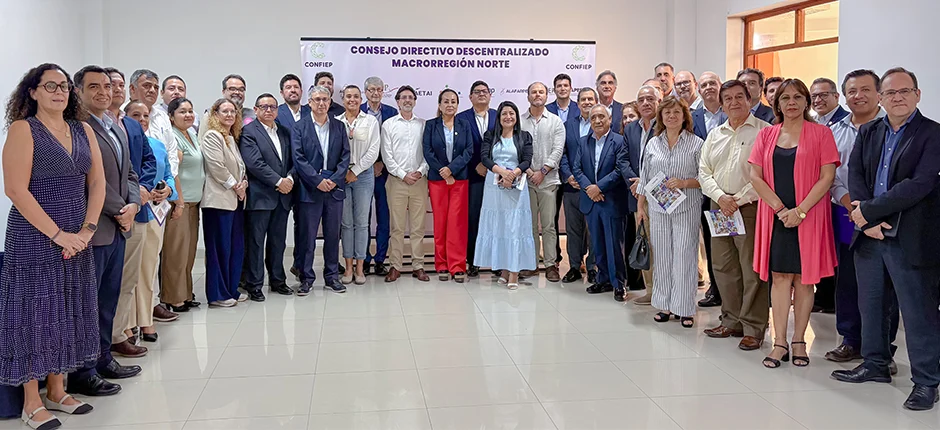
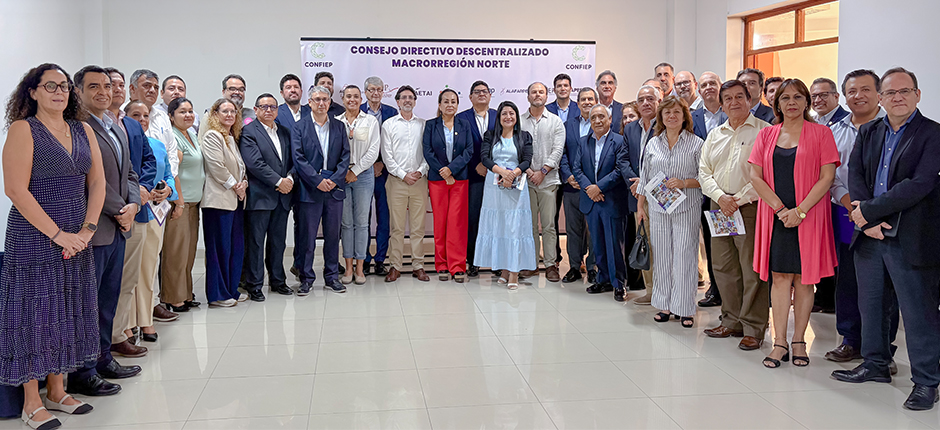
PIURA, PERU – With the meteorological forecasts signaling an escalating threat from the El Niño (FEN) phenomenon, a high-level coalition of private sector leaders, regional authorities, and national policymakers gathered in Piura on September 1, 2026. The emergency summit, organized by the National Confederation of Private Business Institutions (CONFIEP), served as a critical platform to synchronize rapid-response logistics and preventative infrastructure measures aimed at safeguarding the northern region of Peru.
The Urgency of Action: A Call to Collaboration
The meeting, hosted at the headquarters of the Piura Chamber of Commerce, underscored a growing consensus: the window for effective mitigation is closing. As climate indicators point toward severe precipitation and potential flooding, the private sector is positioning itself not merely as a donor, but as a strategic partner in logistical execution.
Jorge Zapata Ríos, President of CONFIEP, delivered a sobering message to the assembly, emphasizing that the bureaucratic hurdles often associated with state-led responses must be bypassed in favor of private-sector agility. "We have a critical two to three-month window to implement every possible safeguard," Zapata Ríos stated. "The private sector stands ready to deploy resources, leveraging our operational agility to ensure that preventative infrastructure and aid reach vulnerable zones before the crisis peaks."
Chronology of the Crisis and Preparation
The summit follows months of mounting apprehension regarding the warming of the Pacific Ocean and its localized impact on Northern Peru.
- Early 2026: Initial scientific reports from the ENFEN (National Study of the El Niño Phenomenon) began to highlight increasing ocean surface temperatures.
- Mid-2026: Regional chambers of commerce in Piura, Lambayeque, and La Libertad reported early disruptions in supply chains and agricultural output.
- August 2026: CONFIEP initiates regional consultation cycles to identify the specific infrastructure gaps in the Macro-Northern region.
- September 1, 2026: The Decentralized Board of Directors meeting in Piura consolidates a unified, cross-sector strategy to address the impending humanitarian and economic risks.
Strategic Mobilization: The Role of the Private Sector
The summit brought together an unprecedented assembly of industrial, commercial, and social stakeholders. The list of participants read like a "who’s who" of the Peruvian economy, reflecting the gravity of the threat.
Key representatives from the Automotive Association of Peru (AAP), CAPECO (Construction), and the Society for the Promotion of National Infrastructure (AFIN) participated alongside leaders from the pharmaceutical and clinical sectors. This diversity is intentional; the strategy encompasses not only physical protection of cities—such as canal clearing and riverbed reinforcement—but also the logistical challenge of maintaining health services and supply chains during a potential disaster.

"We are dealing with a multi-front challenge," noted a representative from the Association of Private Clinics (ACP). "The protection of physical infrastructure is paramount, but the continuity of healthcare delivery during peak flooding events is equally vital to preventing a secondary health crisis."
Official Responses and Cross-Sector Synergy
The presence of congressional representatives, including senators Nilza Chacón and Karla Schaefer, alongside local mayors such as Juan Cevallos (Piura) and Jorge Madrid (26 de Octubre), signaled a rare alignment of political and corporate will.
International stakeholders also provided a global perspective on the crisis. Representatives from UNICEF and the International Labour Organization (ILO) emphasized the need for a "human-centric" approach, focusing on the protection of children and the labor force in regions where livelihoods are tied to the land and local trade.

Furthermore, PROINVERSIÓN and the Water Administrative Authority (Jequetepeque-Zarumilla) provided critical data on investment projects that could be expedited to serve as defensive barriers against potential flooding, highlighting the role of public-private partnerships in executing large-scale, high-speed civil works.
Socio-Economic Implications: A Region at Risk
The Macro-Northern region of Peru represents one of the country’s most significant economic engines, home to vital agricultural, mining, and fishing industries. The potential economic loss from a full-scale El Niño event extends far beyond immediate repair costs.
1. Supply Chain Disruptions
The regional chambers of commerce, including those from Ancash, Cajamarca, and La Libertad, expressed deep concern over the vulnerability of the logistics network. Flooded roads and bridge collapses historically isolate these regions, leading to food insecurity and the paralysis of export-oriented industries.

2. The Agricultural Impact
With agricultural production being the backbone of the North, the private sector is pushing for the rapid deployment of drainage systems and the strengthening of irrigation infrastructure to prevent total crop loss, which would have a devastating effect on the national GDP.
3. Urban Resilience
The municipal authorities highlighted the fragility of urban drainage systems in Piura and surrounding districts. The collaborative plan involving companies like Urbi Propiedades and the various regional Chambers aims to create a "rapid-response task force" capable of deploying heavy machinery and emergency housing solutions on short notice.
Data-Driven Decision Making: Supporting the Effort
Throughout the meeting, experts emphasized that preparation must be data-driven. The coordination between the Ministry of Economy and Finance (MEF) via the Conecta MEF office and private entities ensures that financial resources are directed toward projects with the highest probability of mitigating disaster impact.

The inclusion of the Society of Foreign Trade (ComexPerú) and the National Association of Pharmaceutical Laboratories (ALAFARPE) underlines the necessity of keeping borders open and medical supplies flowing. Without an integrated plan, the "bottleneck effect" often seen in previous El Niño events could lead to a massive inflationary surge in the price of basic goods and medicines.
Looking Ahead: The Path to Resilience
The Piura summit concluded with a commitment to maintain an open channel of communication between the central government, local authorities, and the private sector. The consensus was clear: the time for debate has passed, and the time for execution has arrived.
The "Hombro a Hombro" (Shoulder to Shoulder) initiative, represented at the meeting, stands as a symbol of this new collaborative spirit. By pooling the private sector’s logistical capacity—ranging from heavy transport to telecommunications—with the local government’s mandate for public safety, the region hopes to shift the narrative from one of inevitable damage to one of managed risk.

As the final months of 2026 approach, the people of Northern Peru remain vigilant. However, for the first time in recent history, the private sector has mobilized in a structured, comprehensive manner to serve as the front line of defense. The success of these efforts will be measured not in press releases, but in the number of lives protected, the continuity of businesses maintained, and the resilience of a region that refuses to be defined by its vulnerability to the elements.
Participants in the Decentralized Board of Directors:
- Industry Leaders: CONFIEP, AAP, CAPECO, SNRTV, AFIN, CODIP, ComexPerú, ALAFARPE, IPAI, ACP.
- Regional Chambers: Piura, Ancash, Cajamarca, La Libertad, Lambayeque, Santa, Sullana.
- Government & International Organizations: Congress of the Republic, UNICEF, ILO, PROINVERSIÓN, Autoridad Administrativa del Agua, ALOXI, MEF, Government of Piura, various Municipalities, and corporate partners including Compañía de Minas Buenaventura and CVC Energía.
Reported by the Editorial Office, September 1, 2026.