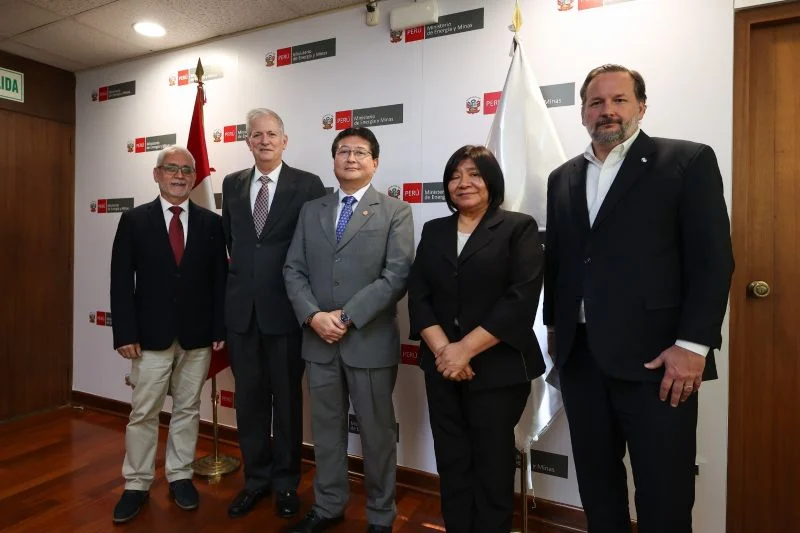
Lima, Peru – [Date of Publication] – Peru’s quest to unlock its offshore hydrocarbon potential has received a significant boost as Anadarko-Oxy, a prominent player in the energy sector, has announced its commitment to drilling an exploratory well in Block Z-62, situated off the coasts of La Libertad and Lambayeque. This decision, revealed during a pivotal meeting between the Ministry of Energy and Mines (MINEM) and Anadarko-Oxy representatives, signals a renewed drive to assess and potentially develop the country’s northern offshore resources.
The high-level discussions, led by the Minister of Energy and Mines, Guillermo Shinno, and Anadarko-Oxy’s Pedro Romero, Douglas Roberts, and César Ardiles, underscored the company’s confidence in the region’s hydrocarbon prospects. Anadarko-Oxy’s representatives provided a comprehensive update on their exploration activities in Blocks Z-61, Z-62, and Z-63, affirming their strategic intent to continue exploring the rich potential of Peru’s northern coastline. This commitment is a testament to the ongoing efforts to diversify Peru’s energy matrix and bolster its energy security through domestic resource development.
Unveiling Promising Prospects: Seismic Data and Natural Indicators
The core of Anadarko-Oxy’s presentation revolved around the extensive interpretation of their 2D and 3D seismic studies. These advanced geophysical surveys have been instrumental in identifying promising prospects with high hydrocarbon potential within the exploration blocks. The company highlighted that the collected data points towards the existence of a robust and active petroleum system in the region.
Furthermore, Anadarko-Oxy presented compelling evidence derived from satellite imagery and "drop core" sampling. These natural indicators have corroborated the seismic findings, providing tangible proof of hydrocarbon presence. The integration of these diverse data sources strengthens the scientific basis for the company’s exploration strategy and justifies the significant investment in the upcoming drilling phase.
The interpretation of seismic data is a critical step in the exploration process. It involves analyzing reflected seismic waves to create a detailed subsurface map, identifying potential geological structures that could trap hydrocarbons. The resolution and accuracy of these 2D and 3D surveys allow geoscientists to delineate potential reservoirs, estimate their size, and assess the likelihood of commercial hydrocarbon accumulations. The fact that Anadarko-Oxy has progressed to this stage and is identifying "prospects of high potential" indicates that the geological conditions are favorable.
"Drop cores" are sediment samples collected from the seabed, typically using a gravity corer. Analyzing these cores can reveal the presence of organic matter, microfossils, and even direct evidence of hydrocarbons, such as oil seeps or gas hydrates. Their use in conjunction with satellite imagery, which can detect surface manifestations of hydrocarbon seepage, offers a multi-faceted approach to validating the existence of an active petroleum system. This dual validation provides a higher degree of confidence in the exploration targets.
Entering the Third Phase: A Commitment to Drilling
Based on the overwhelmingly positive results from their seismic and natural indicator studies, Anadarko-Oxy has officially decided to advance to the third phase of their exploration project. This pivotal phase is marked by a concrete commitment to drill an exploratory well in Block Z-62. This endeavor represents a significant milestone, as it will provide invaluable firsthand data and a more precise evaluation of future development and investment opportunities within the designated zone.
The decision to drill is a high-stakes undertaking in the oil and gas industry. It signifies a company’s conviction that the subsurface geological conditions warrant the substantial financial and operational investment required to penetrate the Earth’s crust and directly sample potential hydrocarbon reservoirs. The success of this well will not only determine the future of Anadarko-Oxy’s operations in Peru but also significantly influence the perception of Peru’s offshore potential by other international energy companies.
Block Z-62’s strategic location off the coast of La Libertad and Lambayeque is particularly noteworthy. This region has long been considered a promising frontier for hydrocarbon exploration, with geological similarities to other proven offshore basins. The success of Anadarko-Oxy’s drilling campaign could unlock a new era of offshore exploration and production for Peru, contributing significantly to the nation’s energy independence and economic growth.
Government Endorsement and Strategic Vision
Minister Guillermo Shinno lauded Anadarko-Oxy’s progress, emphasizing the Peruvian government’s unwavering commitment to fostering a business environment conducive to investment and resource development. He reiterated the administration’s strategic objective to enhance the country’s competitiveness, attract new capital, and maximize the value of its energy resources.
"The continuity of these initiatives is crucial for generating new opportunities for development and growth for the country," Minister Shinno stated, highlighting the broader economic implications of successful offshore exploration. He underscored that the government is actively working to create a predictable and efficient regulatory framework that supports timely project execution while upholding stringent environmental and social standards.
The Minister’s remarks underscore a dual focus: encouraging exploration and production while ensuring responsible resource management. The government recognizes that attracting substantial investment in the energy sector requires not only attractive geological prospects but also a stable and transparent regulatory regime. Predictability in permitting processes is paramount for investors who face long lead times and significant upfront costs.
The mention of "efficient permitting" is particularly relevant. Streamlining bureaucratic processes without compromising environmental and social safeguards is a constant challenge for governments seeking to boost investment. Anadarko-Oxy’s commitment to environmental and social obligations is a positive sign, suggesting alignment with Peru’s national development goals.
Streamlining Processes for Future Growth
In line with the government’s commitment to facilitating exploration, Iris Cárdenas, the Vice Minister of Hydrocarbons, confirmed that the sector is actively developing normative proposals aimed at accelerating these crucial processes. This proactive approach signals the government’s understanding of the need for agility in the energy sector to capitalize on exploration opportunities.
The Vice Minister’s statement suggests that MINEM is not only encouraging exploration but also actively working on the practical mechanisms to enable it. This could involve revising existing regulations, simplifying application procedures, or implementing digital platforms to enhance transparency and efficiency. The focus on "agilizing these processes" indicates a recognition that regulatory bottlenecks can hinder investment and delay the realization of potential energy resources.
The development of new regulations or the amendment of existing ones is a delicate balancing act. They must strike a balance between attracting investment and ensuring robust environmental protection, community engagement, and equitable benefit sharing. The success of these efforts will be measured by their ability to create a regulatory environment that is both attractive to international energy companies and aligned with Peru’s long-term sustainable development objectives.
Chronology of Exploration and Development
The journey of Anadarko-Oxy in Peru’s offshore exploration can be broadly outlined as follows:
- Initial Exploration and Data Acquisition: Following the award of exploration rights for Blocks Z-61, Z-62, and Z-63, Anadarko-Oxy embarked on a comprehensive data acquisition phase. This likely involved the acquisition of extensive 2D and 3D seismic surveys, a foundational step in understanding the subsurface geology.
- Data Interpretation and Prospect Identification: The collected seismic data undergoes rigorous interpretation by geoscientists. This phase is crucial for identifying potential hydrocarbon traps and assessing their economic viability. Simultaneously, Anadarko-Oxy would have employed remote sensing technologies and conducted seabed sampling to gather natural indicators of hydrocarbon presence.
- Decision to Advance to Phase III: Based on the positive outcomes of the data interpretation and natural indicator analysis, Anadarko-Oxy has now committed to the third phase of exploration, which mandates the drilling of an exploratory well. This signifies a significant escalation in investment and risk.
- Drilling of Exploratory Well in Block Z-62: The upcoming drilling operation in Block Z-62 is the most critical step in this phase. The success or failure of this well will provide definitive data on the presence and commerciality of hydrocarbons in the area.
- Evaluation of Future Development: Depending on the results of the exploratory well, Anadarko-Oxy will evaluate the potential for further development and investment in the region. This could involve appraisal drilling, the acquisition of additional seismic data, and ultimately, the planning for production facilities if commercially viable reserves are confirmed.
This phased approach is standard in the upstream oil and gas industry, allowing companies to progressively de-risk exploration efforts and make informed decisions at each stage.
Supporting Data and Scientific Rationale
The scientific rationale underpinning Anadarko-Oxy’s decision to drill is multifaceted and relies on a convergence of geological evidence:
- Seismic Data: The high-resolution 2D and 3D seismic surveys provide detailed imaging of subsurface geological structures. These surveys can delineate potential reservoir rocks, identify fault traps, and estimate the size of potential hydrocarbon accumulations. The identification of "prospects of high potential" suggests that these seismic interpretations have revealed geological formations that are known to host hydrocarbons in other parts of the world.
- Satellite Imagery: Advanced satellite technology can detect subtle surface anomalies, such as hydrocarbon seeps or thermal variations associated with subsurface hydrocarbon activity. The use of satellite imagery in offshore exploration allows for a broader, non-invasive assessment of potential hydrocarbon presence before committing to more expensive survey methods.
- "Drop Cores" (Seabed Sediment Samples): Analyzing sediment cores retrieved from the seabed provides direct evidence of the geological and geochemical conditions. These cores can contain organic matter that has the potential to generate hydrocarbons, as well as direct traces of hydrocarbons that have migrated to the seafloor. The presence of indigenous hydrocarbons in these samples is a strong indicator of an active petroleum system.
- Regional Geological Analogs: The offshore areas of northern Peru share geological similarities with other prolific hydrocarbon-producing basins in South America and globally. Understanding these analogs can provide valuable insights into the potential for hydrocarbon generation, migration, and accumulation in the region.
The combination of these data sources creates a robust case for the existence of an active petroleum system and increases the probability of a successful exploration well.
Implications for Peru’s Energy Landscape and Economy
The success of Anadarko-Oxy’s exploration efforts in Blocks Z-61, Z-62, and Z-63 could have profound implications for Peru’s energy landscape and its broader economy:
- Enhanced Energy Security: The discovery of significant offshore hydrocarbon reserves would bolster Peru’s domestic energy supply, reducing its reliance on imports and enhancing its energy security. This is particularly important in a volatile global energy market.
- Economic Growth and Job Creation: A thriving offshore oil and gas sector can be a significant engine for economic growth. It creates high-skilled jobs in exploration, drilling, production, and related service industries. Furthermore, the revenue generated from hydrocarbon production can contribute to government coffers, funding essential public services and infrastructure projects.
- Diversification of Energy Sources: While Peru has a significant renewable energy potential, diversifying its energy matrix with domestically produced hydrocarbons can provide a more balanced and reliable energy supply, particularly for industrial and transportation sectors.
- Attraction of Further Investment: A successful exploration campaign by a major international player like Anadarko-Oxy would serve as a powerful signal to other energy companies, potentially attracting further investment in Peru’s offshore acreage and other energy sectors.
- Technological Advancement: The implementation of advanced exploration and production technologies required for offshore operations can lead to technological transfer and capacity building within Peru’s workforce.
- Regional Development: The development of offshore resources often spurs investment in coastal infrastructure, such as ports, processing facilities, and pipelines, which can benefit regional economies.
However, it is also crucial to acknowledge the inherent risks and challenges associated with offshore hydrocarbon exploration. These include environmental concerns, the potential for price volatility in the global energy markets, and the need for sustained government commitment to regulatory stability and infrastructure development.
The commitment by Anadarko-Oxy to drill an exploratory well in Block Z-62 represents a critical juncture for Peru’s offshore energy ambitions. The successful outcome of this endeavor could usher in a new era of resource development, contributing significantly to the nation’s economic prosperity and energy security. The proactive stance of the Ministry of Energy and Mines in streamlining regulatory processes further underscores the strategic importance of this sector for Peru’s future.