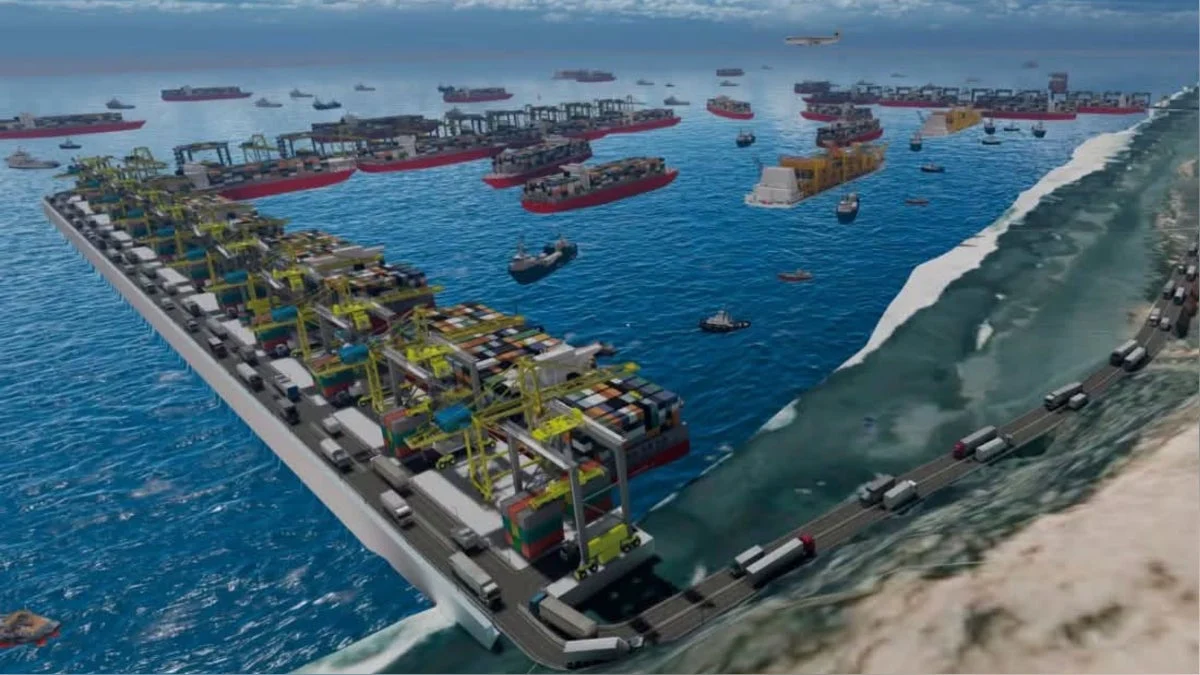
In a landmark decision poised to reshape the logistics landscape of South America, the National Port Authority (APN) of Peru—a specialized body under the Ministry of Transport and Communications (MTC)—has officially approved the Master Plan for the Corío Port Terminal. This ambitious project, slated for development in the district of Punta de Bombón, Islay province, Arequipa, represents more than just infrastructure; it is a declaration of Peru’s intent to become the primary maritime gateway for the Southern Cone and a critical bridge to international markets.
With an investment projection exceeding $800 million, the terminal is designed as a multipurposed facility capable of handling vast volumes of containerized cargo, solid bulk, and fractional freight. As the MTC emphasizes, the project is not merely an isolated port development but the final link in a complex regional chain, effectively bridging the Pacific coast with the agricultural and industrial heartlands of Brazil via the Interoceanic Highway.
I. The Core Facts: A Blueprint for Development
The Master Plan serves as the definitive roadmap for the construction and operationalization of the Corío Port. By formalizing the technical guidelines, environmental considerations, and phased implementation stages, the APN has provided the necessary regulatory certainty to attract large-scale private investment.
Key Technical Specifications:
- Location: Punta de Bombón, Islay, Arequipa.
- Total Investment: Over $800 million (distributed across three development stages).
- Infrastructure Type: Multipurpose Terminal.
- Operational Capacity: Handling of containers, solid bulk, and break-bulk cargo.
- Strategic Objective: Enhancing the national logistics chain and facilitating regional trade.
The project is segmented into three distinct phases. The first phase focuses on basic infrastructure and the initial capacity to handle regional exports, particularly mining and agricultural products from the southern highlands. Subsequent phases will see the expansion of the terminal into a world-class facility capable of competing with the major ports of the Pacific coast of South America, such as Callao and Chile’s central hubs.
II. Chronology of a Visionary Project
The path to the approval of the Corío Master Plan has been one of rigorous technical evaluation and long-term national planning.
Pre-Feasibility and Conceptualization (2015–2020)
For years, the southern region of Peru sought to overcome its logistical isolation. While the Southern Interoceanic Highway provided the physical road link to Brazil, the lack of a deep-water port capable of handling large cargo ships prevented the full realization of the trade corridor’s potential. Early studies identified the coastline of Islay as having the natural depth and geography required to host a major hub.
The Planning Phase (2021–2023)
The APN, in conjunction with private stakeholders and regional authorities, initiated the drafting of the Master Plan. This involved extensive oceanographic, environmental, and socio-economic assessments to ensure the port would be sustainable and efficient. During this period, the project faced challenges regarding environmental impact and local community integration, which were addressed through public hearings and technical revisions.
The Regulatory Milestone (2024)
In its most recent Board of Directors session, the APN reached a consensus to approve the Master Plan. This decision was met with widespread approval from regional leaders in Arequipa, who view the port as the catalyst for the industrialization of the southern department.
III. Supporting Data: The Economic Logic of Corío
To understand why a project of this magnitude is necessary, one must look at the current state of Peruvian logistics. Currently, the vast majority of Peru’s maritime trade passes through the Port of Callao. While Callao is efficient, it is nearing its capacity limit. The Corío Port serves as a necessary relief valve and a strategic regional hub for southern Peru and neighboring landlocked regions.
Trade Integration with Brazil
The "Interoceanic Highway" has long been touted as the bridge between the Atlantic and the Pacific. However, without a deep-water port on the Peruvian side to receive the influx of Brazilian commodities—such as soy, corn, and livestock products destined for Asian markets—the highway has underperformed. Corío changes this dynamic. By reducing travel times and logistics costs for Brazilian exporters, the port offers a shorter route to China and the rest of Asia compared to the current transit through the Atlantic.
Impact on Employment and Local Growth
Economic modeling associated with the Master Plan suggests that the construction phase alone will generate thousands of direct and indirect jobs. Once operational, the port will create a secondary economy in the Islay province:
- Direct Jobs: Stevedoring, crane operation, port administration, and security.
- Indirect Jobs: Logistics services, supply chain management, warehousing, hospitality for transport workers, and technical maintenance.
- Industrial Clusters: The proximity of the port will likely incentivize the creation of industrial zones in Arequipa, where raw materials can be processed before export.
IV. Official Responses and Institutional Commitments
The Ministry of Transport and Communications (MTC) has been the primary architect of the project’s political narrative. In a formal statement following the approval, the Ministry emphasized that the port is not an end in itself, but a mechanism for national integration.
"The approval of this Master Plan is a historic milestone for the southern region," noted an MTC spokesperson. "We are laying the foundation for a project that will strengthen our national logistics connectivity and consolidate Peru as a strategic hub for regional trade."
The APN has also reaffirmed its commitment to international standards. By implementing this plan, the authority ensures that the terminal will operate under the highest safety and efficiency protocols, adhering to global maritime regulations. This regulatory transparency is essential for securing the participation of global port operators and international financial institutions.
V. Implications: Why This Changes the South American Map
The implications of the Corío Port extend far beyond the borders of Peru.
1. Shifting the Pacific Axis
Historically, Chile has served as a dominant transit point for goods moving between the Southern Cone and Asia. The development of Corío directly challenges this hegemony by offering a modern, efficient, and direct route from the heart of South America to the Pacific. This shift will likely influence trade agreements and logistics investments across the continent.
2. Diversifying the Peruvian Economy
For too long, the Peruvian economy has been overly centralized in Lima. A project of this scale in Arequipa decentralizes the economic engine of the country, empowering the southern regions to become autonomous hubs of trade. This will likely lead to increased tax revenue for the region and a higher standard of living for the residents of Islay and surrounding districts.
3. Sustainability and Modernization
The Master Plan explicitly outlines the use of modern technology to minimize the environmental footprint of the terminal. From automated container management systems to energy-efficient loading docks, the project aims to set a new standard for green maritime infrastructure in Latin America.
VI. Conclusion: A New Horizon for Peru
The approval of the Corío Port Master Plan is a decisive step toward a more competitive and integrated Peru. By bridging the gap between the Pacific coast and the resource-rich interiors of Brazil and the Andean region, the project promises to stimulate economic activity for decades to come.
As the government moves from the planning phase to the tender and construction stages, the eyes of the international logistics community will be fixed on Arequipa. If successfully executed, the Corío terminal will not only be a success for Peru but a vital piece of infrastructure for global trade, ensuring that the country remains a key player in the increasingly interconnected world of the 21st century.
The task ahead is significant. It requires continued political will, the attraction of private capital, and a focus on community engagement to ensure that the progress of the port benefits all sectors of society. However, with the Master Plan now in place, the path is clear: Peru is preparing to open a new door to the world, and the South Pacific is about to become a much busier, more prosperous place.