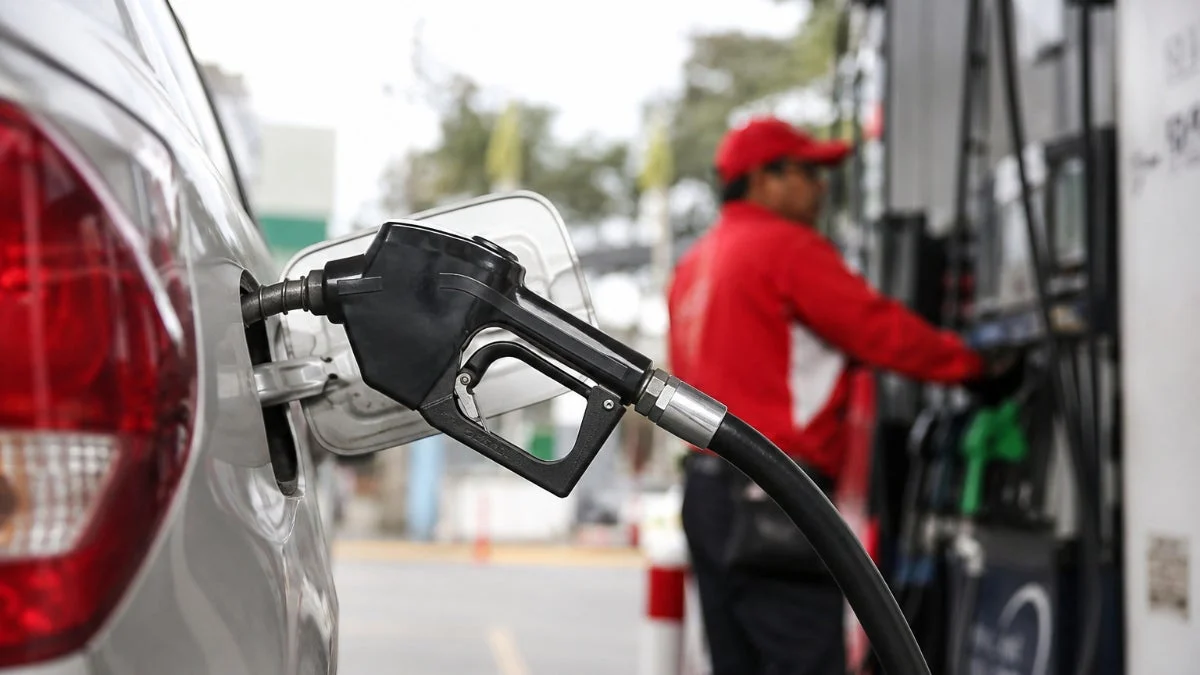
The Peruvian economy is currently grappling with a volatile energy landscape as fuel prices at the pump continue to climb, far outpacing the international escalation of oil costs. While global markets have been rattled by the ongoing conflict in the Middle East, a comprehensive analysis by the Central Reserve Bank of Peru (BCRP) suggests that external shocks are only part of the story. Domestic supply chain failures, particularly involving the state-run energy giant Petroperú, and a tepid fiscal response from the government have created a perfect storm, leading to price spikes that threaten to destabilize the nation’s broader inflationary outlook.
Main Facts: The Disconnect Between Global and Local Prices
The narrative that Peru’s fuel price inflation is solely an import-driven phenomenon has been dismantled by recent data. While global oil prices have seen an increase of approximately 60% since the outbreak of hostilities in the Middle East, the reality for the Peruvian consumer and transport sector is significantly bleaker.
Reports verified by RPP indicate that wholesale prices at Petroperú and Repsol refineries have surged by as much as 103% for certain fuels, most notably diesel. To illustrate the magnitude of this disparity: the price per gallon of diesel at the wholesale level climbed from S/ 12.14 to a staggering S/ 24.66. This drastic leap confirms that the "gap"—the difference between the local refinery price and the international parity price—has widened significantly, suggesting that domestic inefficiencies are compounding the burden of global commodity inflation.
Chronology of the Crisis
The escalation of fuel prices did not occur in a vacuum. The timeline of this economic friction can be traced back to several key developments:
- The Geopolitical Trigger: The initial spike in international oil benchmarks was sparked by the intensifying conflict between the United States and Iran. This created a baseline for global energy inflation, which initially led policymakers to believe that the Peruvian situation was merely a reflection of global trends.
- The Supply Chain Breakdown: As the months progressed, systemic issues within Petroperú began to surface. Chronic operational difficulties, exacerbated by social unrest in regions such as Ucayali—where Petroperú acts as the primary supplier—led to widespread desupply. This localized scarcity created an upward pressure on prices that functioned independently of global oil barrels.
- The Policy Vacuum: Throughout these months, the fiscal authorities remained largely static. Unlike previous administrations, which utilized the Fuel Price Stabilization Fund (FEPC) or implemented temporary tax relief measures to buffer the economy, the current government’s response has been described by the BCRP as "significantly lower" than historical precedents.
- The Recent Pivot: Faced with mounting public pressure and the looming threat of transport strikes, the government recently announced a focalized subsidy for the transport sector. This move, while intended to cushion the blow, represents a departure from the broad-based stabilization mechanisms of the past.
Supporting Data: Analyzing the "Price Gap"
Adrián Armas, Central Manager of Economic Studies at the BCRP, has been vocal about the technical causes of this phenomenon. The BCRP’s analysis indicates that the refinery prices for diesel and gasohols have decoupled from their international parity benchmarks.
When analyzing the data, economists focus on the "basis risk"—the spread between what the market pays at the refinery gate and the actual international cost of importing that fuel. The current data shows that this spread has expanded, meaning that even if international oil prices were to stabilize, the domestic price structure remains burdened by internal costs.
Furthermore, the operational stability of Petroperú is a critical variable. When a major supplier faces logistical bottlenecks, the lack of competition and the inability to maintain consistent stock levels forces wholesalers to pass on the costs of supply chain disruptions to the end-user. As Armas noted, in regions where Petroperú is the sole or primary provider, the impact of these disruptions is magnified, creating "pockets" of hyper-inflationary pressure on fuel that do not exist in better-served coastal markets.
Official Responses and Institutional Friction
The divergence in opinion between the BCRP and the executive branch has become increasingly apparent. While the Ministry of Economy, led by Elmer Cuba, has focused on explaining the international context of the 60% oil hike, the BCRP has shifted the focus toward internal policy shortcomings.
The BCRP’s Critique
The Central Bank has expressed concern that the current fiscal response is effectively non-existent. "For all practical purposes, the [Fuel Price Stabilization] fund is not functioning, or it is functioning very little," Armas stated during a recent press conference. The BCRP argues that by failing to utilize existing tools—such as the FEPC or tax adjustments—the state has allowed the "price shock" to permeate through the entire logistics chain of the country.
Government’s Focalized Approach
In response, the government has moved toward a focalized subsidy for the transport sector. The administration argues that a broad-based subsidy is fiscally unsustainable and that resources must be directed toward the most vulnerable sectors, such as public transport, to prevent a chain reaction of price increases in food and basic goods. However, critics point out that this "targeted" approach is often administratively complex, slow to implement, and susceptible to corruption, potentially failing to reach the drivers who need it most in a timely manner.
Economic Implications: Inflation and Future Risks
The implications of this fuel crisis extend far beyond the gas station. Fuel is a foundational cost for the entire Peruvian economy. When diesel prices double, the cost of moving agricultural products from the highlands to the coast increases, leading to a rise in food prices.
The Inflationary Outlook
The BCRP is currently recalculating its inflation projections. The bank remains in a state of high alert, balancing the fuel-driven inflationary pressure against the potential for an "extraordinary El Niño" climate phenomenon. Climate analysts have warned that a strong El Niño could disrupt food production, which, when combined with high transport costs, could trigger a significant spike in the Consumer Price Index (CPI).
Monetary Policy Challenges
For the BCRP, the challenge is to maintain price stability without strangling economic growth. If the bank raises interest rates too aggressively to combat fuel-driven inflation, it risks cooling an already fragile economy. Conversely, if it ignores the inflationary impact of the fuel price, it risks losing its hard-won credibility regarding inflation targeting.
The Need for Structural Reform
The current crisis has also reignited the debate over the future of Petroperú. Moody’s and other rating agencies have recently questioned the viability of the company, noting that promised state support—up to US$ 2 billion—has yet to materialize into a clear execution strategy. The BCRP’s warnings suggest that until Petroperú can solve its operational and supply chain issues, the Peruvian market will remain vulnerable to internal price spikes that are entirely detached from the global oil market.
Conclusion: A Call for Coordinated Action
The surge in fuel prices in Peru is a complex tapestry of international volatility and domestic mismanagement. While the government’s shift toward a focalized subsidy is a step toward acknowledging the pain of the transport sector, it does little to address the systemic supply issues at the refinery level or the inadequacy of the current fiscal stabilization framework.
Moving forward, the coordination between the Ministry of Economy and the Central Bank will be vital. Peru cannot afford to let its energy infrastructure become a drag on its macroeconomic stability. As the country braces for potential climate shocks, the stabilization of the fuel market is not merely an economic concern; it is a prerequisite for social and political stability. The "tardy" response of the state, as highlighted by the BCRP, serves as a cautionary tale: in a globalized economy, internal inefficiencies are eventually penalized by the market, and those costs are inevitably borne by the citizens.