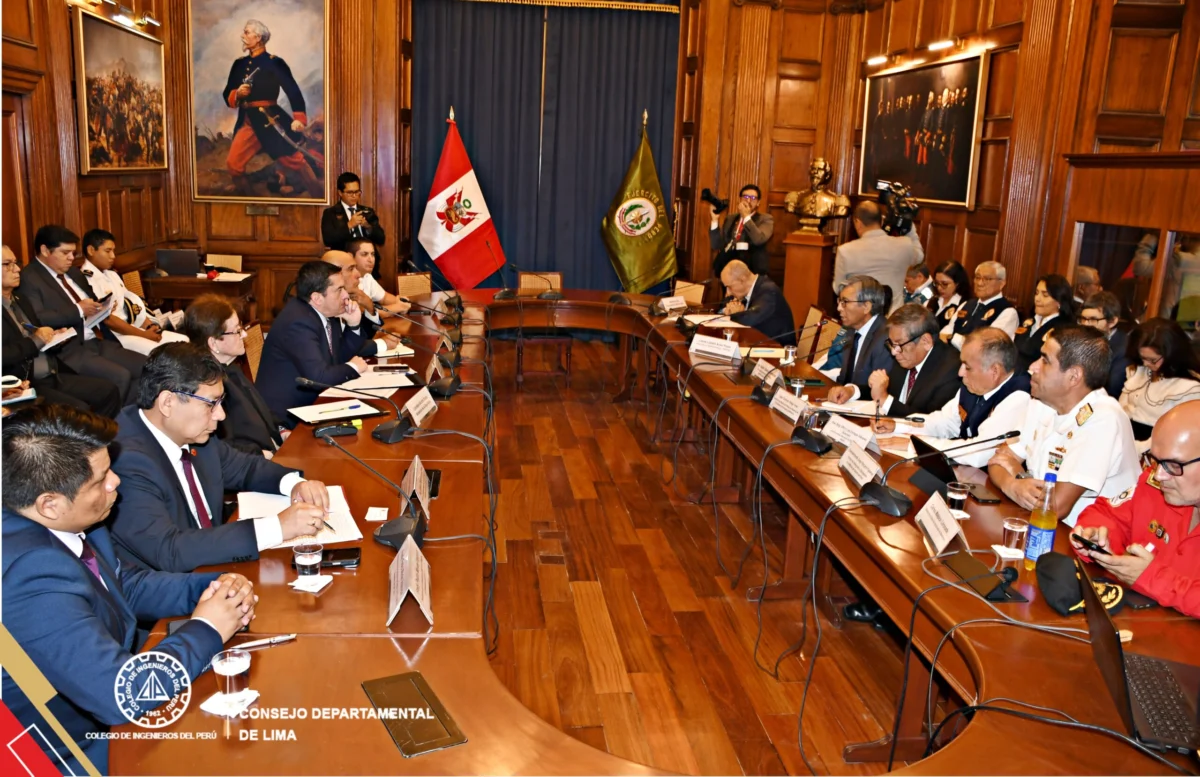
Lima, Peru – In a pivotal meeting held within the hallowed halls of the Congress of the Republic, the Colegio de Ingenieros del Perú (CIP) – Lima Chapter, has issued a resounding call for a paradigm shift in Peru’s disaster preparedness strategy. Citing the ever-present threat of a major seismic event, the organization, represented by its esteemed Dean Ing. CIP Edwin Chavarri, has proposed the establishment of a singular, high-level National Authority for Risk Management and Resilience. This proposed body, advocates argue, is crucial for moving beyond fragmented disaster response and fostering a proactive, unified approach to prevention, preparation, intervention, and reconstruction.
The urgent plea was articulated during a significant working session focused on Earthquake and Tsunami Preparedness and Response, a session presided over by Senator Lourdes Alcorta and attended by the President of the Senate, Miguel Torres. The CIP’s delegation, which included Ing. CIP Fredy Morán, President of the CIP Lima’s Risk Management and Disaster Commission, presented a comprehensive suite of proposals aimed at bolstering the nation’s resilience against seismic threats.
"Peru cannot continue to manage disasters in a fragmented manner," stated Dean Chavarri, his words echoing the gravity of the situation. "We need a single national authority, at the highest level of the State, that can prevent, prepare, respond, and lead reconstruction efforts. This is not a matter of if, but when, and our current approach leaves us dangerously exposed."
The core of the CIP’s proposal revolves around the creation of the National Authority for Risk Management and Resilience of Peru (ANGRR). This proposed entity would serve as the central nervous system for all disaster-related activities, unifying and systematizing information on Disaster Risk Management (DRM). Such a centralized approach, the engineers argue, is vital for ensuring timely and pertinent actions during emergencies, thereby minimizing loss of life and property.
The CIP’s intervention comes at a critical juncture, as Peru, situated on the Pacific Ring of Fire, is highly susceptible to powerful earthquakes and tsunamis. Scientific projections, underscored by national authorities, suggest the potential for an earthquake measuring between 8.8 and 9.0 magnitude, a catastrophic event that could impact over 9.5 million people. The engineers’ proactive stance aims to equip the nation with the robust frameworks necessary to face such a devastating scenario.
A Shift in Preparedness: Beyond Evacuation to Self-Protection
A significant element of the CIP’s recommendations targets the modification of existing emergency protocols, particularly those concerning earthquake simulations and response plans. The organization strongly advocates for a shift in focus, moving beyond an almost exclusive emphasis on evacuation to a more holistic approach that prioritizes self-protection and the identification of safe zones within homes and buildings.
"We need to reinforce self-protection protocols during an earthquake," emphasized Dean Chavarri. "Prioritizing how people know to act and where to position themselves safely before initiating an evacuation is paramount. It’s about how we survive within our homes. How we protect our lives before evacuating – that is the protocol we must strengthen, as already practiced by countries with high seismicity, including the United States, Japan, Chile, and New Zealand."
This proposed reorientation of the National Civil Defense Institute (Indeci)’s operational plan for earthquakes aims to equip individuals with the knowledge and skills to remain safe during the initial, most violent shaking. Instead of solely focusing on immediate evacuation, the revised protocols would place a strong emphasis on identifying and utilizing safe havens within the immediate surroundings – such as sturdy tables or interior walls – as a primary measure to safeguard lives before the need for external evacuation arises.
Strengthening the Framework: The SINAGERD and Operational Centers
Furthermore, the CIP has proposed significant amendments to Law No. 29664, the framework law for the National Disaster Risk Management System (SINAGERD). The engineers contend that the current framework needs a more robust and impactful approach, extending beyond the mere obligation for regional and local governments to possess an Emergency Operations Center (COE).

"Every regional government and local government must have an implemented, operational, interconnected, and certified Emergency Operations Center, with uninterrupted functionality capabilities during emergencies and disasters, supported by clear performance indicators," elaborated Ing. CIP Fredy Morán. This mandate for fully functional and interconnected COEs aims to ensure seamless communication and coordinated response across all levels of government during a crisis. The absence of such robust infrastructure has historically led to communication breakdowns and delayed responses in past disaster scenarios.
The CIP’s vision for ANGRR includes systematizing information and fostering better coordination, ensuring that when a disaster strikes, the response is not only swift but also precisely targeted and effective. This includes ensuring that all regional and local governments have the necessary resources and trained personnel to manage emergencies effectively, thereby preventing the chaotic and often inefficient responses witnessed in the past.
Engineering Expertise in Action: Identifying Vulnerable Structures
Beyond policy recommendations, the CIP Lima has proactively offered its extensive technical resources to the government. The organization has put forth its "Program for the Identification of Vulnerable Housing against Seismic Threats in Metropolitan Lima." This initiative will leverage the expertise of volunteer engineers from the CIP to conduct assessments of residential buildings.
The program’s objective is to provide families with crucial technical information regarding the vulnerability of their homes. Armed with this knowledge, homeowners can then take informed preventive measures against potential seismic events of significant magnitude. This direct, on-the-ground engagement by engineers is seen as a critical step in reducing the overall seismic vulnerability of the population, especially in areas with older or less structurally sound housing.
"This initiative seeks to empower families by making them aware of their housing’s structural integrity," explained Dean Chavarri. "Understanding potential weaknesses allows for timely reinforcement and mitigation efforts, ultimately saving lives and property."
The CIP’s commitment extends to offering the collective expertise of its over 125,000 chartered engineers to the nation. This vast pool of technical talent, the organization asserts, is a fundamental asset that can be harnessed for the prevention, preparation, and reduction of risk in a country facing high vulnerability.
Historical Context and the Urgency of Action
Peru’s history is punctuated by devastating earthquakes. The 1970 Ancash earthquake, a magnitude 7.9 event, caused widespread destruction and an estimated death toll of over 70,000 people. More recently, the 2007 Pisco earthquake, a magnitude 8.0 event, resulted in significant damage and loss of life. These historical traumas serve as stark reminders of the nation’s ongoing vulnerability.
The current fragmented approach to disaster management, characterized by overlapping responsibilities and a lack of centralized coordination, has been a persistent concern for experts and citizens alike. The CIP’s proposal for a unified national authority aims to address these systemic weaknesses head-on.
The establishment of ANGRR, as envisioned by the CIP, would likely involve significant legislative action and inter-agency cooperation. However, the potential benefits in terms of enhanced national resilience and reduced impact from future seismic events are immeasurable. The engineers’ proactive engagement with the legislative branch signifies a commitment to not only identify problems but also to actively contribute to their solutions.
Supporting Data and Future Projections
The urgency of the CIP’s recommendations is underscored by scientific projections and the sheer scale of potential impact. Authorities have repeatedly warned of the high probability of a major earthquake in Peru. Scientific studies, including those conducted by the Peruvian Seismological Research Center, consistently highlight the active tectonic plate boundaries off the coast of Peru, making the region a hotspot for seismic activity.
The projected magnitude of 8.8 to 9.0 is not an arbitrary figure but is based on the accumulation of seismic energy along the Nazca Plate subduction zone. Such an event would generate immense ground shaking, capable of causing widespread structural collapse, especially in areas with unreinforced masonry buildings, which are prevalent in many Peruvian cities.
Furthermore, the potential impact on over 9.5 million people signifies a national crisis of unprecedented scale. This figure represents a significant portion of Peru’s population, highlighting the widespread vulnerability and the critical need for robust preparedness measures. The economic and social ramifications of such an event would be profound, necessitating a comprehensive and well-coordinated reconstruction effort, which the proposed ANGRR would be ideally positioned to lead.
Official Responses and Implications
While the CIP’s proposals represent a significant step forward in the discourse on disaster preparedness, their full implementation will require the commitment and collaboration of various governmental bodies and stakeholders. The presence of Senator Lourdes Alcorta and Senate President Miguel Torres at the working session indicates a level of engagement from the legislative branch, which is crucial for enacting the necessary legal reforms.
The Ministry of Defense, the National Emergency Operations Center (COEN), and Indeci are among the key institutions that would be directly affected by the establishment of a new National Authority. The success of ANGRR would depend on its ability to integrate and coordinate the efforts of these existing entities, rather than creating a parallel bureaucratic structure.
The implications of adopting the CIP’s recommendations are far-reaching:
- Enhanced Coordination: A unified authority would streamline communication and decision-making processes, leading to more efficient and effective disaster response.
- Proactive Prevention: The emphasis on self-protection and identifying vulnerable structures shifts the focus from reactive response to proactive risk reduction.
- Resource Optimization: Centralized management of information and resources would prevent duplication of efforts and ensure that aid is deployed where it is most needed.
- Improved Reconstruction: A clear leadership structure for reconstruction would facilitate a more organized and timely recovery process, minimizing long-term social and economic disruption.
- Increased Public Confidence: A visible and effective national disaster management system would foster greater public trust and encourage greater community participation in preparedness efforts.
The Colegio de Ingenieros del Perú, through its timely and comprehensive proposals, has once again demonstrated its commitment to the safety and well-being of the nation. The call for a National Authority for Risk Management and Resilience is not merely a suggestion but a critical imperative, a testament to the foresight and expertise of Peru’s engineering community in the face of an undeniable and potentially catastrophic threat. The coming months will be crucial in determining whether these vital recommendations are translated into actionable policy, ultimately shaping Peru’s preparedness for the seismic challenges that lie ahead.