Executive Summary: A Push for Legislative Accountability
The political landscape of the nation has reached a critical juncture as the parliamentary caucus "Ahora Nación" formally introduced a legislative motion seeking the establishment of a Special Investigative Commission. This body is mandated to probe the political responsibilities, executive decisions, and operational failures surrounding the deaths and alleged human rights violations that occurred during a tumultuous four-year period—from December 2022 to February 2026.
Covering the transition of power following the removal of Pedro Castillo and the subsequent administration of Dina Boluarte, as well as the later governance of José Jerí, the motion represents an unprecedented attempt by the legislative branch to exercise oversight over the executive’s handling of social unrest. The document, which is currently awaiting review by the Junta de Portavoces (Board of Spokespersons), proposes a 90-day working window to produce a definitive report on the accountability of state actors.
Chronology of Social Unrest: A Nation in Flux
To understand the scope of the proposed investigation, one must look at the timeline of events that have shaken the country’s stability.
The 2022–2023 Crisis
The initial phase of the investigation focuses on the immediate aftermath of the December 2022 political transition. Following the failed self-coup and subsequent ouster of Pedro Castillo, widespread protests erupted across the country. These demonstrations were characterized by demands for early elections, the dissolution of Congress, and the resignation of President Dina Boluarte. The response from security forces, particularly in regions such as Ayacucho, Apurímac, and Puno, resulted in a series of violent confrontations that drew international condemnation from human rights organizations, including the Inter-American Commission on Human Rights (IACHR).
The 2024–2026 Context
The motion is not limited to the early days of the Boluarte administration. It extends its reach through the government of José Jerí, tracking the evolution of social discontent. As the country transitioned into the mid-2020s, the nature of the protests shifted. While initial unrest was rooted in constitutional and political grievances, the later period—culminating in late 2025—saw a rise in civil mobilization against the escalating tide of organized crime, extortion, and systemic insecurity that plagued urban centers like Lima.
Supporting Data: The Human Cost of Political Polarization
The legislative motion is grounded in a grim statistical baseline that highlights the severity of the conflicts. The "Ahora Nación" caucus has presented a harrowing breakdown of casualties, which serves as the foundation for their demand for a formal parliamentary investigation.
Breakdown of Victims
- Civilians in Direct Conflict: 49 individuals lost their lives during direct clashes with state security forces.
- Incident-Related Fatalities: 11 civilians died in circumstances related to the blockade of national highways, often citing the lack of timely medical attention or secondary accidents caused by the paralysis of transport.
- Security Personnel: The commission intends to honor and investigate the deaths of seven members of the Armed Forces and National Police who perished while performing their duties.
- Injured Citizens: An estimated 1,956 citizens sustained physical injuries, ranging from minor trauma to life-altering wounds, as a result of the use of force by state agents.
Regional Focal Points
The commission’s mandate specifically targets regions where the intensity of the violence was most pronounced. The investigation will focus on the operational protocols deployed in:
- Southern Corridor: Apurímac, Ayacucho, Cusco, and Puno, which saw the highest rates of lethality.
- Urban Centers: Arequipa and Lima, where the character of the protests shifted from rural-political to urban-security demands.
- Northern Connectivity: La Libertad, where highway blockades significantly impacted economic stability and public order.
The Case of Eduardo Ruiz Sáenz (‘Trvco’)
A pivotal element of the motion is the inclusion of the specific case of Eduardo Mauricio Ruiz Sáenz, known by his pseudonym ‘Trvco.’ His death on October 15, 2025, serves as a focal point for the investigation into the Jerí administration.
The death of ‘Trvco’ occurred during massive demonstrations in Lima sparked by the public’s frustration with rampant extortion and the state’s inability to protect small business owners. The incident, which involved a sub-officer of the National Police who is currently under investigation by the Dirincri (Criminal Investigation Directorate), has become a symbol of the friction between the state and a citizenry demanding security. By including this case, the parliamentary motion seeks to establish whether the government’s operational response to domestic crime is functionally indistinguishable from its response to political dissent.
Official Responses and Political Implications
The move to create this commission has sent shockwaves through the legislative chamber.
The Legislative Path
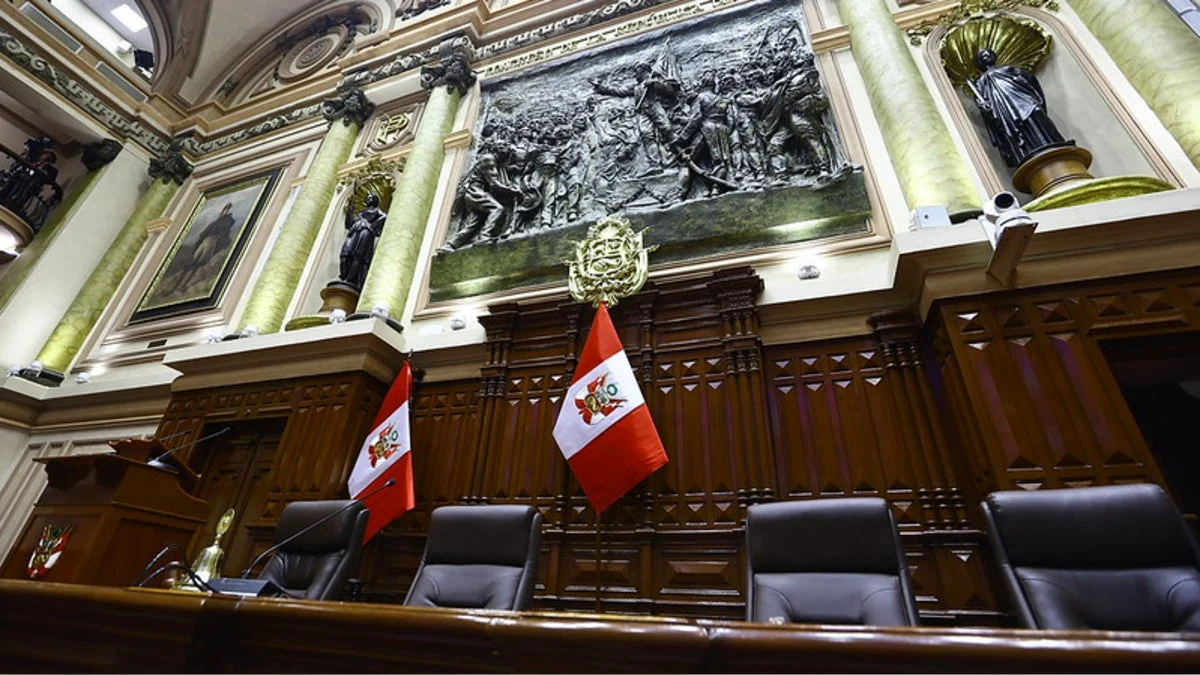
Before the proposal can reach the floor of the Bicameral Congress, it must pass the rigorous scrutiny of the Junta de Portavoces. This body, comprised of the leaders of each political group, will determine whether the motion possesses the political weight and legal merit to proceed. Critics of the motion argue that it is a politically motivated instrument intended to weaken the standing of the current administration, while proponents argue that it is a necessary exercise of constitutional checks and balances.
Executive Accountability
The executive branch has yet to issue a comprehensive formal response. However, sources close to the Palacio de Gobierno suggest that the administration views the investigation as an encroachment on the executive’s prerogative to maintain public order. The government maintains that all operational decisions made during the specified period were in accordance with the law and designed to restore the rule of law in the face of violent insurrection.
Human Rights and Institutional Integrity
For civil society groups and international observers, the creation of this commission represents a potential, albeit delayed, opportunity for truth and justice. The core challenge for the committee, should it be formed, will be to maintain objectivity while operating within the highly polarized environment of a bicameral legislature. The investigative commission will be tasked with answering three fundamental questions:
- Did the executive branch provide clear, legal orders to the forces of order?
- Were the protocols for the use of force compliant with international human rights standards?
- What specific political decisions led to the escalation of conflict in regions like Puno and Ayacucho?
Conclusion: Looking Ahead
The proposed inquiry into the events of 2022–2026 marks a significant moment for the country’s democratic maturity. By attempting to formalize the analysis of these deaths, the Congress of the Republic is signaling that no government, regardless of its ideological orientation, is immune from the scrutiny of the people’s representatives.
The 90-day timeframe requested by the "Ahora Nación" caucus is ambitious. It will require not only the cooperation of the executive branch—which may be reluctant to provide internal documents—but also the testimony of witnesses, victims’ families, and technical experts. Whether this initiative results in genuine accountability or is swallowed by the machinery of political maneuvering remains to be seen. What is certain, however, is that the families of the victims, and the citizens who took to the streets during those four years, are waiting for answers that have remained elusive for too long.
As the motion moves to the Board of Spokespersons, the nation watches closely. The outcome of this legislative process will likely define the institutional relationship between the government and the governed for the remainder of the decade.