Executive Summary
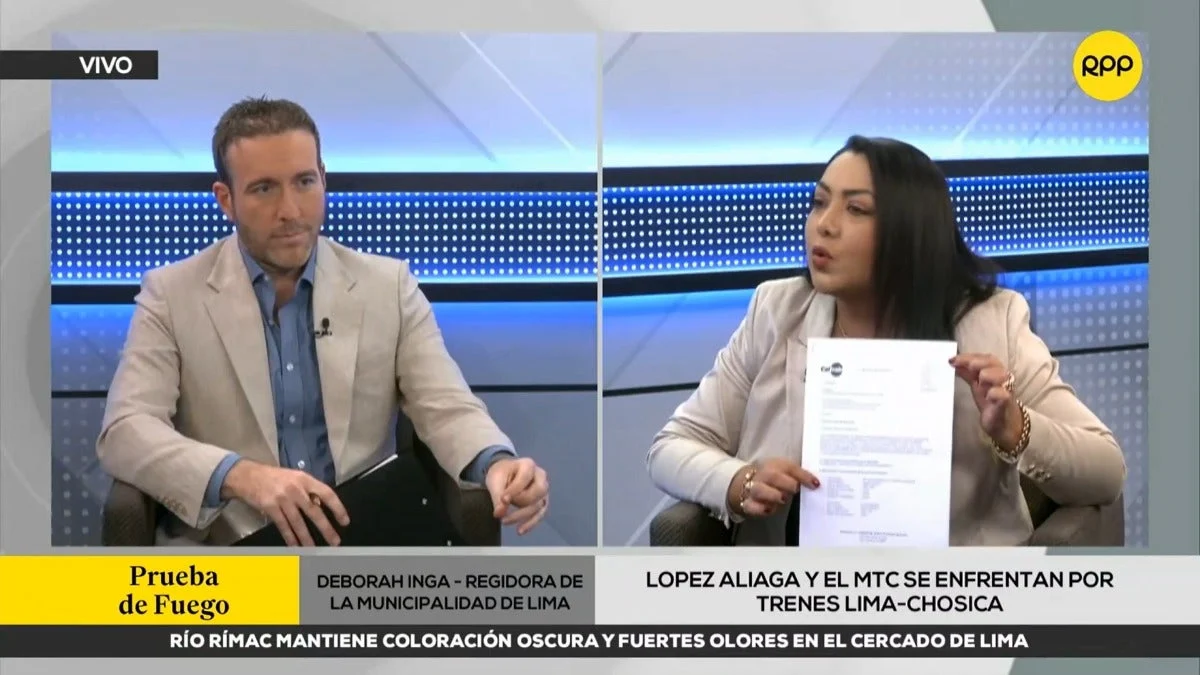
In a significant development within the Peruvian legal and political landscape, the judiciary has formally rejected a habeas corpus petition filed by Senator Fernando Rospigliosi. The legislator, a prominent figure in the opposition, sought to overturn a previous conviction for aggravated defamation against Delia Espinoza, the former Nation’s Prosecutor and current Dean of the Lima Bar Association (CAL).
The ruling, issued by the Fifth Constitutional Court of Lima, marks a critical juncture in a case that highlights the ongoing tension between political discourse, freedom of expression, and the legal protections afforded to public officials. Despite the rejection of this specific constitutional challenge, the underlying legal battle remains active, as both parties continue to pursue appeals regarding the initial sentence of nine months of suspended imprisonment.
The Core Dispute: Defamation vs. Political Criticism
The conflict stems from a series of statements made by Fernando Rospigliosi on social media platforms. The senator, known for his acerbic critiques of the justice system and political establishment, publicly labeled Delia Espinoza as an "ally of terrorism and informal economies."
For Espinoza, these accusations transcended the boundaries of legitimate political criticism and constituted a direct attack on her professional integrity and personal honor. The legal action initiated by the former Prosecutor centered on the premise that such labels were not merely expressions of opinion but unfounded assertions that caused verifiable damage to her reputation.
In April, Judge Norma Carbajal, sitting as a Supreme Judge, handed down a sentence of nine months of suspended imprisonment against Rospigliosi. This decision sent shockwaves through the legislative branch, sparking a debate regarding the judicialization of political debate and the extent to which legislators can use their platforms to disparage public officials.
Chronology of Legal Maneuvering
The trajectory of this case illustrates the complexities of the Peruvian judicial system. Below is the sequence of events that has led to the current impasse:
- Initial Allegations: Senator Rospigliosi uses social media to characterize Delia Espinoza with terms linking her to criminal networks and extremist ideologies.
- The Lawsuit: Delia Espinoza files a formal complaint for aggravated defamation, arguing that the senator’s claims were malicious and lacked any evidentiary basis.
- The First Instance Ruling (April): Judge Norma Carbajal finds Rospigliosi guilty, imposing a nine-month suspended prison sentence.
- The Appeal: Both Rospigliosi and Espinoza file appeals, with the former seeking an acquittal and the latter seeking a more rigorous sentence.
- The Habeas Corpus Petition: Rospigliosi’s defense team files a constitutional habeas corpus action, arguing that his right to due process was violated and that the court erred in treating the case as a common crime rather than a matter of political immunity.
- The Constitutional Rejection (Current): Judge Jorge Ramírez of the Fifth Constitutional Court of Lima declares the habeas corpus petition "improcedente" (inadmissible).
Legal Analysis: Why the Habeas Corpus Failed
The decision by Judge Jorge Ramírez is rooted in a fundamental procedural principle of Peruvian law: the requirement of "firmness" (firmeza).
In his resolution, Judge Ramírez articulated that the constitutional court could not intervene in the case because the conviction against Rospigliosi has not yet reached a state of "firmness." A sentence is considered firm only when it has exhausted all ordinary levels of appeal and review.
Because both Rospigliosi and Espinoza have pending appeals before higher judicial bodies, the constitutional challenge is premature. The judiciary maintains that the habeas corpus mechanism is an extraordinary remedy intended to protect against clear, definitive constitutional violations, not a tool to bypass ongoing appellate processes. By ruling as he did, Judge Ramírez essentially directed the senator’s defense to exhaust the ordinary appellate route before seeking constitutional relief.
Perspectives and Official Responses
The Position of the Defense
Rospigliosi’s legal team has maintained a consistent narrative throughout the proceedings. They argue that the senator’s comments were made in the context of his legislative duties and oversight role. According to his lawyers, the judiciary’s decision to criminalize these statements constitutes an "error in legal classification," suggesting that the court treated a political dispute as if it were a common criminal matter. The defense argues that this creates a chilling effect on the oversight role of the Congress.
The Position of the Plaintiff
Delia Espinoza has framed the case as a matter of institutional dignity. As the former Nation’s Prosecutor and a high-ranking member of the legal community, she contends that public figures—even those with parliamentary immunity—are not exempt from the laws that protect citizens from defamatory lies. Her legal team argues that the evidence of defamation is overwhelming and that the senator’s attempts to use constitutional mechanisms are merely delaying tactics to avoid the consequences of his rhetoric.
Broader Implications for Peruvian Democracy
The Judicialization of Politics
This case serves as a microcosm of a broader phenomenon in Peru: the increasing tendency of political actors to resolve their differences in the courtroom. When political discourse is heavily criminalized, the space for legitimate, albeit sharp, debate shrinks. Critics of the ruling argue that it could set a precedent where judicial actors become the arbiters of political truth, potentially limiting the accountability of the judiciary itself, as members of the legislature may become too fearful of litigation to conduct oversight.
Parliamentary Immunity vs. Judicial Accountability
The case also reignites the debate over the scope of parliamentary immunity. While immunity is designed to protect legislators from persecution for their votes and opinions, it is not an absolute shield for criminal acts. The judiciary’s persistence in this case signals a shift toward holding legislators strictly accountable for their conduct outside of the legislative chamber, or even within it, if the language crosses the threshold into actionable defamation.
The Role of the Constitutional Court
With the defense signaling that they intend to appeal the recent ruling and continue the fight, it is highly likely that this case will eventually reach the Constitutional Tribunal. This will force the nation’s highest constitutional body to define the boundary between "protected political expression" and "aggravated defamation." The court’s eventual verdict will be a landmark ruling that will likely define the parameters of political speech in Peru for years to come.
Supporting Data: Understanding Defamation Laws in Peru
Under the Peruvian Penal Code, defamation (difamación) is defined as the act of attributing to a person, before several people, a fact, quality, or conduct that could harm their honor or reputation. The "aggravated" status arises when the defamation is committed through social media or other mass communication outlets, as the potential reach of the injury is magnified.
- Penalty Range: Generally, aggravated defamation carries a suspended sentence or fines, though in extreme cases, it can result in more restrictive measures.
- The "Suspended" Sentence: A suspended sentence means the individual does not serve time in a correctional facility, provided they comply with specific rules of conduct imposed by the court (such as appearing regularly to sign a log, paying restitution, or refraining from repeating the offense).
- Appellate Process: The Peruvian legal system provides for at least two levels of review before a case is considered "firm." The involvement of the Constitutional Court represents a third, supreme layer of review, reserved strictly for issues where constitutional rights are alleged to have been disregarded by lower courts.
Conclusion
The rejection of Senator Rospigliosi’s habeas corpus petition is a procedural victory for the integrity of the judicial process, reinforcing the principle that ordinary appeals must be exhausted before constitutional courts intervene. However, the case is far from over.
As the appeals proceed, the nation will be watching closely. The outcome will not only determine the personal fate of Senator Rospigliosi and the reputation of Delia Espinoza but will also provide a definitive answer to the question of whether political labels—regardless of their intensity—should be treated as criminal offenses or as the rough-and-tumble reality of a polarized democratic society.
Until the higher courts deliver their final ruling, the case remains a potent reminder of the fragility of institutional relations in Peru and the enduring power of the judiciary to challenge even the most influential political voices.