Executive Summary: A Race Against Time for Peru’s Road Network
As meteorological forecasts warn of the impending impact of the El Niño phenomenon, the Organismo Supervisor de la Inversión en Infraestructura de Transporte de Uso Público (Ositrán) has sounded a stark alarm regarding the safety of Peru’s national road network. With scores of structures across the country showing signs of advanced decay, the regulatory body has intensified its preventive supervision, explicitly calling upon the Ministry of Transport and Communications (MTC) to authorize and execute urgent interventions on more than 80 critical bridges.
These structures, many of which have surpassed four decades of service, represent a significant vulnerability in the country’s logistical backbone. Despite years of repeated warnings from regulatory authorities, the pace of maintenance and replacement has been alarmingly slow, leaving key transportation corridors exposed to potential catastrophic failure during the extreme weather conditions characteristic of an El Niño event.
The Chronology of Neglect: A Long-Standing Warning
The current crisis is not a sudden development but the culmination of years of administrative inertia. According to Verónica Zambrano, President of Ositrán, the regulatory body has been documenting and flagging the deteriorating state of these bridges since 2018.
- 2018: Initial assessments by Ositrán identify 99 bridges within concessioned roads that require major structural interventions to ensure safety.
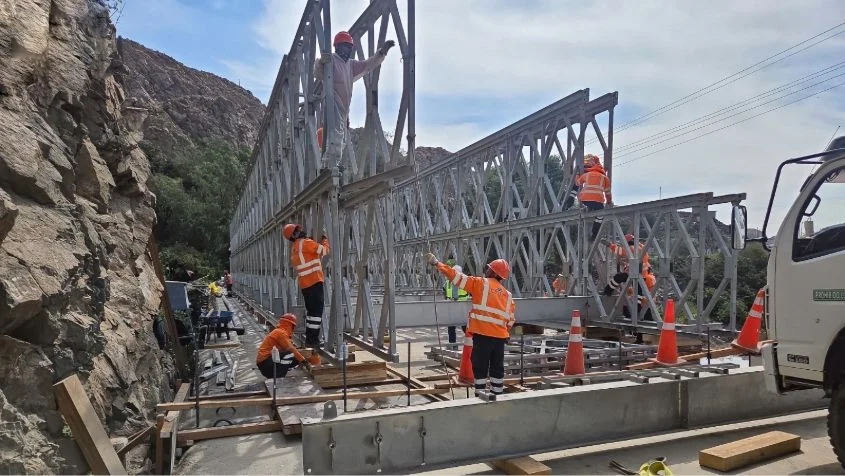
- 2017–2023: Following the devastation of the 2017 "Coastal El Niño," several Bailey bridges—temporary modular structures—were installed as emergency stopgaps. Many of these, intended for short-term use, remain in place today, years past their intended service life, without having been replaced by permanent, resilient infrastructure.
- 2024–2026: Continued reports and technical inspections reinforce the findings that the majority of these 99 identified sites remain in a state of critical or near-critical disrepair. Despite the gravity of the technical reports, only six of the 99 identified structures have undergone significant remedial work.
This failure to act transforms a manageable maintenance problem into a systemic threat to national connectivity and public safety.

Supporting Data: An Aging Infrastructure Under Pressure
The technical crux of the issue lies in the age and structural integrity of the bridges in question. A significant portion of the identified infrastructure has exceeded 40 years of service. While Ositrán clarifies that age alone does not condemn a bridge, it serves as a critical indicator of the need for specialized, proactive maintenance.
The Breakdown of the Current Status:
- Total Identified Bridges: 99
- Successfully Intervened: 6
- Pending Urgent Action: 80+
- Core Risk Factors: Lack of specialized maintenance, advanced structural aging, and the emergence of "hidden" damage that remains undetected until failure occurs.
Zambrano highlights that the risk is not merely hypothetical. The collapse of the Chancay Bridge serves as a haunting precedent. In that instance, the bridge appeared structurally sound to the casual observer, but it had far exceeded its useful life and was structurally compromised. When environmental stress hit, the failure was total and immediate. This, according to regulators, is the scenario they are desperate to avoid across the wider national network.
Official Responses and Jurisdictional Clarification
A central point of contention in this ongoing debate is the question of responsibility. Because these bridges are located within concessioned roads—managed by private entities—there is often public confusion regarding who is tasked with major structural repairs.
The Role of the MTC vs. Concessionaires
Verónica Zambrano has been emphatic in delineating the responsibilities:

- The MTC’s Mandate: Under the specific terms of the concession contracts, major structural interventions and the replacement of bridges on the National Road Network are the explicit responsibility of the "concedente"—the Ministry of Transport and Communications.
- The Concessionaire’s Role: While private firms manage the daily maintenance and operational safety of the highways, they are not contractually obligated to perform the "major interventions" required for these aging bridges.
- The Communication Gap: Ositrán asserts that it has maintained a constant flow of alerts to the MTC, urging the ministry to prioritize these works within their annual budget and execution plans. The regulatory body argues that while the bridges "cross" concessioned paths, the investment must come from the state to ensure the continuity of the national network.
Implications: The High Cost of Inaction
The potential failure of these structures poses risks that extend far beyond simple traffic delays. The implications for the Peruvian economy and public welfare are profound.
1. Supply Chain Disruption
Peru’s economy relies heavily on its road network to move agricultural goods, minerals, and essential supplies from the highlands and the interior to the coastal ports. A single bridge failure can isolate entire provinces, causing massive economic losses for the export sector and driving up inflation for basic consumer goods due to increased transportation costs.
2. Public Safety and Emergency Response
During an El Niño event, roads are the arteries for emergency aid, medical supplies, and rescue teams. If critical bridges collapse, the government’s ability to respond to flooding and landslides will be severely hampered, effectively trapping vulnerable populations in isolated areas.
3. The "Hidden Risk" Factor
Beyond the 80+ bridges already identified as critical, Ositrán has begun a broader assessment of structures that currently show no visible damage. These bridges are being evaluated for their resilience against extreme hydraulic stress—specifically, the capacity to withstand the surging river currents and flash floods that often accompany intense El Niño rains. The goal is to move from a reactive posture—fixing what is broken—to a proactive one, reinforcing structures before the damage becomes irreversible.

Conclusion: A Call for Political Will
The message from Ositrán is clear: the technical data is irrefutable, the locations are identified, and the risk is documented. What remains missing is the consistent, large-scale political and budgetary commitment from the central government to execute these works.
As the country faces the uncertainty of the next climatic cycle, the state of the bridges is more than a technical issue—it is a matter of national security. The government stands at a crossroads: it can continue to delay investment in the hope that these aging structures endure another season, or it can mobilize the necessary resources to ensure that the vital arteries of Peru’s infrastructure are robust enough to withstand the challenges of the future.
The time for planning and deliberation has passed; the urgency of the current climate reality demands an immediate, coordinated, and aggressive intervention strategy by the Ministry of Transport and Communications. Anything less is a gamble with the safety of thousands of citizens and the economic stability of the nation.