Executive Summary: A Bold Push for Legislative Reform
In a decisive move to address the dual challenges of infrastructural vulnerability and national security, the Peruvian government, led by President Keiko Fujimori and Council of Ministers President Luis Galarreta, has formally requested that Congress delegate legislative powers for a period of 120 days. This comprehensive initiative, comprising 66 distinct legislative requests, aims to streamline state operations, bolster national defense, and provide a rapid, efficient response to environmental emergencies.
The proposal marks a significant pivot in domestic policy, moving toward a "results-oriented" governance model that emphasizes flexibility in procurement and emergency management. With the looming threat of climate phenomena and the persistent challenge of organized crime, the administration argues that the current legal framework is insufficient to meet the demands of modern governance.
The Core Pillars of the Legislative Proposal
The government’s request is structured around eight thematic pillars designed to revitalize the economy, protect vulnerable populations, and restore order.
1. Expanding "Obras por Impuestos" (Works for Taxes)
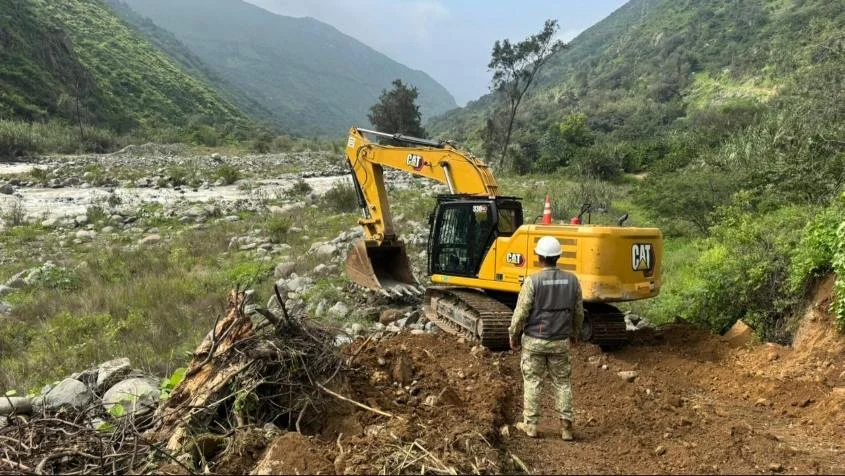
A cornerstone of the proposal is the expansion of Law No. 29230, better known as the "Works for Taxes" mechanism. The government intends to permit private firms to finance civil defense infrastructure directly through tax credits. This move is specifically designed to bypass traditional bureaucratic bottlenecks that often delay the construction of flood defenses, retaining walls, and seismic retrofitting in high-risk zones.
Furthermore, the reform targets the reconstruction of rural housing. By allowing private sector participation in financing, the administration hopes to accelerate the delivery of safe, disaster-resilient homes to populations frequently displaced by extreme weather.
2. Streamlining Emergency IOARR
The proposal introduces a simplified procedural framework for the execution of Inversiones de Optimización, Ampliación Marginal, Rehabilitación y Reposición (IOARR). These investments are critical for the immediate restoration of public services following a disaster. Under the new proposal, the time-consuming administrative phases of these projects would be compressed, allowing for the rapid deployment of resources to repair damaged bridges, roads, and water supply systems before a secondary crisis emerges.

3. Modernizing Human Capital and Aid Delivery
The administration seeks to empower the National Institute of Civil Defense (INDECI) to act with greater autonomy. Under the proposed reforms, INDECI would be authorized to distribute humanitarian aid directly to affected populations during the first 15 days of an emergency. This bypasses the often-cluttered inter-agency coordination channels that have historically hindered aid reaching the most vulnerable in remote areas.
Chronology of the Legislative Push
The journey toward this legislative request has been shaped by recent climate instability and a growing public demand for security:
- Pre-2026: Peru faced recurring challenges with El Niño phenomena, which exposed deep-seated inefficiencies in the state’s ability to respond to infrastructure failure.
- Early 2026: The administration identified a lack of "speed-to-market" for civil defense projects as a primary driver of the housing crisis in rural provinces.
- August 2026: The Council of Ministers formally reviews and approves the 66-point legislative agenda.
- Current Date: The proposal is submitted to Congress. A 120-day window is requested, starting from the potential date of approval, to draft and implement the necessary decrees.
Addressing the Security Crisis
The second major component of the legislative agenda is an aggressive strategy to curb organized crime. Recognizing that traditional policing has struggled to contain modern criminal syndicates, the government has proposed a "hard-line" approach.
Defining Criminality
The legislation seeks to establish a legal framework that classifies specific organized criminal groups as "terrorist organizations." This reclassification is not merely semantic; it triggers a different set of prosecutorial tools, including the ability to freeze assets more rapidly and apply stricter sentencing guidelines under existing anti-terrorism laws.
Military-Police Synergy
In a move that has sparked significant debate, the proposal outlines the intervention of the Armed Forces in the security of external prison perimeters and as an operational support unit for the National Police (PNP). The government maintains that this is an "exceptional and temporary" measure designed to secure the borders of penal institutions and allow the PNP to focus on urban patrol and intelligence gathering.
Telecom Control in Prisons
Recognizing that many major crimes are orchestrated from within prison walls via illicit mobile phones, the government is proposing:

- Stricter Penalties for Carriers: Telecom companies will face heavy sanctions if they fail to block signals effectively or if they allow illicit service to continue in penitentiaries.
- Advanced Geolocalization: New mandates for the tracking of mobile devices used in illicit activities, including the ability to isolate signals in specific geographical sectors of high-crime areas.
Official Responses and Political Implications
Council of Ministers President Luis Galarreta has been the primary advocate for this package. During a press conference, he emphasized that the goal is to "put order, not only in the streets but order in the State."
"We are not seeking power for the sake of power," Galarreta stated. "We are seeking the tools necessary to fulfill our duty to the citizens. The current bureaucratic state is a luxury we cannot afford when people are losing their homes to floods or when families are terrorized by extortionists."
However, the opposition in Congress has already begun to raise questions regarding the scope of the "120-day" window. Critics argue that delegating such broad powers—spanning from tax policy to military deployment—could bypass the essential checks and balances provided by the legislative branch.
Supporting Data and Economic Context
The economic logic behind these reforms is rooted in the "cost of inaction." Data from previous disaster cycles suggests that for every dollar spent on proactive infrastructure maintenance and civil defense, the state saves upwards of five dollars in emergency reconstruction and social welfare spending.
Regarding the housing sector, the government is prioritizing the optimization of the Bono Familiar Habitacional and the Bono de Arrendamiento de Vivienda para Emergencias. By digitizing and simplifying the application process, the Ministry of Housing expects to reduce the waiting time for emergency rent support from months to weeks.
Implications for the Future of Governance
If granted, this legislative package could transform the administrative landscape of Peru. The implications are twofold:

- Administrative Efficiency: The government is signaling a shift toward a more agile, project-based administrative culture. By integrating the private sector more deeply into the construction of public infrastructure, the government hopes to create a more resilient public works portfolio.
- State-Citizen Relationship: By prioritizing the security of the streets and the reconstruction of homes, the administration is attempting to restore public trust in the central government. The success of these measures will likely define the political trajectory of the Fujimori administration for the remainder of its term.
The Role of Technology
A subtle but vital part of this initiative is the investment in state digitalization. The proposal explicitly includes provisions for "administrative simplification," which aims to reduce the number of physical documents required for state processes. This "Zero Paper" initiative is intended to work in tandem with the infrastructure reforms, ensuring that the speed at which a project is built is matched by the speed at which it is approved and funded.
Conclusion
As the proposal sits before the Peruvian Congress, the nation awaits a decision that will determine whether the Executive branch will be granted the authority to bypass the traditional, slow-moving gears of the legislative process.
The focus on "Obras por Impuestos" as a vehicle for national reconstruction, coupled with a firm stance on organized crime, presents a clear vision of an interventionist, proactive state. Whether this strategy will succeed in providing the stability and infrastructure the country requires remains to be seen, but the government’s message is clear: the status quo is no longer an option. The coming months will be a critical test of political consensus-building in a country eager for progress and desperate for security.