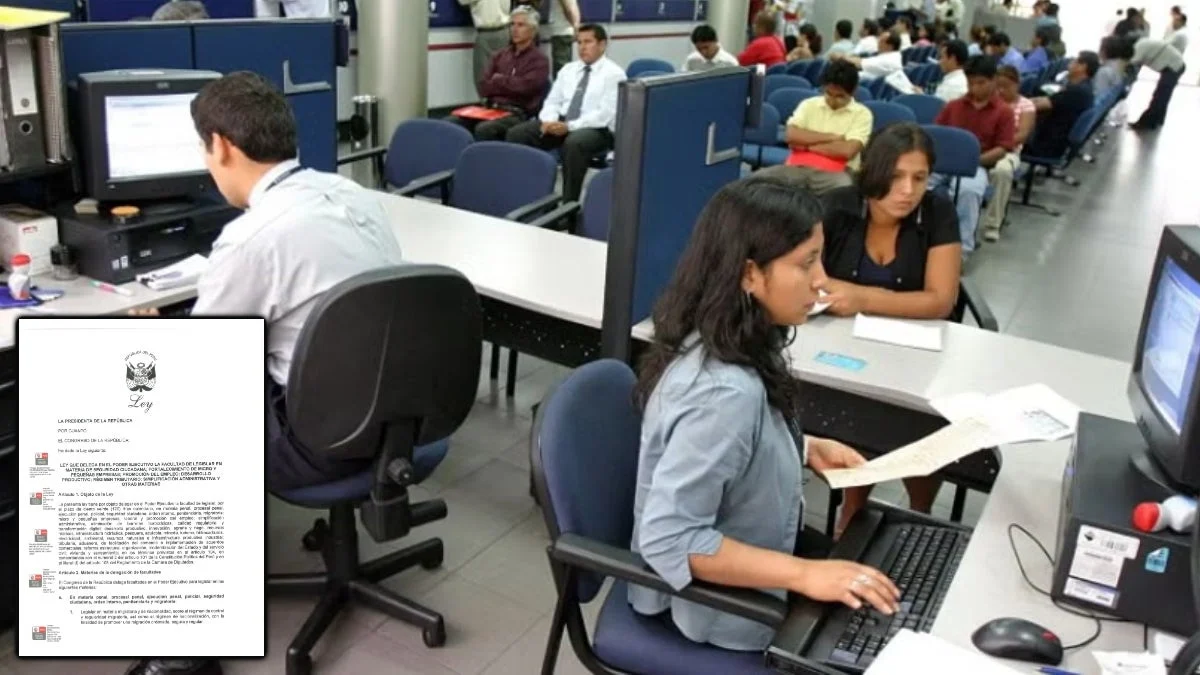
In a decisive move to overhaul the structure of the Peruvian state, the administration of President Keiko Fujimori has officially submitted a formal request for legislative faculties to the National Congress. At the heart of this proposal lies a controversial and ambitious plan to downsize the public sector workforce through a series of "voluntary resignation incentives." The executive branch aims to modernize the state, eliminate bureaucratic redundancies, and consolidate a fragmented labor landscape, but the proposal has already ignited a firestorm of debate regarding the potential for "disguised layoffs."
The Core Proposal: Reorganizing the State’s Human Capital
The government’s request, framed under the broader umbrella of structural reform and modernization, seeks to provide the executive with the authority to offer financial compensation packages to public servants who choose to exit their positions voluntarily. This mechanism is intended to streamline the administrative apparatus, which currently suffers from a complex overlapping of multiple labor regimes.
According to the official proposal, the calculation for this incentive would mirror the indemnification standards applied in the private sector under Legislative Decree 728. The government has explicitly stated that the delegation of power requested from Congress does not, under any circumstances, authorize the mass dismissal or arbitrary firing of workers who enjoy established legal protections. Instead, the focus is on incentivizing those who may be considering alternative career paths or who fall under administrative categories deemed redundant in the government’s vision for a leaner, more efficient state.
The Mechanics of the Incentive
The proposed formula for compensation is as follows:
- The Calculation: Eligible employees would receive a payment equivalent to 1.5 months of salary for every full year of service.
- The Cap: There is a strict ceiling on this benefit, limiting the total payout to a maximum of 12 remunerations, regardless of the years of service accumulated beyond that point.
To illustrate the impact, a public servant with a monthly salary of S/4,000 and five years of service would be entitled to a payout of S/30,000 (7.5 remunerations). Conversely, a long-serving employee with 10 years of service would reach the cap of 12 remunerations, resulting in a total severance of S/48,000.
Chronology of the Legislative Push
The path to this proposal has been marked by a transition from internal policy drafting to public scrutiny:
- Early Drafting (The Internal Phase): The initial concept was drafted as part of a wider administrative modernization plan. Reports surfaced weeks prior, suggesting that the executive was looking into reducing the public payroll to address long-standing budgetary pressures.
- Public Disclosure: A leaked draft of the project confirmed the government’s intent to link financial incentives to the "voluntary" departure of workers, triggering early criticism from labor unions and legal experts.
- Formal Submission: The Executive branch officially transmitted the request for legislative faculties to Congress, confirming that the incentive program remains a cornerstone of their administrative reform agenda.
- Legislative Review (Ongoing): The proposal is currently under review by relevant congressional committees, where the technical viability and the constitutional legitimacy of the voluntary exit scheme are being debated.
A Fragmented Labor Landscape: The "Why" Behind the Reform
To understand the government’s urgency, one must look at the current state of the Peruvian civil service. Public employees in Peru operate under a labyrinthine system of different legal frameworks, including:
- Legislative Decree 276: The traditional civil service regime.
- Legislative Decree 728: The private sector regime often applied to specific public entities.
- Legislative Decree 1057 (CAS): A temporary contracting regime that has become a permanent fixture for many.
- Law 30057: The modern Law of the Civil Service (Servir), which the government intends to promote as the standard.
The existence of these disparate regimes often means that two individuals working in the same department, performing similar functions, may have vastly different benefits, job security, and salary structures. By offering a "golden handshake," the government hopes to transition the public sector toward a more unified, merit-based system, effectively "sincering" the number of staff required to perform essential government functions.
Supporting Data: Fiscal Projections and Economic Impact
The Ministry of Economy and Finance has conducted a fiscal impact study based on two distinct scenarios to gauge the feasibility of the program. The government estimates that between 2,500 and 10,000 public servants could potentially opt for this voluntary exit.
Fiscal Scenarios:
- The Conservative Scenario (2,500 workers): This would involve an immediate fiscal cost of S/220.1 million in compensation payments. However, the government projects a cumulative saving in personnel expenditure of S/291.9 million over the subsequent three years.
- The Aggressive Scenario (10,000 workers): The upfront cost would climb to S/886.9 million. In exchange, the state anticipates a significant long-term reduction in the payroll burden, estimating cumulative savings of S/1.18 billion over a three-year period.
These figures indicate that the government views the program not as an expense, but as a strategic investment to reduce the long-term operational costs of the state apparatus.
Official Responses and Expert Analysis
The proposal has drawn a spectrum of reactions from political analysts, labor lawyers, and government officials.
The Government’s Stance
The Executive maintains that this is a purely voluntary, incentive-based program. In their expository memorandum, they emphasize that the modernization of the state requires a flexible approach to human resources. They argue that by providing a dignified exit for those who wish to leave, the government can clear the way for more efficient management and the eventual implementation of a unified meritocracy.
The Labor Perspective
The legal community has expressed significant caution. Willman Meléndez, a prominent labor law professor, has highlighted the critical importance of the term "voluntary."
"The fundamental question is whether this will be a truly free negotiation or if we are looking at ‘disguised layoffs’," Meléndez stated. He pointed to the historical precedent of the 1990s, when the Peruvian state underwent massive restructuring. During that period, many public workers felt coerced into accepting early retirement or resignation packages due to fears of imminent termination or workplace harassment. Meléndez warned that unless the government establishes strict safeguards—such as adequate time for workers to consult with legal counsel and transparent terms—the process could lead to a wave of litigation that would ultimately negate the fiscal savings the state hopes to achieve.
Implications for the Future of the State
The implications of this legislative request are twofold: structural and political.
Structural Implications
If passed, this law would mark the most significant reduction of the public workforce in decades. While the modernization of the state is a goal shared by many economists, the success of the program will depend entirely on its implementation. If the government targets the wrong sectors—such as essential technical staff—it could lead to a "brain drain" that paralyzes public service delivery. Conversely, if successful, it could provide the breathing room necessary to fully implement the modern civil service reforms that have been stalled for years.
Political Implications
For the Fujimori administration, this is a litmus test of their ability to negotiate with a fractured Congress. By framing this as a "reform" rather than "austerity," they are attempting to build a narrative of efficiency. However, the proposal risks alienating the powerful public sector unions, which remain a significant political force in Peru.
Furthermore, the lack of detail regarding the procedural aspects of the payment and the specific selection criteria for those eligible to apply remains a point of contention. As the debate moves forward, the government will likely face intense pressure to provide more granular detail on how they plan to ensure the process remains truly voluntary and protected from the administrative abuses that characterized previous decades.
Conclusion
As the Peruvian Congress begins its deliberations, the nation watches closely. The government’s proposal to incentivize the voluntary departure of up to 10,000 state workers is a bold attempt to resolve a long-standing crisis of administrative inefficiency. While the fiscal logic is sound, the human and legal risks are substantial. Whether this move leads to a modern, meritocratic state or creates a new chapter of labor conflict depends on the safeguards that lawmakers insist upon in the coming weeks. For now, the administration’s request for faculties serves as a clear signal: the era of the status quo in the Peruvian public sector is rapidly coming to an end.