Introduction: A Government in Search of Authority
Weeks after the inauguration of President Keiko Fujimori on July 28, the central pillar of the administration’s governance strategy—a request for special legislative powers—remains mired in bureaucratic limbo and political hesitation. Despite the administration’s initial pledge to tackle "urgent challenges" such as the impending El Niño phenomenon and the escalating crisis of citizen insecurity, the executive branch has yet to formalize its submission to Congress.
The delay, characterized by conflicting timelines and shifting priorities, has sparked mounting concerns among the opposition and political analysts. While ministers emphasize the need for "due diligence" to ensure the bill’s success, the lack of a clear roadmap has fueled public speculation. This article analyzes the status of the executive’s legislative agenda, the internal tensions within the Cabinet, and the broader political implications of this critical delay.
1. The Genesis of the Legislative Request
During her maiden speech to the nation on July 28, President Keiko Fujimori outlined an ambitious roadmap, signaling that her administration would seek delegated legislative powers from Parliament. The objective was explicitly stated: to bypass the slow pace of standard legislative processes to address immediate threats to the nation.
By July 29, during the inaugural session of the Council of Ministers, the petition for these powers occupied the primary position on the agenda. It was a clear signal of intent. However, the momentum was quickly disrupted when a draft of the bill was leaked to the media. The contents of the document, which reportedly included controversial proposals regarding the reduction of public holidays and the "flexibilization" of labor rights, triggered an immediate backlash. Opposition figures, including legislator Indira Huilca, were quick to voice their dissent, warning that the Congress would not provide a "blank check" to the new administration.
2. Chronology of Conflicting Estimates
One of the most striking aspects of this delay has been the inability of the executive branch to provide a consistent timeline for the presentation of the bill. The lack of coordination has led to a series of contradictory public statements:
- August 1: Minister of Agricultural Development and Irrigation, Marco Vinelli, stated that the project was in a final "review phase" and would be ready within the following week (August 3–9).
- August 8: President Keiko Fujimori provided a revised estimate, suggesting the project would be presented the following week (August 10–16), citing bureaucratic delays and the need to finalize the appointment of key vice-ministers.
- August 15: Minister of Justice, Ernesto Álvarez, offered a "pessimistic" estimate, suggesting the proposal would not reach Congress until "mid-next week."
- August 17: Minister of Defense, Rafael Belaúnde, offered a more open-ended timeline, stating it would be ready in "less than a month," while insisting that the government must act with a sense of urgency, albeit without rushing.
This disjointed messaging has left observers questioning whether the delay is truly a matter of "fine-tuning" the technical aspects of the law or a result of deep-seated internal disagreements within the Cabinet regarding the scope of the powers requested.
3. Supporting Data and Ministerial Perspectives
In recent interviews, key Cabinet members have attempted to reassure the public that the legislative package is undergoing rigorous refinement. Their accounts, however, reveal a complex negotiation process.
The Defense Sector: A New Legal Framework
Minister of Defense Rafael Belaúnde has been vocal about expanding the scope of the request to include more aggressive anti-criminality measures. Belaúnde noted that his sector is pushing for a broader legal framework that would allow the Armed Forces to support the National Police in "sweeping operations" in high-risk zones.
"If I detain an undocumented foreign citizen today, I have 24 hours to deport them, which is materially impossible," Belaúnde explained. He argues that without a revamped legal framework, the military’s role in public safety remains largely decorative. His focus is on ensuring the bill is "complete" and "well-made" to avoid a legislative defeat in Congress.
The Labor and Economy Nexus
Minister of Labor Juan Sheput faces the difficult task of managing the public fallout from the leaked draft. While acknowledging that labor flexibilization is a sensitive issue, he insists that the government’s priority remains the El Niño phenomenon and security.
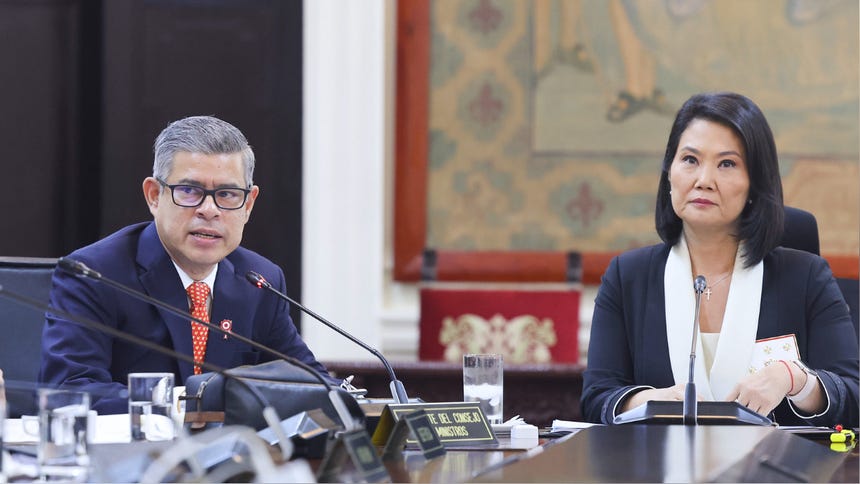
Sheput maintains that the goal is not to strip away existing rights, but to integrate the 80% of the informal workforce into a system that provides social security, pension access, and other benefits. He admitted, however, that if the government decides to push for these reforms, it must first engage in a robust political campaign to "sensitize" opposition benches.
Meanwhile, Minister of Economy Elmer Cuba has confirmed that his ministry has finalized its input. Cuba emphasized that the Ministry of Economy and Finance (MEF) is focused on formalization and economic support to mitigate the impact of natural disasters. "We have sent all our suggestions, and we are ready for the other sectors to finish their parts," Cuba stated, deferring to the President of the Council of Ministers, Luis Galarreta, for the final announcement.
4. Official Responses and the "Urgency" Paradox
The administration’s defense—that they are acting with more celerity than previous governments—is increasingly met with skepticism. Ministers argue that previous administrations spent 45 to 150 days preparing such requests. However, the Fujimori government campaigned on the promise of a "different" way of governing, one characterized by efficiency and decisive action.
The primary conflict currently plaguing the Cabinet is the tension between comprehensive planning and political viability. As Minister Belaúnde noted, "Of what use is it to present it if it is rejected?" This fear of rejection is likely the primary driver behind the delay. The government is essentially attempting to curate a legislative package that is broad enough to satisfy its agenda but narrow enough to avoid a complete collapse in the opposition-led Congress.
5. Strategic Implications: The Path Ahead
The implications of this delay extend far beyond mere bureaucratic inefficiency.
Political Capital and Credibility
The first hundred days of a government are traditionally considered the "honeymoon phase," where a president has the most political capital to implement structural changes. By spending the first three weeks of her term in a state of preparation and internal deliberation, President Fujimori risks squandering this window of opportunity. The perception of indecision could embolden opposition factions, making the eventual negotiation process even more difficult.
The Shadow of El Niño
With the El Niño phenomenon looming, the urgency cited by the ministers is not merely rhetorical. Climate experts warn that infrastructure preparation must begin months in advance. Any delay in granting the executive the power to bypass standard procurement laws could have direct, tangible consequences on the country’s ability to respond to future floods and landslides.
Legislative Hurdles
Even if the project is submitted, the government faces a fragmented Congress. Success will depend on the administration’s ability to form alliances, particularly with centrist blocs. The controversy surrounding labor laws, which the government has not yet officially abandoned, remains a potential "poison pill" that could derail the entire request.
Conclusion: A Critical Juncture
The Fujimori administration finds itself at a crossroads. The promise of "doing things right" by ensuring a comprehensive and technically sound legislative bill is colliding with the reality of a political environment that demands immediate results.
As the government continues to refine its draft, the public and the legislative opposition remain in a state of watchful waiting. The coming weeks will be decisive. Whether the administration can successfully translate its legislative ambitions into a concrete, approved reality, or whether it will succumb to the same bureaucratic traps that have historically hampered Peruvian governance, remains to be seen. The stakes, ranging from national security to the economic inclusion of millions, could not be higher. The government must now move from the phase of "internal review" to the phase of "political action," or risk losing the momentum it so desperately needs to define its mandate.