Executive Summary: Transforming the Salvadoran Commute
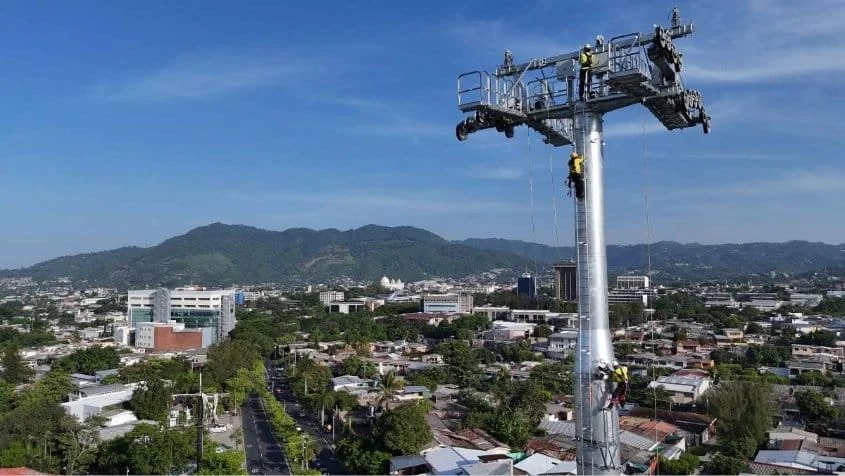
In a strategic move to reshape the urban landscape of Central America, the government of El Salvador, led by President Nayib Bukele, is making significant strides in the construction of its ambitious "Metrocable" project. The recent successful installation of the fourth support tower marks a pivotal milestone in a multi-million-dollar infrastructure initiative designed to bridge the geographic and socioeconomic divide between the municipality of Mejicanos and the heart of San Salvador.
With a total investment exceeding US$ 100 million, the project is not merely an engineering endeavor but a social intervention. By providing an efficient, high-capacity aerial transit system, the government aims to serve approximately 200,000 citizens, slashing daily travel times by up to 45 minutes. As the project nears its 35% completion mark, it stands as a testament to the administration’s commitment to modernizing public transport and reducing the nation’s heavy reliance on traditional, congestion-prone road networks.
Chronology and Project Evolution
The journey toward the Metrocable began with a comprehensive analysis of the topographically complex terrain surrounding the Salvadoran capital. Recognizing that traditional road expansion was hindered by dense urban settlements and challenging hills, the Ministry of Public Works (MOP) opted for a cable-propelled transit system.
- Initial Planning (2023-2024): Preliminary studies identified the corridor between Mejicanos—the fifth most populous municipality in the country—and San Salvador as the primary bottleneck for thousands of commuters.
- The Launch (2025): Official construction commenced, with site clearance and geotechnical testing for the 23 planned steel towers.
- The Fourth Tower Milestone (July 2026): The successful erection of the fourth tower serves as a visible affirmation of the project’s momentum. This phase confirms the structural integrity of the line’s design, which accounts for the region’s specific meteorological challenges, including high winds and heavy tropical rainfall.
- Completion Target (2027): With the framework of the towers currently rising, the project is on track to finalize its four stations and full line integration by 2027, transitioning from a construction site to a functional transit artery.
Supporting Data: Engineering and Capacity
The sheer scale of the Metrocable project is reflected in its technical specifications. The infrastructure is being engineered to withstand the unique environmental pressures of the San Salvador region, ensuring safety and reliability even during adverse weather conditions.

Key Technical and Operational Metrics:
- Structural Backbone: The system will feature 23 heavy-duty steel towers, each standing 34 meters (approximately 112 feet) tall, designed to provide stability for the suspended cabins.
- Capacity: Once fully operational, the system is projected to transport nearly 40,000 passengers per day, providing a consistent flow of transit that operates independently of road traffic.
- Time Efficiency: Perhaps the most significant metric for the average citizen is the travel time reduction. Currently, a commute between Mejicanos and downtown San Salvador can take over an hour depending on traffic conditions. The Metrocable will complete this same journey in approximately 15 minutes, offering a 45-minute savings per trip.
- Network Integration: The line is specifically designed to intersect with major hubs, including a path alongside the University of El Salvador—the nation’s primary public academic institution—and terminating at the newly renovated Centro Histórico, with direct access to the iconic Calle Rubén Darío.
Official Perspectives and Regional Context
President Nayib Bukele has been a vocal proponent of the project, framing it as a necessary evolution for modern Salvadoran cities. "The systems of cable-propelled transport were born as a solution to cities fractured by topography," Bukele stated. By looking toward successful regional precedents, such as the Metrocable in Medellín, Colombia, and the Mi Teleférico network in La Paz, Bolivia, El Salvador is adapting a proven Latin American model to its specific urban geography.
The Ministry of Public Works has emphasized that the project is built on the pillars of "operational safety and permanent maintenance." In an official communiqué, the Ministry noted that the selection of materials—from the high-tensile steel cables to the aerodynamic design of the passenger cabins—was prioritized to ensure that the service remains continuous throughout the year, regardless of seasonal shifts.
From a macroeconomic perspective, the US$ 100 million investment is viewed as an "urban equalizer." By connecting a densely populated residential area like Mejicanos with the economic and cultural pulse of the capital, the government is facilitating better access to jobs, education, and public services for thousands who were previously marginalized by the geographic barriers of the valley.

Implications: A New Era for Salvadoran Urbanism
The implications of the Metrocable extend far beyond the immediate benefit of a faster commute. The project signals a shift in the regional approach to urban planning, prioritizing verticality and efficiency over the horizontal sprawl that has characterized the growth of San Salvador for decades.
1. Environmental Impact
By moving thousands of passengers from buses and private cars into an electric-powered, cable-driven system, the city expects a measurable reduction in carbon emissions. This aligns with global trends toward sustainable urban mobility, reducing the city’s overall carbon footprint and alleviating the pressure on existing road infrastructure.
2. Socioeconomic Mobility
The connection to the University of El Salvador is particularly significant. Thousands of students who currently navigate a grueling commute will gain direct access to the campus, potentially increasing attendance and lowering the barrier to entry for higher education. For the workforce, the ability to reach the city center in 15 minutes creates a more flexible labor market, allowing residents of Mejicanos to access better-paying positions in the capital without the burden of long-distance transit.
3. Urban Rejuvenation
The terminus at the Centro Histórico is designed to breathe new life into the heart of the city. By funneling thousands of daily commuters directly into the downtown area, local businesses, markets, and cultural sites are likely to see an increase in foot traffic, fostering a more vibrant local economy. The recent renovations of the capital’s plazas and streets are intended to complement the Metrocable, creating a cohesive, modern transit ecosystem.

4. Setting a Precedent
If successful, the Metrocable project is likely to serve as a blueprint for other municipalities in El Salvador and neighboring Central American nations. It proves that even in countries with limited space and challenging mountainous terrain, high-capacity mass transit is not only possible but essential for sustainable growth.
Conclusion: Looking Toward 2027
As the fourth tower stands tall above the landscape, it serves as a tangible reminder of the government’s promise to its citizens. The transition from planning to construction, and now to structural completion, marks the Metrocable as the flagship infrastructure project of the current administration.
For the people of Mejicanos and the greater San Salvador area, the project represents a future where geography no longer dictates opportunity. By 2027, the skyline of the capital will be forever changed, not just by the presence of 23 steel towers, but by the movement of thousands of citizens traveling safely, efficiently, and rapidly above the congestion of the streets below. The Metrocable is, in essence, an investment in the time and quality of life of the Salvadoran people, setting a new standard for public infrastructure in the 21st century.