Executive Summary: A Call for Legislative Action
The Peruvian economy faces a critical juncture as the looming threat of the El Niño phenomenon converges with a stagnant industrial sector. Juan Carlos Requejo, the Minister of Production (Produce), has issued a stark warning: the current request for legislative faculties submitted by the Executive branch to the Peruvian Congress fails to address the specific vulnerabilities of micro and small enterprises (MYPES) in the fishing, aquaculture, and textile sectors.
As climate experts predict an intensification of El Niño’s impacts, the lack of a robust legislative framework to buffer these businesses could spell disaster for millions of livelihoods. Requejo, in a candid assessment, noted that while the current proposal is insufficient, there remains a window of opportunity to incorporate necessary protections before the bill is finalized. "The country needs to enter a mode of urgent reactivation," Requejo stated. "It is not a matter for tomorrow; it is a matter for yesterday."
Chronology of the Crisis: From Climate Alert to Legislative Standoff
The intersection of economic policy and climate adaptation has become a flashpoint in Peruvian politics.
- Early 2024: Scientific warnings regarding the strengthening of El Niño begin to influence market expectations, particularly in the coastal regions where fishing and agriculture are primary economic drivers.
- Mid-2024: The Executive branch formally requests the delegation of legislative powers from Congress, aiming to streamline economic regulations. However, observers note a glaring omission: no specific contingency plans for the MYPE sector, which represents the backbone of the Peruvian workforce.
- Late 2024 (Current): Minister Requejo voices his public disagreement with the scope of the request, urging lawmakers to pivot toward a more holistic approach that accounts for climate-driven economic disruptions. Meanwhile, the National Society of Industries (SNI) joins the chorus of concern, highlighting the paralysis of the textile industry due to unseasonably warm temperatures.
Supporting Data: The MYPE Landscape
To understand the gravity of the situation, one must look at the sheer scale of the MYPE sector in Peru. There are approximately 2.4 million micro and small enterprises currently operating in the country.
- The Regulatory Burden: Research indicates that over two-thirds of these businesses engage in activities that do not pose significant environmental risks. Yet, they are frequently hamstrung by complex bureaucratic requirements. Minister Requejo advocates for a "zero-procedure" model for these low-risk entities, arguing that businesses should not spend months waiting for automatic licenses.
- The Textile Stagnation: Data from the SNI reveals that a prolonged, unseasonably warm summer has severely disrupted the textile sector. With winter clothing inventories sitting idle in warehouses, thousands of small businesses are facing a liquidity crisis.
- Credit and Liquidity: The use of factoring—a mechanism allowing businesses to sell their accounts receivable for immediate cash—remains underutilized or overly complicated. The government is looking to reform these legal mechanisms to provide a lifeline to firms waiting 30, 60, or even 90 days for payments.
Official Responses and Strategic Disagreements
The dialogue between the Ministry of Production and the Legislative branch reflects a broader tension regarding how much power the Executive should hold in steering the economy during a crisis.
The Ministry of Production’s Stance
Minister Requejo has emphasized that the delegation of faculties is not merely a bureaucratic preference, but a pragmatic necessity. By having the power to legislate quickly, the Executive could bypass the often-slow parliamentary process to enact:
- Simplified Licensing: Reducing the "red tape" that prevents new businesses from opening.
- Emergency Credit Lines: Providing state-backed guarantees for businesses impacted by climate anomalies.
- Fiscal Flexibility: Enabling tax relief for regions hit hardest by the climatic shifts.
The Perspective of the SNI
Antonio Castillo, Director of the SNI, has added weight to the Minister’s plea. According to his analysis, roughly 50% of industrial enterprises anticipate no growth or further stagnation in the coming quarter. This pessimism is driven by the fear that infrastructure damage—common during El Niño—will paralyze supply chains and logistics, further isolating small businesses from their urban markets.
Implications for the Future: A Race Against Time
The consequences of inaction are multifaceted. If the legislative powers are not granted or if they remain narrow in scope, the following implications are likely:
1. The Threat to Food Security and Supply Chains
The fishing and aquaculture sectors are among the most sensitive to temperature fluctuations in the Pacific. A sudden drop in catch volume, combined with the inability of small fishing outfits to pivot, could lead to spikes in consumer prices and a reduction in the availability of essential proteins.
2. The "Lima 2027" Opportunity
Despite the gloom, there are glimmers of potential. The partnership between Produce and the Peruvian Sports Institute (IPD) to provide uniforms for the 2027 Lima Games offers a template for success. With 3,500 companies eligible to compete for contracts, this initiative could inject much-needed capital into the textile sector. However, the Minister warns that only about 50 of these companies are currently in a position to handle the logistical and quality demands of such a large contract, highlighting the need for capacity-building programs.
3. The Shift to Localized Reactivation
If Congress refuses to delegate the requested powers, the Ministry of Production has signaled a "Plan B." They intend to submit these measures as individual, ordinary bills. While this approach is more democratic, it is significantly slower. The Minister is essentially gambling that by creating "outlets" for unsold inventory and promoting regional fairs (such as those for Pisco and winter apparel), he can stimulate enough micro-level demand to prevent a systemic collapse of the small business sector.
Conclusion: Bridging the Gap
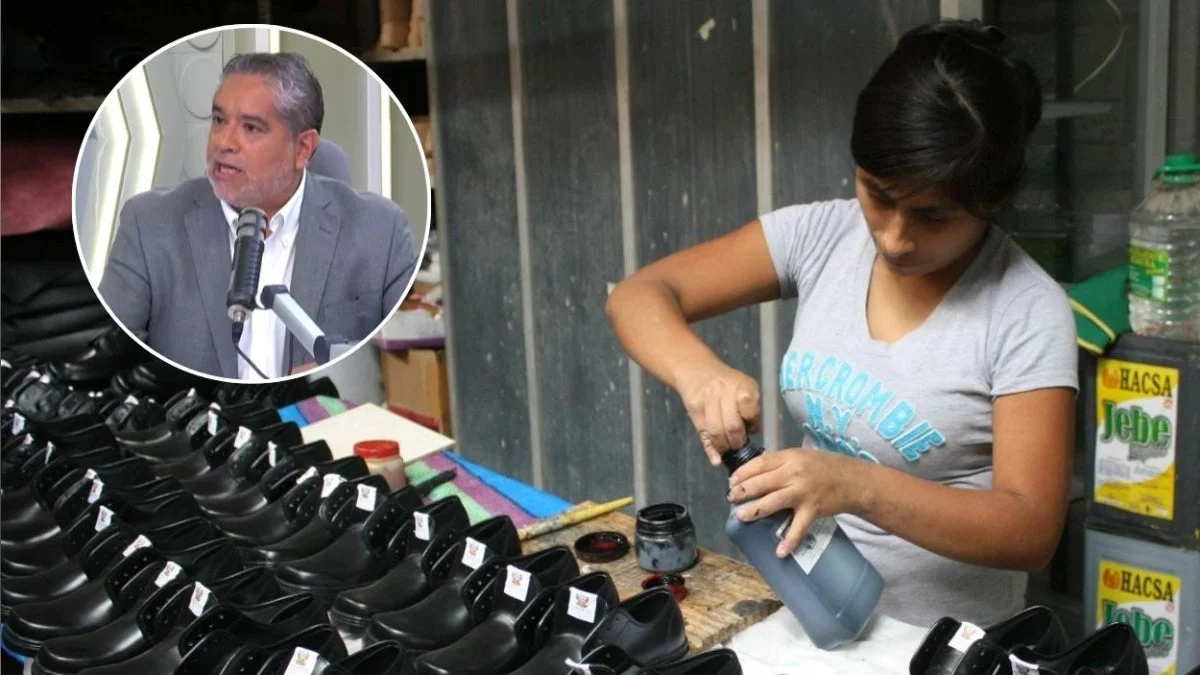
The situation remains fluid. The debate over the delegation of powers is not just a constitutional dispute; it is a fight for the survival of the Peruvian entrepreneur. The government’s decision to pursue the acquisition of 1.2 million school kits—a massive procurement project designed to stimulate local textile and footwear production—demonstrates a commitment to using public spending as a counter-cyclical tool.
However, as Minister Requejo rightly pointed out, these are localized solutions to a systemic problem. Without a comprehensive framework that integrates climate-risk mitigation with business development, the MYPES will remain vulnerable to the next cycle of climate instability. The path forward requires a unified effort from the Executive and the Legislative branches to recognize that in an era of unpredictable climate patterns, economic agility is not a luxury—it is a fundamental requirement for national stability.
Whether through a broader delegation of powers or a rapid-fire series of individual bills, the Ministry of Production is under immense pressure to deliver. The next few months will prove decisive in determining whether the Peruvian MYPE sector becomes a casualty of the climate crisis or a catalyst for a more resilient, simplified, and reactive economic future. As the government continues to push for these reforms, the message from the ministry remains clear: the time for deliberation is ending, and the time for decisive, collective action has arrived.