Date: September 11, 2026
For years, a pervasive narrative has dominated political discourse in Peru: the claim that the prevailing economic model has served as a structural barrier to the nation’s industrialization. From the halls of Congress to the campaign trails, critics frequently point to the economic chapter of the Constitution as the culprit, suggesting that its provisions somehow stifle industrial growth. However, a deeper analysis reveals that this argument is not only flawed but serves as a convenient distraction from the real obstacles hindering progress.
The Constitution does not dictate the granular details of industrial policy; it establishes the foundational rules of the game, positioning private initiative as the primary engine of national development. The true malaise afflicting the Peruvian economy is not constitutional, but rather a dense, suffocating thicket of regulations, secondary laws, and administrative requirements. This bureaucratic web strips enterprises of the agility required to invest, innovate, and compete on the global stage. If Peru has not achieved a more robust industrial sector, the cause lies not in a "failed model," but in the interventions of legislators and populists who have distorted the constitutional mandate, replacing economic freedom with a labyrinth of red tape.
The Agro-Export Miracle: A Blueprint for Success
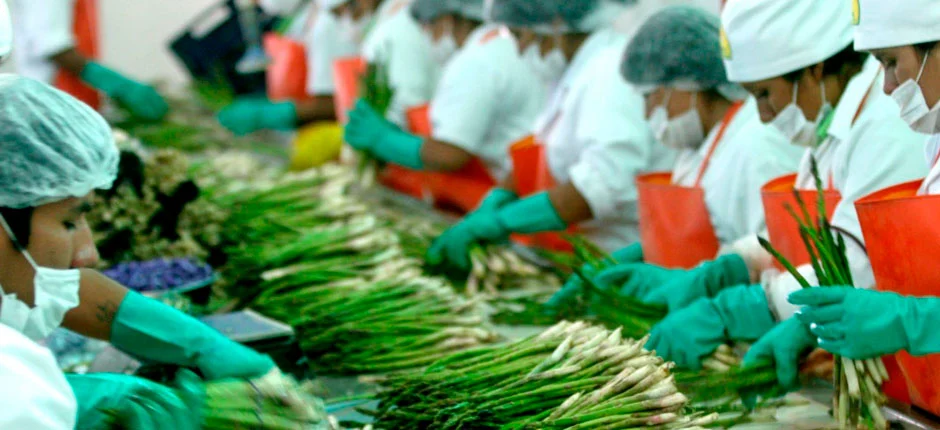
If one seeks a definitive rebuttal to the claim that the Peruvian model is incapable of fostering world-class industry, they need only look to the agro-export sector. Over the past two decades, this industry has transformed from a modest player into an economic powerhouse, with exports skyrocketing from $500 million to $15 billion.
A Transformation Born from Aridity
The success story of Peruvian agro-exports is nothing short of a miracle of engineering and market integration. It began in the nation’s most barren deserts, where vast, arid landscapes were reclaimed through irrigation and technology, turning dust into fields capable of producing fruits of global quality. This success was achieved in direct defiance of the dogmas held by ideologically rigid sectors. It required the recognition that high-risk industries—which are heavily subsidized in competing nations—require targeted promotion, infrastructure support, and the flexibility to scale.
The results of this promotion have been profound:
- Massive Job Creation: The sector has become a primary engine for formal employment in rural areas.
- Smallholder Integration: Thousands of small-scale farmers have been integrated into global value chains, lifting entire communities out of subsistence poverty.
- Fiscal Contributions: The sector has evolved into a major contributor to the national treasury, providing the state with the resources needed for social investment.
The Politics of Envy: Undermining the Virtuous Cycle
Despite these undeniable successes, the agro-export sector now faces an existential threat. A segment of the political establishment views this prosperity not as a national victory, but as a target for extraction. There is a recurring, populist sentiment that "the sector has won enough," leading to a systematic effort to impose ceilings on growth.
Chronology of Legislative Friction
- The Regulatory Shift: In recent years, the sector saw the imposition of a 30% increase in labor costs via mandatory bonuses, a move critics argue was implemented without regard for the delicate margins of agricultural productivity.
- The Tax Debate: Current legislative proposals seek to strip the sector of tax incentives that have been critical for its international competitiveness.
- The Climate Crisis: These policy shifts are occurring precisely as the El Niño phenomenon begins to exert pressure on agricultural yields. The uncertainty surrounding the intensity of the upcoming summer, combined with the loss of fiscal competitiveness, creates a "perfect storm" for investors.
The attitude of "the sector has gained enough" is not only economically illiterate but fundamentally dangerous. It ignores the reality that global competitiveness is not a static achievement; it must be defended every day against international rivals who are heavily supported by their respective governments.
Supporting Data: The Case for Infrastructure
The path forward is not found in taxing success, but in expanding the foundational infrastructure that allows success to replicate. The most significant hurdle facing the expansion of the agro-export model is the stagnation of major irrigation projects.
- The Irrigation Gap: Several large-scale projects, intended to turn additional thousands of hectares of desert into productive land, have remained stalled, under-funded, or mired in bureaucratic litigation.
- The Multiplier Effect: If these projects were to be completed, the industry could theoretically multiply its production by five, ten, or even thirty times over the next two decades, mirroring the trajectory of the previous twenty years.
Economic data consistently shows that the "bottleneck" to Peruvian growth is not the lack of entrepreneurial spirit, but the lack of basic public infrastructure—roads, water management, and energy—that allows the private sector to function efficiently.
Official Responses and Perspectives
While the executive branch has occasionally signaled a desire to reduce administrative burdens, the legislative branch remains divided.
- The Pro-Reform Perspective: Economists and business leaders argue that the "Model of 1993" remains a robust framework for development, provided it is allowed to function. They contend that the government should focus on "debureaucratization"—a process of stripping away redundant permits and simplifying the tax code to encourage the formalization of small businesses.
- The Populist Narrative: Conversely, some legislative blocs maintain that the "neoliberal model" has only served the elite. Their proposed solutions often involve increased state intervention, stricter labor mandates, and the redistribution of wealth generated by high-performing sectors. They argue that the state must play a more "active role" in directing industrial investment, a strategy that critics argue has historically led to corruption and inefficiency in Latin America.
Implications: The Road Ahead
The implications for Peru’s future are clear. If the country wishes to transition into a more industrialized economy, it must abandon the fantasy that the Constitution is the problem. The Constitution is the shield that protects private investment; the actual problem is the sword of bureaucracy that cuts away at productivity.
Key Pillars for Future Growth
- De-bureaucratization: An immediate audit and elimination of redundant procedures that hinder the start-up and expansion of industrial enterprises.
- Infrastructure Investment: Prioritizing public-private partnerships to finish irrigation and transport projects that have been stalled for years.
- Stability of Rules: Investors, both domestic and international, require "clear rules of the game." Constant changes to labor laws and tax incentives create a high-risk environment that discourages long-term capital commitment.
- Embracing Global Competition: Rather than fearing the success of sectors like agro-export, the state should seek to replicate those conditions in other industries, such as textiles, manufacturing, and technology.
Conclusion: A Choice of Paths
Peru stands at a crossroads. One path leads to the continued strangulation of the private sector, driven by a narrative of resentment and populist interventionism. This path will inevitably lead to stagnation and the loss of the gains made in the last two decades.
The alternative path is to respect the essence of the economic model that has brought the country this far. By fostering industrialization through the removal of barriers, investing in critical infrastructure, and protecting the stability of the legal framework, Peru can transform its potential into reality. The "miracle" of the desert was not a stroke of luck; it was the result of hard work and the right incentives. Replicating that success in other sectors is not only possible—it is the only way to ensure that prosperity becomes a tangible reality for every Peruvian citizen.