Apurímac, Peru – In a strategic move to combat the chronic water scarcity affecting the Andean highlands, the Regional Government of Apurímac has accelerated progress on one of the most ambitious hydraulic infrastructure projects in the region’s history. The "Parcco, Chinquillay, and Peruanita" project stands as a cornerstone of the regional development plan, aiming to modernize agricultural practices and provide a sustainable lifeline for thousands of farming families.
By leveraging advanced engineering to capture and store water, the project is set to incorporate nearly 2,000 hectares of land into modern, technified irrigation systems, effectively insulating the local economy from the volatility of the dry season (estiaje).
Main Facts: A Blueprint for Resilience
The project represents a comprehensive effort to manage water resources in the provinces of Andahuaylas, specifically targeting the communities of San Jerónimo and Pacucha. At its core, the project focuses on three primary reservoirs—Parcco, Chinquillay, and Peruanita—which are designed to operate in synergy to ensure a year-round supply of water.
The scope of the project is expansive:
- Total Storage Capacity: Over 5.9 million cubic meters of water.
- Agricultural Expansion: Incorporation of 1,938.2 hectares of land under high-efficiency irrigation.
- Direct Beneficiaries: More than 10,800 users across seven rural communities.
- Infrastructure Components: Three major dams, four distinct water conduction systems, and 24 individual reservoirs equipped with advanced distribution networks.
The primary objective is the mitigation of water stress. Historically, farmers in these sectors have struggled with the "estiaje" period, where the absence of rain leads to crop failure and reduced yield. This project aims to decouple agricultural success from climatic unpredictability.

Chronology of Development: From Concept to Construction
The journey toward this water infrastructure milestone began years ago, as the regional government identified a critical need for large-scale storage to support the agrarian base of Apurímac.
- Initial Planning and Feasibility: Early stages involved extensive hydrological studies to determine the optimal locations for the dams. The choice of the Parcco, Chinquillay, and Peruanita sites was dictated by their topographical capacity to hold massive volumes of runoff water.
- Design and Engineering Phase: Engineers mapped out the intricate network of canals and pipes required to distribute the stored water across nearly 2,000 hectares. This phase involved complex civil engineering to ensure that the infrastructure could withstand the harsh Andean terrain.
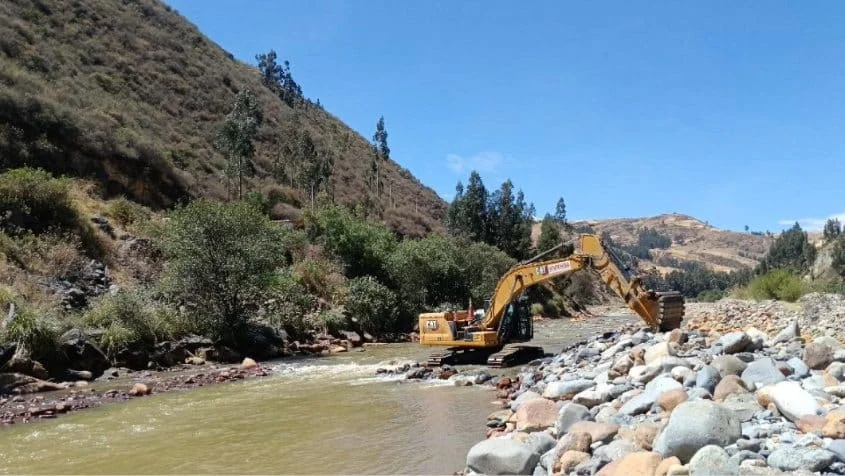
- Execution and Mobilization: Construction commenced following environmental assessments and community consultations. The project required significant logistical coordination to transport materials to these high-altitude sites.
- Recent Inspection (August 2026): Governor Percy Godoy Medina recently conducted an on-site inspection of the worksites. This visit served as a critical checkpoint to assess the physical progress of the dams, the quality of construction materials, and the adherence to strict project timelines.
Supporting Data: Engineering for Efficiency
To understand the scale of this project, one must look at the specific storage volumes allocated to each of the three dams:
- Parcco Dam: With a capacity of 2.15 million cubic meters, it serves as a central anchor for the system.
- Peruanita Dam: Designed to store 1.96 million cubic meters, it provides critical redundancy.
- Chinquillay Dam: Adding 1.86 million cubic meters to the total, this structure rounds out the catchment strategy.
The inclusion of 24 reservoirs is perhaps the most significant technical feature. These decentralized storage units allow for "last-mile" delivery, ensuring that water pressure is maintained and that farmers have access to water exactly when their specific crops require it. By transitioning from traditional irrigation (which is often wasteful) to "technified" irrigation, the project increases the "crop per drop" ratio, allowing for higher yields with less water consumption.
Official Responses and Strategic Vision
During his visit to the construction sites, Governor Percy Godoy Medina emphasized the transformative nature of the project. "This is not just about concrete and water; it is about providing the security that our farmers have been denied for generations," the Governor stated.
The regional administration views the project as a critical component of its broader effort to modernize agriculture in Andahuaylas. By focusing on technical oversight, the governor’s office aims to avoid the common pitfalls of public works in Peru, such as delays or structural integrity issues. The team of engineers accompanying the Governor confirmed that the project is currently meeting its milestones, with a strong focus on high-quality materials to ensure long-term durability in the face of seismic activity and climate-related wear.

Furthermore, the regional government has highlighted that this project is a "social contract" with the farming communities. By involving local stakeholders, the government hopes to ensure that the management of the water systems—once completed—will be handled by the beneficiaries themselves, fostering a sense of ownership and sustainable operation.
Socio-Economic Implications: Beyond Irrigation
The implications of the Parcco, Chinquillay, and Peruanita project extend far beyond the immediate increase in irrigation capacity.
1. Poverty Reduction and Food Security
Agriculture is the backbone of the Apurímac economy. By stabilizing water access, the region expects to see a significant increase in crop diversity. Farmers who were previously limited to subsistence crops due to water risks can now invest in high-value, market-oriented produce. This shift is expected to bolster household incomes across the seven beneficiary communities.
2. Climate Change Adaptation
The Andean region is increasingly vulnerable to the effects of climate change, including erratic rainfall patterns and glacial retreat. The storage of 5.9 million cubic meters of water is a direct adaptation strategy. It allows the region to "bank" water during the wet season, effectively creating a buffer against the increasingly unpredictable droughts that threaten the Andean corridor.
3. Strengthening Rural Infrastructure
The construction of these dams also involves the upgrading of surrounding logistics. The access roads built to service the construction zones will benefit the transport of goods, lowering costs for farmers to bring their harvest to market. This creates a multiplier effect where the infrastructure investment acts as a catalyst for broader regional commerce.

4. Technical Modernization
The shift to technified irrigation involves the implementation of drip and sprinkler systems. This transition requires the training of local farmers in modern agricultural technology, effectively upskilling the workforce. As farmers learn to manage these systems, they become more competitive, moving the sector from traditional, labor-intensive methods to technology-driven, efficient agricultural production.
Conclusion: A Vision for the Future
The progress on the Apurímac hydraulic project serves as a beacon of progress in the region. As the project moves into its final phases, the focus will shift from construction to operational management and capacity building for the local user groups.
The successful completion of the Parcco, Chinquillay, and Peruanita project will stand as a testament to the power of well-planned, state-backed infrastructure. By turning the challenge of seasonal water scarcity into an opportunity for growth, the regional government is laying the groundwork for a more prosperous, resilient, and food-secure future for the people of Andahuaylas. As the dams begin to fill and the irrigation networks start to flow, the impact will be measured not just in cubic meters of water, but in the improved livelihoods and strengthened autonomy of thousands of families across the Andean landscape.