Executive Summary: A New Horizon for Archidona
In a significant stride toward addressing the national housing deficit, the Ecuadorian government has reached a critical milestone in the development of a flagship social housing project located in the cantonal heart of Archidona, within the Amazonian province of Napo. The initiative, which carries a total investment of US$ 4.1 million, is currently 40% complete. This project is not merely an infrastructure endeavor; it represents a comprehensive social policy aimed at providing fully subsidized, dignified housing to vulnerable families who have historically lacked access to the formal real estate market.
By providing 140 residential units, the project serves as a cornerstone for local urban development, stimulating the regional economy through job creation and the improvement of public infrastructure. The project stands as a testament to the state’s commitment to providing housing as a fundamental right rather than a commercial commodity, ensuring that beneficiaries receive homes without the burden of mortgage debt or partial payment requirements.
The Scope of the Project: Technical Specifications and Progress
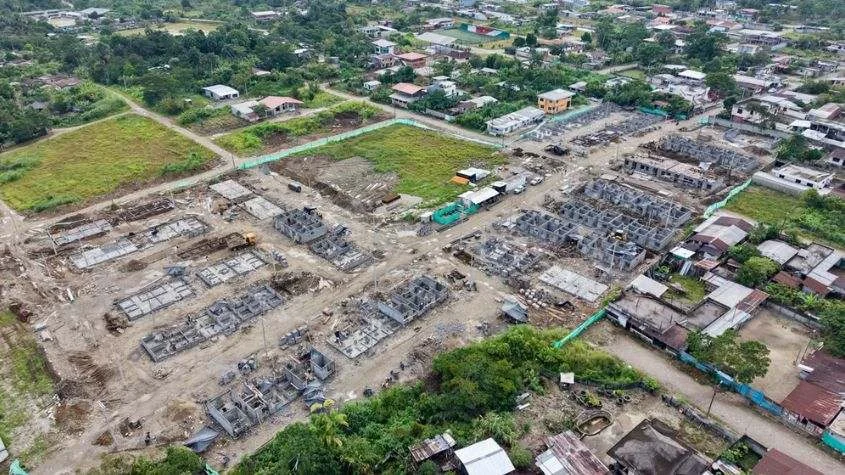
The Archidona housing complex is a sprawling development designed to integrate seamlessly into the local landscape while adhering to modern architectural and engineering standards. Spanning a total area of 15,430 square meters, the project earmarks 8,738 square meters exclusively for residential construction, ensuring that residents have adequate space and access to communal areas.
Current Construction Status
As of the latest site reports, the project has achieved a physical progress rate of 40%. The construction sequence has been methodical, focusing on structural integrity and long-term durability.

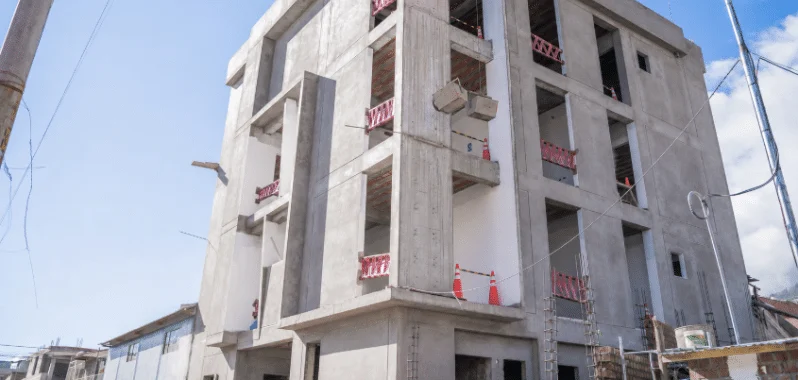
- Mampostería (Masonry): Work is currently underway on eight distinct blocks, where masonry is being finalized to ensure the structural shell of the units is secure.
- Structural Elements: Five additional blocks have reached the stage where they are primed for the encofrado (formwork) of the concrete slabs, a critical phase that will allow for the vertical expansion of the residential units.
- Infrastructure Integration: Beyond the housing units themselves, the project includes essential utility networks. Teams are currently installing comprehensive hidrosanitary (water and sewage) and pluvial (rainwater drainage) systems. The inclusion of modern sanitary inspection chambers (cajas de revisión sanitaria) ensures that the development meets strict environmental and health safety codes, preventing long-term maintenance issues.
- Electrification: The electrical component is advancing at a steady pace. The main medium-voltage network has already been successfully installed, and the site is currently being prepared for the installation of transformers, which will provide stable and reliable power to all 140 families.
Chronology of the Development
The path to this project’s current 40% completion rate has been characterized by careful planning and government prioritization.
- Project Conceptualization (Early Stages): The initiative was born out of a diagnostic analysis of the housing needs in the Napo province, identifying a clear gap in social housing for low-income families in Archidona.
- Funding and Procurement: The Ecuadorian state committed US$ 4.1 million (inclusive of VAT) to the project, categorizing it as a 100% state-funded social welfare program.
- Groundbreaking and Initial Excavation: Following the procurement phase, site preparation began in the designated 15,430-square-meter zone, focusing on land clearing and the laying of foundational utilities.
- Structural Progression (Ongoing): Over the last several months, the development shifted to structural framing and the installation of core infrastructure (plumbing/electrical).
- Future Milestones: The upcoming phases will transition from structural development to finishing work, including interior installations, painting, and the construction of the central communal house, which serves as the social hub for the future neighborhood.
Economic Implications: Employment and Local Growth
Beyond the provision of housing, the Archidona project functions as a potent economic catalyst for the province of Napo.
Job Creation
The project has successfully generated 180 direct jobs. In a region where economic diversification is often limited, the mobilization of 180 construction workers, engineers, and site managers provides a significant boost to local household incomes. This infusion of wages into the local economy creates a multiplier effect, supporting local businesses, markets, and service providers in Archidona.
The Value of Total Subsidy
The most striking feature of this initiative is the financial model: the houses are fully subsidized. Unlike traditional "social interest" programs that often require a down payment or a long-term mortgage, the families selected for this program will not be required to pay for the construction or the transfer of the property. This removes the "debt trap" barrier, allowing low-income families to allocate their limited financial resources toward education, nutrition, and healthcare, thereby breaking the cycle of poverty.

Official Perspectives and Social Impact
Government officials have framed the Archidona project as a model for future rural and semi-urban development in the Amazon region. By integrating a community house into the layout, the project promotes social cohesion. The house is intended to be a multi-purpose facility where residents can hold town hall meetings, community workshops, and educational programs.
Addressing the Housing Deficit
The housing deficit in Ecuador remains a persistent challenge, particularly in the provinces of the Amazon basin. The state’s intervention in Archidona is part of a broader, long-term policy to decentralize urban planning and ensure that rural residents enjoy the same standard of living as those in major metropolitan hubs like Quito or Guayaquil.
By prioritizing quality materials and modern utility systems, the government is also looking to minimize the long-term cost of maintenance for these families. The inclusion of standardized electrical and sewage systems means that these units are resilient, safe, and environmentally compliant.
Implications for the Construction Sector in Ecuador
The successful execution of this project offers several lessons for the construction industry in Ecuador:

- The Efficacy of State-Led Development: When the state acts as the primary developer, it can prioritize social outcomes over profit margins, allowing for higher-quality building standards in regions that might otherwise be ignored by private developers.
- Infrastructure as a Priority: The inclusion of complex hidrosanitary and electrical systems at the beginning of the project demonstrates a shift toward "sustainable urbanism." It ensures that the housing complex does not become a burden on the municipality’s existing infrastructure.
- Employment Stability: The 180 jobs generated are not merely temporary. They provide a blueprint for how infrastructure projects can be used to mitigate unemployment rates in smaller cantons.
Conclusion: A Blueprint for the Future
As the Archidona project moves past its halfway mark toward completion, it stands as a lighthouse of progress for the Napo province. The combination of state-funded capital, meticulous infrastructure planning, and a commitment to providing 140 families with a debt-free future makes this a defining project of the current administration.
The successful delivery of these homes will not only house 140 families but will likely serve as a proof-of-concept for similar initiatives across the country. As the masonry for the eight blocks finishes and the final electrical components are integrated, the residents of Archidona are one step closer to a new reality—one defined by security, dignity, and the promise of a stable home environment.
The project remains on track, and its completion will mark a significant victory in the ongoing effort to ensure that the fundamental human right to adequate housing is upheld for every citizen, regardless of their economic standing or geographic location. The progress observed to date is a clear indication that, with focused investment and effective project management, the challenges of the housing deficit can be systematically overcome.