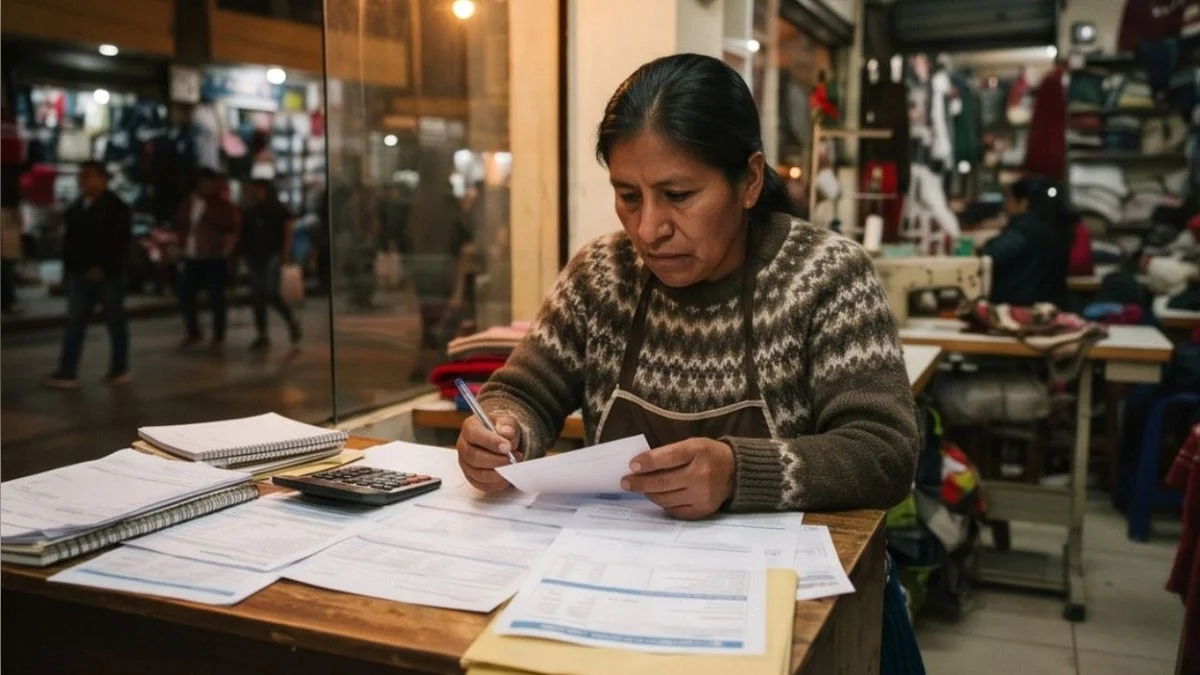
As the 2026 holiday shopping season approaches, Peru’s micro and small enterprises (MYPEs) find themselves at a critical crossroads. While businesses are gearing up for a period typically defined by high consumer demand and increased revenue, a new report from Mibanco and Apoyo Consultoría reveals a landscape defined by significant financial strain, strategic caution, and mounting anxiety regarding the looming threat of the El Niño phenomenon (FEN).
The data paints a picture of resilience tempered by reality. With nearly half of all MYPEs reporting an increase in debt over the last quarter and a massive majority bracing for climate-related disruption, the "most wonderful time of the year" is being approached with a mixture of hope and tactical defensive maneuvers.
The Core Financial Landscape: Rising Debt and Strategic Investment
The most striking finding from the study, Campaña Navideña 2026, is the marked increase in corporate indebtedness. According to the survey, 48% of entrepreneurs expanded their debt portfolios in the three months leading up to the holiday season. This represents a substantial 12-percentage-point jump compared to the 36% recorded in February of this year, signaling that businesses are increasingly reliant on external capital to stay afloat or to scale operations for the year-end surge.
Where is the money going?
Contrary to a narrative of reckless spending, the data suggests that MYPEs are largely using these funds as a mechanism for survival and growth. The primary destination for these loans is inventory: 32% of the borrowed funds are being funneled into the purchase of merchandise, a significant rise from the 23% observed at the beginning of the year.
Furthermore, 13% of these resources are being allocated to the acquisition of fixed assets—such as machinery, equipment, or facility upgrades—which is a four-percentage-point increase over the previous measurement. This trend indicates that, despite the economic headwinds, entrepreneurs are investing in the long-term viability and productivity of their businesses rather than merely covering short-term operational deficits.
Chronology of Market Sentiment: From Early Year Optimism to Year-End Caution
To understand the current state of the MYPE sector, it is necessary to examine the shifts in sentiment throughout 2026.
- February 2026: The year began with a more conservative debt profile, where only 36% of MYPEs reported taking on new liabilities. At this stage, inflationary pressures were starting to be felt, but the looming climate crisis was not yet the primary focus of business owners.
- September 2025 – September 2026: The shift in priorities has been drastic. In late 2025, only 1% of entrepreneurs identified the El Niño phenomenon as a major concern. By the final quarter of 2026, that figure has surged to 16%. Meanwhile, concern regarding the rising cost of goods and fuel climbed from 12% to 21% over the same period, reflecting a year of persistent cost-push inflation.
- Q4 2026 (The Current Context): We are now seeing the convergence of all these factors. The "holiday optimism" is still present—76% of businesses expect to maintain or increase their sales—but the projected growth rate is slowing. While the anticipated growth of 15% is healthy, it marks a decline from the 17% growth recorded in 2025, suggesting that the broader economic environment is cooling the sector’s growth potential.
Supporting Data: The Anatomy of a Muted Expansion
The prevailing sense of caution is perhaps most evident in human resources and capital expenditure decisions. The "wait-and-see" approach has led to a divergence in strategy:
- Hiring Freezes and Reductions: A significant 30% of businesses are planning to reduce their workforce, while only 8% have committed to accelerating hiring. This stark disparity highlights the pressure business owners feel to protect their profit margins in the face of rising operational costs.
- Investment Contraction: Investment appetite is similarly dampened, with 15% of business owners planning to cut back on investments, compared to only 12% who are looking to scale up.
These figures are symptomatic of a sector squeezed by three primary levers: lower-than-hoped-for consumer demand, the persistent increase in raw material and fuel prices, and the constant threat of climate-driven supply chain interruptions.
The Looming Shadow: The El Niño Phenomenon (FEN)
Perhaps the most significant threat to the stability of Peru’s small business sector is the El Niño phenomenon. The survey results are unequivocal: 70% of business owners fear that the climate event will have a material impact on their operations.
A National Concern
The geographic spread of this concern is pervasive. In the central region of the country, 95% of business owners expect a strong impact from FEN. This sentiment is echoed across the nation: 88% in Lima, 86% in the north, 85% in the south, and 78% in the oriente (jungle) region.
The economic implications are severe, with 87% of respondents anticipating that the climatic event will directly harm their household economies. Within this group, more than a third (37%) characterize the anticipated impact as "considerable."
Preparedness and Financial Need
There is a silver lining regarding preparedness: 48% of entrepreneurs now feel "very" or "moderately" prepared for the onset of the climate phenomenon, a significant improvement from the 32% who felt prepared three years ago. However, this leaves more than half of the sector feeling ill-equipped for the disruption.
Consequently, 86% of MYPEs believe it is likely or very likely that they will require external financial assistance to mitigate the impact of the phenomenon. When asked what form of support would be most useful, the responses were clear:
- 55% prioritize capital for daily operations (working capital).
- 26% view the debt rescheduling of existing loans as a critical lifeline.
- 18% seek specific financing for structural repairs to their business premises.
Official Responses and Institutional Support
In response to these findings, Mibanco has stepped forward with a substantial commitment to liquidity. The bank projects it will disburse more than S/ 5.782 billion during the holiday season (October through December 2026). This figure represents a robust growth of over 30% compared to the same period in 2025, a move clearly designed to counter the credit crunch and ensure that MYPEs have the resources to stock up for the peak season.
Building on a Strong Foundation
This year-end target builds on a record of steady financial support. Between January and September 2026, Mibanco successfully disbursed S/ 14.682 billion, an increase of 24.3% compared to the same nine-month period in 2025.
To facilitate this, the institution is emphasizing flexible financial instruments. Among the primary offerings is the "credit line," for which the bank has earmarked S/ 2.303 billion in potential disbursements. Currently, over 499,000 clients have pre-approved credit campaigns available, allowing them to access funds with minimal bureaucratic delay—a necessity in a volatile market where speed of execution is vital for survival.
Implications: The Path Forward
The data from the Mibanco and Apoyo Consultoría study reveals a sector that is remarkably resilient but increasingly fragile. The transition from a post-pandemic recovery phase to a phase dominated by climate and inflationary pressures requires a fundamental shift in how small businesses operate.
Implications for the Economy
The heavy reliance on debt to finance inventory is a double-edged sword. While it allows businesses to participate in the holiday market, it also exposes them to interest rate risks and potential defaults if sales do not meet expectations. If the El Niño phenomenon hits with the severity anticipated by 87% of business owners, the current debt levels could trigger a wave of delinquency, requiring proactive intervention from both financial institutions and government policy makers.
Strategic Recommendations
For the individual entrepreneur, the current environment demands a "defensive growth" strategy:
- Liquidity Management: Prioritize the preservation of working capital over aggressive expansion.
- Diversification: As the climate threat looms, businesses should look to diversify their supply chains to avoid over-reliance on regions most likely to be affected by FEN.
- Engagement: With nearly 86% of businesses anticipating a need for financial help, maintaining open lines of communication with lending institutions is paramount. The proactive use of debt-rescheduling programs—before a crisis hits—can be the difference between a temporary setback and business insolvency.
As 2026 draws to a close, the performance of the MYPE sector will serve as a bellwether for the Peruvian economy at large. The resilience of these small business owners, who represent the backbone of the national economy, will be tested as never before. With the right mix of prudent financial management and institutional support, they may navigate this period of turbulence and emerge better prepared for the challenges of the coming year.