In a decisive move to curb the escalating wave of insecurity across the nation, the Peruvian government has officially formalized the creation of the "High-Level Multisectoral Commission for the Recovery of Security and Public Order." The executive mandate, published this Wednesday in the official state gazette El Peruano, establishes a centralized framework designed to bridge the operational gaps that have historically hindered the state’s fight against organized crime.
The initiative, which seeks to synchronize the efforts of various state agencies, will be presided over by the President of the Council of Ministers (PCM). It will include the active participation of the Ministers of the Interior, Defense, Justice and Human Rights, and Foreign Affairs. This strategic alignment aims to transform the government’s approach to public safety from fragmented, agency-specific efforts into a unified, national security strategy.
The Strategic Framework: Main Facts
The core mandate of this newly minted commission is to act as a high-level support mechanism for national security operations. By integrating the highest echelons of the executive branch, the government aims to bypass bureaucratic hurdles that have previously delayed intelligence sharing and rapid response efforts.
The commission’s primary objective is not merely to issue policy recommendations but to serve as a functional support structure for the Peruvian National Police (PNP) and other law enforcement bodies. By providing the political weight of the PCM to these operations, the government hopes to ensure that law enforcement agencies have the necessary authority and resources to execute complex, multi-jurisdictional investigations.
Chronology of the Security Crisis
To understand the impetus behind this decree, one must look at the recent trajectory of crime in Peru. Over the past twenty-four months, the country has witnessed a transformation in criminal activity, shifting from localized petty crime to sophisticated, transnational organized criminal syndicates.
- Q1-Q2 2023: A sharp increase in extortion cases targeting small businesses and public transport operators triggered widespread protests among citizens demanding greater protection.
- Late 2023: Security analysts noted an increase in the presence of foreign-linked criminal factions, leading to a surge in violent homicides and kidnappings in the metropolitan area of Lima.
- Early 2024: The government implemented several "States of Emergency" in key districts. While these provided temporary relief, critics argued they lacked a long-term strategic backbone.
- Mid-2024: Legislative debates focused on the need for a multisectoral approach, as individual ministry efforts proved insufficient to stop the flow of illicit arms and capital.
- Today: The publication of the decree establishing the High-Level Multisectoral Commission marks the official pivot toward a "whole-of-government" approach to national security.
Supporting Data: Why Inter-Institutional Cooperation Matters
The effectiveness of the new commission hinges on the concept of "Information Fluidity." According to experts, the greatest challenge in dismantling criminal organizations in Peru has been the "silo effect," where vital information remains trapped within specific departments—such as the Financial Intelligence Unit (UIF) or immigration databases—preventing the PNP from forming a complete picture of criminal networks.
The current security landscape shows that:
- Financial Laundering: Criminal organizations often utilize legal businesses as fronts. Without direct, real-time access to financial intelligence, law enforcement is often months behind the money trail.
- Arms Proliferation: Illicit firearms continue to circulate via the black market, often originating from legal imports that were diverted. Tightening control at the Superintendencia Nacional de Control de Servicios de Seguridad, Armas, Municiones y Explosivos de Uso Civil (Sucamec) is crucial.
- Migration and Border Security: Managing the intersection of migration flows and organized crime requires close cooperation between the Ministry of the Interior and the Ministry of Foreign Affairs, both of which are now mandated to coordinate through the new commission.
Official Responses: Strengthening the PNP
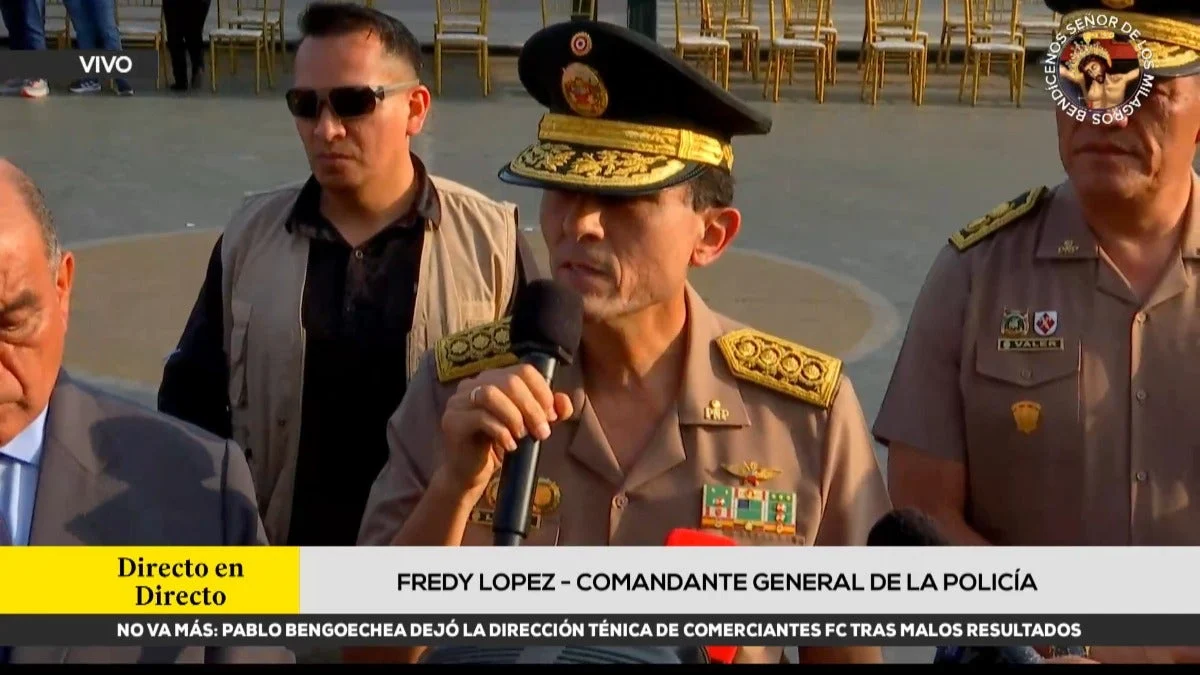
Commander General of the National Police of Peru, Fredy López, has been one of the most vocal proponents of this new structure. In his recent remarks, he emphasized that the commission is not just a symbolic gesture but a necessary tactical tool.
"This team will serve as a definitive support structure for all activities linked to the fight against criminality," General López stated following the decree’s publication. He highlighted that the police force has been hampered by restricted access to the data held by other ministries. By facilitating direct channels of communication with entities like the UIF, Sucamec, and the Migrations office, the commission will effectively lower the "data barrier" that criminals have exploited for years.
"What we are seeking is that the interrelation between these organisms becomes much more fluid," López added. "When we can access information in real-time, our ability to prevent crimes—rather than just reacting to them—increases exponentially."
Implications: A New Era for Public Policy?
The creation of this commission carries significant implications for both domestic policy and the international perception of Peruvian stability.
Implications for Law Enforcement
For the PNP, the commission represents a transition from a reactive model to an intelligence-led policing model. If the commission succeeds in streamlining the flow of information, the police will be able to map out criminal hierarchies more accurately, leading to higher rates of successful prosecutions rather than just short-term arrests.
Legal and Judicial Impact
By involving the Ministry of Justice and Human Rights, the commission ensures that security operations are conducted within a robust legal framework, reducing the risk of procedural errors that often lead to the release of dangerous criminals. It also provides a platform to address systemic weaknesses in the prison system, which have long served as command centers for criminal gangs.
Diplomatic and Cross-Border Cooperation
With the inclusion of the Ministry of Foreign Affairs, the commission is clearly signaling that Peru intends to tackle the transnational nature of the current crime wave. Whether it involves coordinating with neighboring countries to track criminal movements or engaging with international intelligence partners, this addition allows for a diplomatic layer to be added to the domestic security strategy.
The Challenge of Implementation
Despite the optimism surrounding the announcement, the commission faces a daunting task. The primary challenge will be overcoming institutional inertia. Critics point out that "multisectoral commissions" in Peru have historically struggled with bureaucratic friction, where ministerial mandates often clash. For this initiative to avoid the fate of its predecessors, the Presidency of the Council of Ministers must exercise strong, decisive leadership to ensure that the "fluidity of information" promised by General López is realized in practice.
Conclusion: A Turning Point for Peru
The formation of the High-Level Multisectoral Commission for the Recovery of Security and Public Order is an acknowledgment that the status quo is no longer tenable. As organized crime evolves into a sophisticated, multi-faceted threat, the state must respond with a similarly sophisticated, integrated approach.
The success of this initiative will be measured not by the number of decrees signed, but by the tangible reduction in crime rates and the restoration of public trust. With the police leadership, the cabinet ministers, and the highest office in the land now formally aligned, the government has set the stage for a comprehensive crackdown on the criminal forces currently destabilizing the country.
As the commission begins its work, all eyes will be on the Ministry of the Interior and the PNP to see how they utilize these new channels of intelligence to dismantle the networks of fear that have plagued the Peruvian populace. For the citizens of Peru, this move represents a long-awaited signal that the state is finally mobilizing its full potential to reclaim the streets.