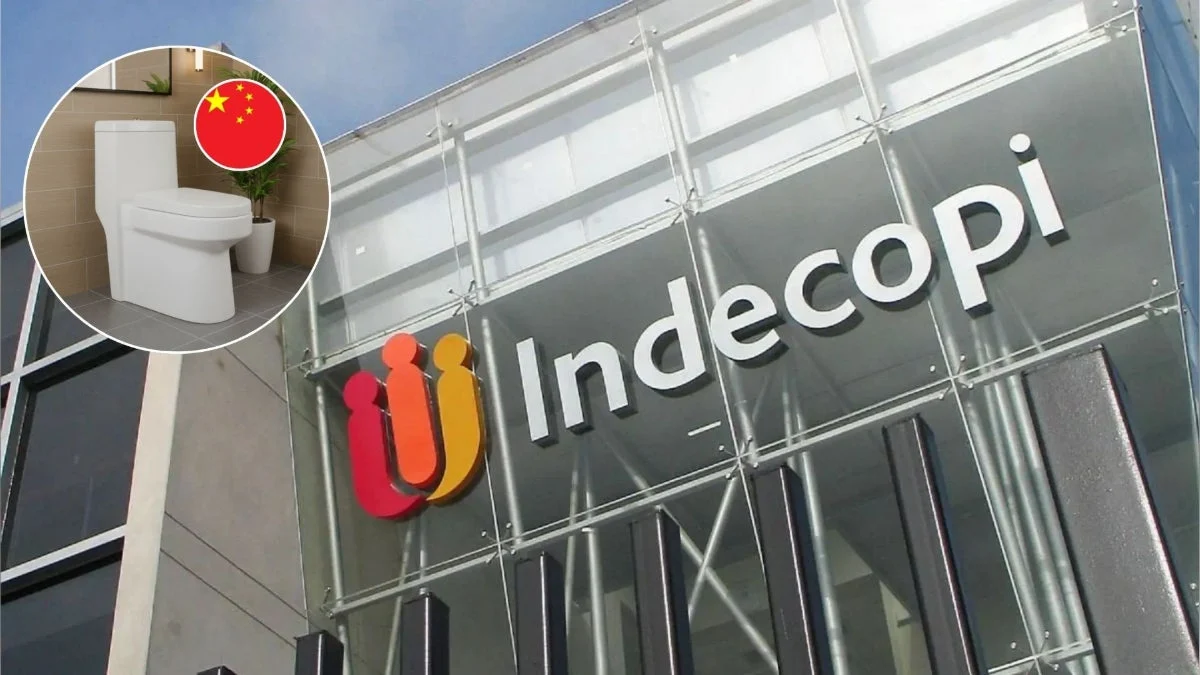
In a significant move to safeguard the domestic manufacturing sector, the Peruvian National Institute for the Defense of Competition and Intellectual Property (Indecopi) has officially imposed definitive antidumping duties on imports of "one-piece" ceramic toilets originating from China. This regulatory intervention follows an extensive investigation that confirmed a clear causal link between a surge in low-priced imports and the financial deterioration of local producers.
The decision, formalized under Resolution 244-2026/CDB-INDECOPI, marks a five-year commitment to leveling the playing field for Peruvian manufacturers who have struggled to compete against a flood of products priced significantly below market value.
The Core of the Dispute: Dumping and Economic Harm
The term "dumping" refers to the practice of exporting a product to another country at a price lower than its normal value in the country of origin. In this case, Indecopi’s Commission on Dumping, Subsidies, and Elimination of Non-Tariff Barriers concluded that the predatory pricing strategies of Chinese exporters created an unsustainable environment for the Peruvian industry, specifically impacting flagship companies such as Vainsa and Trebol.
The regulatory body found that the price gap between the Chinese imports and the domestic equivalent was stark. On average, the landed cost of Chinese "one-piece" toilets was 40% lower than the cost of production in Peru. In the most extreme instances recorded in 2023, this gap widened to nearly 50%, effectively stripping domestic manufacturers of their ability to compete on price while maintaining quality standards and employment levels.
Chronology of the Investigation
The path to this protective measure began in April 2025, prompted by a formal petition from VSI Industrial S.A.C. (Vainsa). The company alleged that the rapid influx of Chinese ceramic units was not the result of increased efficiency or competitive advantage, but rather a deliberate practice of selling goods at or below the cost of production to capture market share.
- April 2025: Vainsa files a formal complaint with Indecopi, providing initial evidence of price manipulation and market distortion.
- Late 2025 – Early 2026: Indecopi initiates a comprehensive probe, gathering data on import volumes, pricing structures, and the financial health of the local sanitary ware sector.
- Mid-2026: The Commission releases preliminary findings indicating that a 56.9% increase in imports between 2021 and 2024 directly correlated with declining production figures in Peru.
- Late 2026: Following a period of verification and public hearings, the final resolution is issued, establishing the definitive duties as a corrective measure for a five-year term.
Supporting Data: A Market in Decline
The statistical evidence gathered by Indecopi illustrates a troubling trend for the local industry. Between 2021 and 2024, the cumulative effect of the import surge manifested in several key economic indicators:
1. Production and Sales Volume
Domestic production plummeted by 11.7% over the four-year period, while domestic sales—the lifeblood of local manufacturers—fell by 17.6%. This drop was not merely a result of market contraction, as demand remained relatively steady; rather, it reflected a massive shift in consumer purchasing toward the cheaper, imported alternatives.
2. Market Share Erosion
The share held by Peruvian producers in their own domestic market contracted by 12.6 percentage points. Conversely, Chinese imports expanded their footprint by 11.4 percentage points in the same timeframe, with a massive 75.9% spike in volume during the calendar year 2024 alone.
3. Financial Viability
Perhaps most alarmingly, the productivity of the local sector dropped by 22.9%. Profit margins for manufacturers were decimated, shrinking by 11.6 percentage points. By the end of 2024, local manufacturers were operating at a net margin of -10.9%, a deficit that Indecopi deemed unsustainable and directly attributable to the unfair competition from abroad.
Understanding the Scope: What is Included and What is Exempt?
Not every ceramic bathroom product is subject to these new tariffs. Indecopi was careful to narrow the scope of the resolution to protect specific sectors without creating unnecessary inflationary pressure on specialized products.
- The Focus: The duties apply strictly to ceramic "one-piece" toilets, which are characterized by the bowl and tank being fused into a single unit. This is the standard product type manufactured by the bulk of the Peruvian industry.
- The Exclusions: Smart toilets (electronic bidet systems, self-cleaning units, etc.) are exempt. Additionally, toilets designed specifically for use in boats, recreational vehicles (RVs), and aircraft are excluded. These products were deemed distinct in their functionality and physical properties, and they do not directly compete with the mass-market residential toilets produced by Vainsa and Trebol.
Official Responses and Justification
In its final report, Indecopi addressed alternative theories for the decline in domestic performance. The commission analyzed factors such as shifts in consumer preference, the impact of the exchange rate, and changes in the national tax regime.
"The Commission conducted a rigorous analysis to ensure that the damage to the domestic industry was not caused by other factors, such as macroeconomic fluctuations or a decrease in local demand," an Indecopi spokesperson noted. "After evaluating the data, we concluded that the only variable that explains the sustained, sharp decline in profitability and production volume is the surge of dumped imports."
The investigation found that even in 2024, when some broader economic indicators began to show signs of a minor rebound, the sanitary ware sector remained in a precarious state, proving that the damage caused by the dumping was structural and long-lasting.
Implications of the Antidumping Duties
The imposition of these duties functions as an "additional tax" on imported units, intended to normalize the final retail price to a level that reflects the actual cost of production. By implementing these measures, the Peruvian government aims to achieve three primary goals:
Ensuring Fair Competition
The primary objective is to stop the downward pressure on prices that prevented local firms from covering their costs. By effectively raising the floor for imported products, local manufacturers can regain a portion of their market share without being forced to match prices that are artificially depressed.
Protecting Local Jobs and Investment
The manufacturing sector for construction materials is a significant employer in Peru. By stabilizing the market, Indecopi aims to secure the future of the factories operated by Vainsa and Trebol, preventing potential plant closures and layoffs that were becoming a looming possibility due to the financial losses reported in 2023 and 2024.
The Cost Structure for Importers
The duties are applied as a specific amount per unit, rather than a flat percentage. This allows for a granular approach that penalizes companies based on the severity of their dumping practices:
- Romance: US$ 5.7 per unit.
- Yatao: US$ 12.7 per unit.
- Farns: US$ 14.3 per unit.
For firms that did not cooperate with the investigation, a "residual" duty has been set, mirroring the rate applied to the most aggressive exporters. This encourages transparency in future trade dealings, as companies that fail to provide data to the regulator will face the highest possible penalties.
Future Outlook for the Peruvian Market
The five-year window provided by this resolution offers a lifeline for the domestic industry to restructure and reinvest. The challenge for local manufacturers will be to leverage this period of protection to increase efficiency and maintain the quality that distinguishes their products from the mass-produced imports.
Meanwhile, for the Peruvian consumer, the impact remains to be seen. While some experts argue that antidumping measures can lead to price increases, the government maintains that the current pricing of imported toilets is an anomaly created by unfair trade practices. By restoring a "normal" market price, the government expects to foster a healthier, more sustainable construction sector that supports both domestic production and long-term economic stability.
As the implementation phase begins, the eyes of the construction and trade sectors will remain fixed on how these duties affect the supply chain. For now, the message from Indecopi is clear: Peru will not allow its domestic industries to be hollowed out by unfair international competition. The era of unchecked dumping in the ceramic toilet market has come to a definitive end.