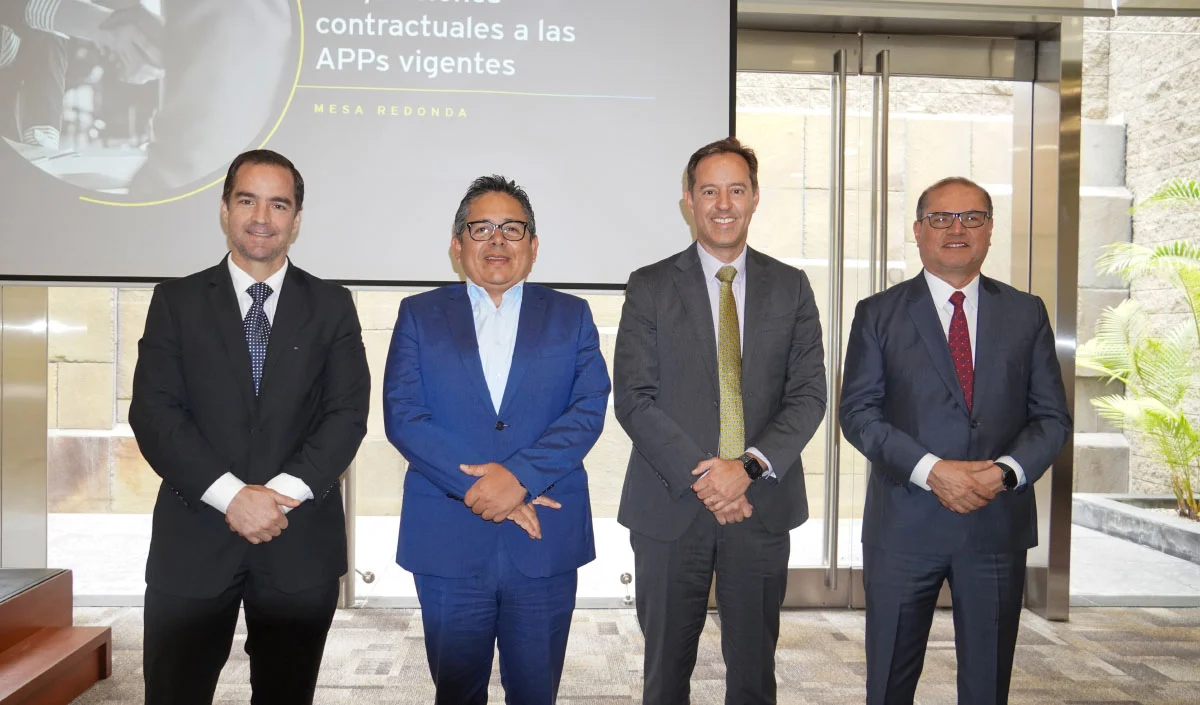
Lima, Peru – In a nation grappling with a significant infrastructure deficit and the urgent need to stimulate economic growth, a pivotal discussion emerged from a panel hosted by EY (Ernst & Young). Experts from the infrastructure sector convened to dissect the impact and potential of Public-Private Partnerships (PPPs) and to advocate for a demystification of contractual addenda, often perceived negatively. The consensus was clear: private collaboration and flexible concession agreements are indispensable tools to unlock critical investments in Peru.
The panel, titled "Contractual Extensions for Existing APPs" (Ampliaciones contractuales a las APP vigentes), underscored the immense power of concession extensions as a mechanism to invigorate the Peruvian economy. The sheer scale of investments and the strategic importance of projects awarded over the past three decades necessitate placing this tool at the forefront of public policy, as highlighted by Manuel Rivera, Tax Advisory Partner at EY Peru. Rivera emphasized that these concessions "can still offer much more, at least until the legal term of 60 years."
The Stark Contrast: Public vs. Private Sector Management
A retrospective analysis of the last 30 years of state modernization in Peru reveals a stark dichotomy. Sectors that have embraced private capital have witnessed substantial improvements, a stark contrast to areas under direct state management, such as healthcare, education, water, and sanitation, which continue to suffer from chronic deficits. This disparity underscores a fundamental challenge: the state’s capacity to deliver essential services and infrastructure efficiently and effectively on its own.
Juan Pacheco, President of the Association for the Promotion of National Investment (AFIN), painted a vivid picture of the magnitude of Peru’s infrastructure needs. He pointed out that the educational infrastructure alone faces a gap of S/ 171,000 million, with half of the country’s schools requiring urgent intervention. In the face of such a monumental task, Pacheco cautioned that traditional public works alone are insufficient to meet the demand.
"This year’s budget amounts to 51 billion soles, of which 80% is allocated to current spending; therefore, it is unfeasible to tackle this task exclusively through public works," he warned. This budgetary reality leaves little room for significant capital investment, further highlighting the limitations of the traditional public works model.
AFIN, Pacheco reiterated, views PPPs as the most effective instrument to address the entire project lifecycle: design, financing, operation, and maintenance. "We must stop initiating projects that do not have assured operation and maintenance from the outset," he stated emphatically, as reported by Revista ProActivo. This perspective shifts the focus from mere construction to the long-term sustainability and functionality of infrastructure, a crucial element often overlooked in conventional procurement.
Pacheco further stressed the urgent need for an "infrastructure shock" in Peru. He argued that the country’s primary challenge is not a lack of access to credit, a common issue in other developing economies, but rather the inefficient management of available resources.
"A World Bank study identified that 45% of public works in Peru are abandoned. We allocate nearly 5% of GDP to traditional public works, and approximately half of those resources are lost. With over 2,200 executing units in the country, we are atomizing the territory," he elaborated. This alarming statistic points to systemic inefficiencies and a significant waste of public funds, underscoring the need for more robust and integrated project delivery mechanisms.
Furthermore, Pacheco was resolute in dispelling the negative perception surrounding contractual modifications. "There are no automatic renegotiations; these are processes where, through a multi-criterion analysis, the sector will determine whether it is convenient for the country and the public interest," he explained. This statement aims to reframe contractual adjustments not as loopholes for private gain but as necessary adaptations to ensure project viability and public benefit.
The Opportunity Cost of Stigmatizing Addenda
The pervasive social and political stigma attached to contract addenda often eclipses the substantial cost incurred by the paralysis of ongoing projects. Camilo Carrillo, Associate Partner for Infrastructure at EY-Parthenon, articulated that while classical economic theory might advocate for new tenders to foster greater competition, operational realities demand pragmatism. Delaying critical investments directly hampers regional development and deprives communities of essential services and economic opportunities.
"We have been led to believe that an addendum, by definition, is something bad. (…) But reality shows us that in projects that function today, where concessionaires meet service levels, it makes sense to discuss addenda if it will generate a benefit for the State," Carrillo asserted. This perspective challenges the absolute condemnation of addenda, suggesting a more nuanced evaluation based on their potential to enhance public good.
Illustrative cases such as Line 1 of the Lima Metro and various southern port projects demonstrate the inefficiency of compelling the public to wait until the end of a concession period for further expansions. Carrillo highlighted that recent regulatory changes have created a legal framework enabling concessionaires to execute additional or marginal investments rapidly. These could include crucial improvements to road access to airports or maritime terminals, thereby enhancing the functionality and economic impact of existing infrastructure.
A positive example presented by Carrillo was that of TISUR, a port operator. Through an addendum, investments were accelerated, allowing society to benefit earlier from sums ranging between US$ 500 million and US$ 700 million, which would have otherwise taken five years to materialize. This case exemplifies how timely contractual adjustments can unlock significant economic value and public benefit ahead of schedule.
The Barrier of "Permissology" and Climate Change Preparedness
Beyond contractual intricacies, a significant bottleneck lies within bureaucratic limitations. The panel warned that Peru suffers from "atomized, redundant, and overlapping ‘permisology’" – a complex web of permits and authorizations. This bureaucratic labyrinth is exemplified by the need to navigate through dozens of different municipalities to approve a single road corridor in Lima. Such an arduous process not only delays projects but also increases their costs and complexity.
In the face of climatic threats like the El Niño phenomenon, this state inefficiency becomes particularly perilous. Carrillo argued that a comprehensive vision is necessary, recognizing that emergencies extend beyond the immediate aftermath of disasters like mudslides destroying roads. This vision must encompass the proactive phase (ex ante) to prevent such impacts. He explained that the legal framework for such proactive measures already exists and that implementing them is "a matter of decision and signing the corresponding minutes to act quickly." This highlights the critical need for political will and administrative agility to leverage existing legal instruments for disaster risk reduction and climate adaptation.
Moving Forward: A Consensus for Action
In a collective conclusion, the specialists agreed that the ultimate objective should not be the dogmatic defense of one contracting modality over another. Instead, the focus must be on ensuring that infrastructure functions effectively and serves its intended purpose. Strengthening ProInversión, the government agency responsible for promoting private investment, ensuring administrative stability, and overcoming the apprehension surrounding the renegotiation of successful contracts are identified as immediate steps to prevent Peru from continuing to lose valuable investment opportunities.
The dialogue presented a compelling case for a pragmatic and forward-looking approach to infrastructure development in Peru. By embracing the potential of PPPs, fostering flexibility in contractual arrangements, and streamlining bureaucratic processes, Peru can begin to bridge its infrastructure gap and unlock its full economic potential. The conversation initiated by EY serves as a crucial catalyst for policy reform and a renewed commitment to building a more robust and resilient future for the nation.
Chronology of Key Developments in Peruvian Infrastructure and PPPs:
- Late 1990s – Early 2000s: Peru pioneers the use of PPPs and concessions for major infrastructure projects, including toll roads, airports, and telecommunications. This period sees significant investment in modernizing the country’s essential services and connectivity.
- Mid-2000s: Increased scrutiny and public debate arise regarding the terms of some concession agreements, leading to a more cautious approach and calls for greater transparency.
- 2010s: The Lima Metro Line 1 is a landmark PPP project, demonstrating the potential for large-scale urban transport solutions. Other sectors, such as ports and energy, continue to attract private investment through concessions.
- Mid-2010s onwards: A series of corruption scandals involving construction companies and public officials casts a long shadow over the sector, increasing public distrust and leading to a slowdown in new project approvals and a heightened focus on contractual oversight. This era sees a rise in the perception of "addenda" as inherently problematic, often linked to alleged irregularities.
- Late 2010s – Present: The need to address a significant infrastructure deficit becomes increasingly apparent. Experts and industry bodies begin to advocate for a more nuanced understanding of PPPs and contractual flexibility, emphasizing their role in unlocking much-needed investment, particularly in critical sectors like education, health, and sanitation. The discussion around "permisology" and bureaucratic hurdles also intensifies. The EY-hosted panel represents a continuation of this discourse, aiming to recalibrate the approach to PPPs and contractual modifications.
Supporting Data and Key Figures:
- Infrastructure Education Gap: S/ 171,000 million (approximately USD 46 billion) is the estimated deficit in educational infrastructure alone.
- School Infrastructure Needs: Half of Peru’s schools require urgent intervention.
- Public Works Budget Allocation: 80% of Peru’s annual public works budget is allocated to current spending, leaving limited funds for capital investment.
- Public Works Abandonment Rate: A World Bank study found that 45% of public works projects in Peru are abandoned.
- Resource Loss in Public Works: Approximately half of the resources dedicated to traditional public works are lost due to inefficiencies.
- Executing Units: Peru has over 2,200 executing units involved in public works, leading to fragmentation and atomization.
- TISUR Addendum Impact: Accelerated investments by TISUR through an addendum unlocked between US$ 500 million and US$ 700 million in earlier benefits for society.
- Concession Duration: Legal terms for concessions can extend up to 60 years, offering significant scope for long-term investment and adaptation.
Official Responses and Expert Opinions:
- Manuel Rivera (EY Peru): "These concessions can still offer much more, at least until the legal term of 60 years." This statement highlights the underutilized potential of existing concession frameworks.
- Juan Pacheco (AFIN):
- "This year’s budget amounts to 51 billion soles, of which 80% is allocated to current spending; therefore, it is unfeasible to tackle this task exclusively through public works." This points to the fiscal limitations of the state in addressing the infrastructure gap.
- "We must stop initiating projects that do not have assured operation and maintenance from the outset." This emphasizes the need for a holistic approach to infrastructure project planning and execution.
- "A World Bank study identified that 45% of public works in Peru are abandoned. (…) With over 2,200 executing units in the country, what we are doing is atomizing the territory." This highlights systemic inefficiencies in public works delivery.
- "There are no automatic renegotiations; these are processes where, through a multi-criterion analysis, the sector will determine whether it is convenient for the country and the public interest." This aims to demystify addenda as rational contractual adjustments.
- Camilo Carrillo (EY-Parthenon):
- "We have been led to believe that an addendum, by definition, is something bad. (…) But reality shows us that in projects that function today, where concessionaires meet service levels, it makes sense to talk about addenda if that will generate a benefit for the State." This calls for a pragmatic evaluation of addenda based on their outcomes.
- The argument that "emergencies are not only when the landslide destroys the road, but also the previous phase (ex ante) to prevent the impact" underscores the importance of proactive climate adaptation measures.
Implications for Peru’s Development:
The insights shared during the EY panel have profound implications for Peru’s path to sustainable development. The stark contrast between public and private sector performance in infrastructure delivery underscores the critical role of PPPs in bridging the vast infrastructure deficit. The persistent stigma surrounding contractual addenda, while understandable given past controversies, is identified as a significant impediment to unlocking necessary investments and adapting existing projects to evolving needs.
By demystifying these contractual mechanisms and focusing on their potential to generate public benefit, Peru can accelerate the delivery of essential services in education, health, and sanitation. Furthermore, addressing the "permisology" and bureaucratic inefficiencies is crucial for streamlining project execution and reducing costs.
The call for strengthening ProInversión and ensuring administrative stability signals a recognition that effective institutional frameworks are as vital as sound contractual agreements. Ultimately, the expert consensus points towards a paradigm shift: moving away from dogmatic adherence to specific contracting models and embracing a pragmatic, results-oriented approach that prioritizes the functionality and societal impact of infrastructure. Failure to do so risks perpetuating a cycle of underdevelopment and missed opportunities, a cost that Peru, in its pursuit of progress, can ill afford.