By Political Correspondent
The fragility of the legislative-executive relationship in the country was laid bare this past Saturday during a volatile session of the Senate’s Constitution Committee. What was intended to be a routine debate regarding the government’s request for extraordinary legislative powers devolved into a series of heated exchanges, resulting in a temporary suspension of proceedings and a lingering fallout that continues to dominate the national political discourse.
At the center of the controversy is a high-stakes clash between Senator Ruth Luque, representing the "Ahora Nación" faction, and the Minister of the Interior, César Astudillo. The incident, which saw accusations of verbal aggression and unprofessional conduct, has sparked a broader debate about the decorum of public officials, the urgency of police reform, and the integrity of the democratic process.
The Core Conflict: A Question of Reform and Respect
The friction began when Senator Luque took the floor to voice her concerns regarding the government’s legislative proposal. According to witnesses and the transcript of the session, the atmosphere was already strained following a separate altercation involving Senator Iber Maraví and Minister Astudillo.
As Luque attempted to articulate her skepticism regarding the government’s strategy for tackling rising insecurity, she was interrupted by Minister Astudillo. This interruption, which Luque described as both ill-timed and disrespectful, became the catalyst for the subsequent chaos.
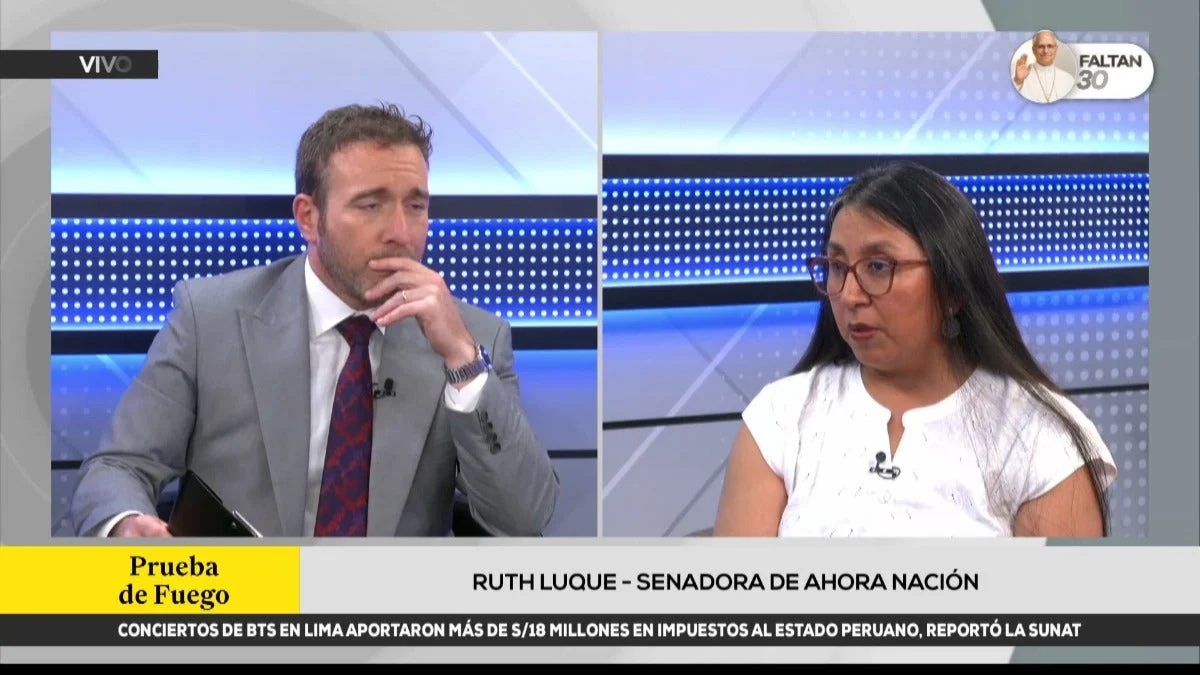
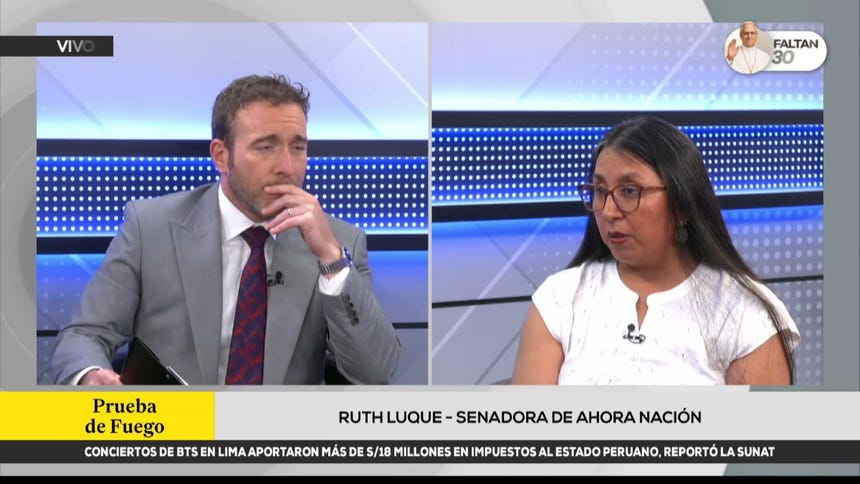
In an exclusive interview on the RPP program Prueba de Fuego this Monday, Senator Luque categorically denied claims that she had personally insulted the Minister. "Me parece que el ministro Astudillo no debió interrumpir mi intervención," she stated, emphasizing that there are appropriate protocols for parliamentary debate. She argued that her critique was directed strictly at the policy level: "I said it seems as though he is afraid to address a deep-seated reform of the National Police."
Luque’s stance is that the current executive branch lacks a cohesive strategy, despite their insistence that they require emergency powers to address public safety. She noted that the government’s reliance on international models—specifically referencing the administration’s stated interest in studying El Salvador’s security measures—suggests a lack of a home-grown, evidence-based plan.
A Chronology of the Senate Breakdown
To understand the severity of the incident, it is necessary to examine the sequence of events that led to the suspension of the Constitution Committee session.
Saturday: The Escalation
- The Presentation: The session began with members of the Cabinet presenting the rationale for the requested legislative powers.
- The Initial Spark: Following the Cabinet’s presentation, Senator Iber Maraví challenged the Minister of the Interior regarding specific policy points. The exchange grew increasingly personal.
- The Interruption: Senator Ruth Luque took the floor to continue the inquiry. Minister Astudillo interrupted her mid-sentence.
- The Intervention: Senator Maraví intervened, demanding that the Chair of the Committee maintain order and protect the floor for his colleague.
- The Collapse: The situation escalated into a verbal confrontation, with reports of aggressive posturing and discourteous gestures from the Minister toward the senators.
- The Suspension: Facing a breakdown in order, the Chair suspended the session indefinitely.
The "Dog Whistle" and Political Polarization
The aftermath of the incident has been marked by a sharp divide in political rhetoric. Keiko Fujimori, a key figure in the opposition, weighed in on the events with a controversial statement: "The dogs bark, a sign that we are moving forward."
For Senator Luque, such language is not merely inflammatory; it is a dangerous erosion of democratic dialogue. She argued that labeling critics as "barking dogs" or, in other instances, questioning their loyalty to the state by labeling them as "terrorists" or "sympathizers," effectively shuts down the possibility of constructive consensus.
"If one questions a hostile group, they immediately label you a terrorist," Luque remarked. She contends that this reductionist approach to political opposition is a hallmark of an executive branch that is uncomfortable with oversight.
Supporting Data: The Case for Police Reform
The crux of the legislative debate rests on whether the current government should be granted the power to bypass the standard legislative process. The executive argues that the urgency of the crime wave justifies the request. Senator Luque and other critics, however, argue that the government has not demonstrated a clear vision for the structural changes required.
- Institutional Inertia: Critics point to the fact that the National Police have been the subject of numerous studies and reform proposals for years, none of which have been fully implemented by the current administration.
- The Insecurity Gap: Public perception data indicates that the population’s sense of safety is at an all-time low. Luque’s argument is that without a fundamental restructuring—addressing internal corruption and operational inefficiency—the requested powers will merely reinforce a failing system.
- The "El Salvador" Strategy: The government’s interest in the Salvadoran model has been a point of contention. While popular with some sectors, legal experts and human rights organizations have raised concerns about the potential for human rights violations if similar "iron fist" policies are implemented without the necessary checks and balances.
Official Responses and Political Repercussions
The response from the Ministry of the Interior has been characteristically defensive. Supporters of Minister Astudillo claim that he was merely responding to a "hostile" and "disrespectful" environment created by opposition senators. They argue that the Senate has become a place of obstruction rather than cooperation.
However, the opposition views the Minister’s conduct as a breach of institutional norms. They argue that a Cabinet member appearing before a legislative committee has a duty to endure questioning with decorum, regardless of how sharp the critique may be.
Senator Maraví, who was present during the height of the conflict, echoed Luque’s concerns, noting that the Minister’s body language and dismissive tone were a deliberate attempt to undermine the legitimacy of the Senate’s inquiry.
Implications for Future Governance
The incident at the Constitution Committee is a microcosm of a broader crisis of governance. Several key implications arise from these events:
- The Legislative-Executive Gridlock: The suspension of the session suggests that the trust necessary for passing complex legislation is currently absent. Without a cooling-off period, the delegation of powers is likely to face a protracted and possibly failed path through the Senate.
- Erosion of Parliamentary Decorum: The normalization of aggressive language—on both sides of the aisle—threatens the stability of the institution. When discourse is replaced by personal attacks, the public loses faith in the capacity of the legislative body to solve real-world problems.
- The Police Reform Dilemma: Regardless of the political drama, the fundamental issue of police reform remains unaddressed. The country faces a security crisis that cannot be resolved through rhetoric alone. The failure to debate the issue professionally in committee delays the implementation of necessary structural changes.
- The Polarization Trap: The use of derogatory metaphors, as seen in the public discourse following the incident, suggests that the political class is becoming increasingly entrenched in a "friend vs. enemy" mentality. This leaves little room for the moderation required in a healthy democracy.
Conclusion: A Call for Reset
As the dust settles, the pressure is on the leadership of the Senate and the Executive branch to restore a functional working relationship. Senator Luque’s insistence on a substantive debate rather than a performative one highlights a path forward: the government must be willing to defend its policies under rigorous scrutiny, and the opposition must remain committed to the norms of parliamentary procedure.
The incident at the Constitution Committee serves as a stark reminder that democracy is not merely about the power to make laws, but the process through which those laws are debated. If the current tensions continue, the country risks not only a legislative impasse but a deeper disillusionment with its core governing institutions. For now, the question of whether the executive will receive its requested powers remains in limbo, suspended alongside the decorum of the body that must decide its fate.