In an increasingly polarized political climate, the Peruvian government is navigating a period of significant legislative tension. The recent escalation of verbal hostilities within the halls of the Senate, specifically involving the Minister of the Interior, César Astudillo, has triggered a broader debate regarding the functionality of the current administration’s relationship with the legislative branch.
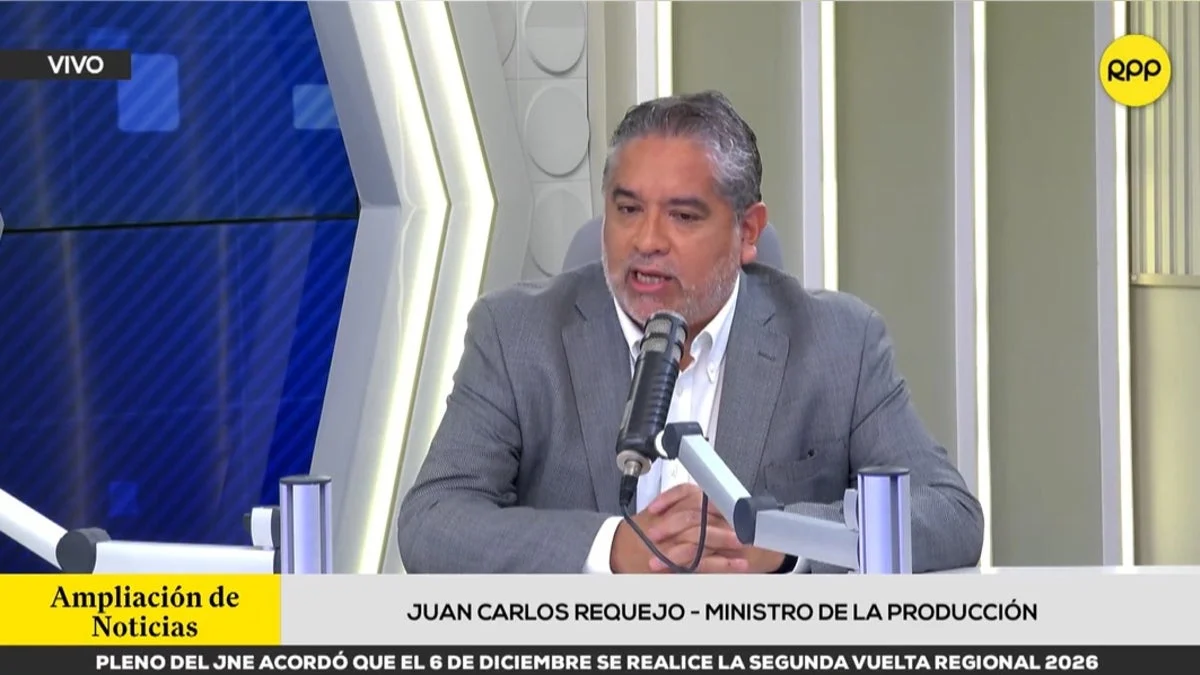
Juan Carlos Requejo, the Minister of Production, has emerged as a key voice for the Executive, calling for a cessation of hostilities and a return to pragmatic governance. As the government seeks to secure the delegation of legislative powers to jumpstart the economy, the specter of a parliamentary impasse looms large. In response, the administration has signaled a strategic pivot: if the requested legislative faculties are denied, the government is prepared to bypass the deadlock by pushing forward through ordinary legislative channels.
The Anatomy of a Political Crisis: A Chronological Overview
The current tension is not an isolated incident but the culmination of weeks of legislative friction. To understand the gravity of Minister Requejo’s recent interventions, one must look at the timeline of events that have defined this standoff:
- The Initial Proposal: The Executive submitted a comprehensive request for legislative faculties, arguing that the country’s current economic stagnation—particularly among Micro and Small Enterprises (MYPEs)—requires immediate, agile regulatory intervention that the standard legislative process cannot provide.
- The Commission Deadlock: Discussions within the Constitution Commission regarding the scope and necessity of these powers hit a wall. Critics, particularly from the opposition, argued that the requested powers were overly broad and lacked sufficient oversight.
- The Senate Incident: The boiling point was reached during a high-profile session of the Constitution Commission. A heated verbal altercation occurred between Minister of the Interior César Astudillo and members of the legislative body. The incident, captured and disseminated across national media, became a lightning rod for criticism against the Executive.
- The Political Backlash: The political movement "Ahora Nación" publicly demanded a formal rectification from the President, arguing that her subsequent public support for Minister Astudillo normalized unprofessional conduct within the halls of power.
- The Call for De-escalation: Following the public fallout, Minister Juan Carlos Requejo stepped into the fray, publicly urging all political actors to set aside the "politics of confrontation" and prioritize the nation’s urgent economic needs.
The Executive’s Stance: Defending the Team
Minister Requejo’s intervention serves a dual purpose: to lower the temperature of the public discourse and to solidify the government’s internal morale. Addressing the media on Ampliación de Noticias, Requejo emphasized that the current climate of "distrust and fighting" is antithetical to the goals of a functioning government.
"I believe we need to put a cooling cloth on these tensions," Requejo remarked. "The country is tired of the fighting. We need to look forward, focus on the social and economic conditions, and stop dwelling on the past."
Regarding the specific controversy surrounding Minister Astudillo, Requejo took a firm stance in defense of the President’s loyalty to her cabinet. When asked about the demand for a presidential apology, Requejo dismissed the notion, arguing that institutional stability relies on the Executive branch presenting a united front. He characterized Astudillo as a professional and hinted that the altercation was likely a response to a specific provocation rather than a lapse in character. By framing the incident as a reaction rather than an instigation, the administration is effectively circling the wagons, signaling that they will not abandon cabinet members under political fire.
Economic Implications: The Struggle for Legislative Faculties
At the heart of the current political theater lies a critical economic debate. The government’s request for legislative faculties is tied to a broader plan to "unblock" the state bureaucracy. The Ministry of Production, under Requejo’s leadership, has prioritized the revitalization of the MYPE sector, which constitutes the backbone of the Peruvian economy.
The Argument for Delegated Powers
The administration maintains that the current administrative burden is strangling private investment and preventing small businesses from scaling. By securing temporary legislative powers, the government aims to:
- Streamline administrative procedures for business registration.
- Introduce tax incentives for emerging sectors.
- Simplify regulatory compliance to lower the barrier to entry for entrepreneurs.
The Opposition’s Perspective
Opposition lawmakers have expressed deep skepticism. The primary concern is the potential for executive overreach. Critics argue that delegating law-making powers—a core function of the Congress—weakens the system of checks and balances. Jaime Abensur, among other legislative critics, has previously noted that the government’s proposals, in their current form, are "insufficient" to address the systemic issues they claim to solve, suggesting that the Executive is seeking an easy way out of rigorous legislative debate.
The "Plan B": Governing Through Ordinary Channels
Perhaps the most significant development in this saga is Minister Requejo’s admission that the government is not tethered solely to the success of the delegation of faculties. If the Congress chooses to deny the request, the Executive has already mapped out an alternative path: the use of "ordinary norms."
This strategy involves submitting individual bills through the standard legislative process, a move that is significantly more time-consuming but avoids the constitutional controversy of broad delegated powers. By framing this as a secondary, proactive choice, the government is signaling to the public that it will not be paralyzed by parliamentary gridlock.
"If they do not see fit to grant us the powers, we will immediately charge ahead with ordinary norms," Requejo stated. "We have a plan. We have the technical capacity, and we have the will to act. That is what is required of us."
This shift to ordinary legislation is a strategic pivot that effectively places the burden of proof back on the Congress. By committing to this path, the Executive is telling the opposition that if they refuse the faster track, they will be forced to debate every individual component of the economic plan in the public eye. This could potentially backfire on the opposition if the public perceives them as obstructionist against common-sense economic reforms.
Institutional Stability and the Path Forward
The situation remains fluid. The tension between the Executive and the Legislative branches is a reflection of the deeper structural challenges currently facing the Peruvian political system. As the country grapples with post-pandemic economic recovery, the disconnect between political rhetoric and tangible policy results is becoming increasingly evident.
The Role of Public Perception
Public opinion polls suggest a growing weariness with the persistent friction between the government and the Congress. The "tiredness" alluded to by Minister Requejo is not just an observation; it is a sentiment that carries political weight. If the current stalemate continues, both branches of government risk a further decline in public approval.
The Need for a Pragmatic Consensus
For the Executive, the challenge lies in maintaining its legislative agenda while managing the optics of a cabinet under fire. For the Congress, the challenge is to exercise its oversight role without appearing as a roadblock to economic recovery.
As the government prepares to move forward with its "ordinary norms" strategy, the political landscape in Peru remains at a crossroads. The success of these initiatives will depend less on the legal mechanisms employed and more on the ability of both branches to establish a working relationship based on professional, if not friendly, dialogue.
Conclusion
Minister Juan Carlos Requejo’s call for a return to normalcy, coupled with the administration’s pivot toward ordinary legislative processes, marks a strategic turning point. By refusing to be sidelined by the controversies of the past few weeks, the Executive is attempting to reclaim the narrative of being the branch of government that is "getting things done."
Whether this approach will lead to the desired economic outcomes or merely prolong the legislative impasse remains to be seen. However, one thing is clear: the administration has made it known that it will not wait indefinitely for the Congress to act. The next few months will be a definitive test of the government’s resolve, its ability to govern under pressure, and the willingness of the opposition to engage in a constructive, rather than obstructionist, political process. As the dust settles on the recent Senate scuffle, the real work of governance—economic, social, and administrative—must now take center stage.