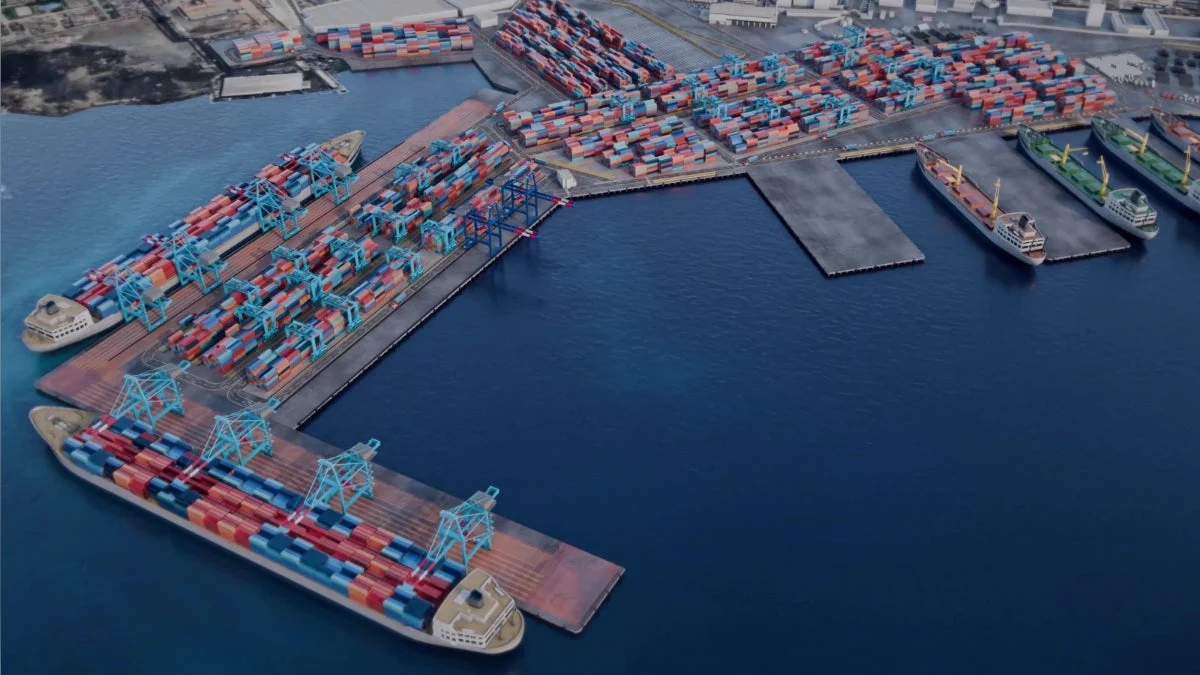
The Port of Callao, Peru’s primary gateway for global trade, is poised for a significant transformation. APM Terminals Callao, the operator of the Terminal Norte Multipropósito, has officially announced a massive capital injection of US$231 million aimed at modernizing its infrastructure. The centerpiece of this ambitious project is the construction of "Muelle 5C" (Pier 5C), a state-of-the-art facility designed to accommodate the world’s largest container vessels. As Peru’s economy continues to lean heavily on international trade, this investment serves as a critical move to bolster national competitiveness and secure the country’s position as a regional logistics hub.
The Core Project: Engineering a New Era for Pier 5C
The investment is part of the broader Stage 3B modernization plan for the Terminal Norte. The construction of Pier 5C is not merely an addition of space; it is a technological and structural upgrade. The new pier will span 440 meters in length and feature a depth of 16 meters, specifications that are essential to host "MalaccaMax" class vessels. These massive ships, capable of carrying upwards of 20,000 TEUs (twenty-foot equivalent units), represent the modern standard for global maritime efficiency.
By facilitating the arrival of these mega-vessels, APM Terminals aims to achieve significant economies of scale. The project is scheduled for completion in January 2028, marking a pivotal milestone in the modernization of Peru’s maritime assets.
A Chronology of Growth: From Planning to Global Integration
The journey toward this expansion is rooted in the long-term vision of APM Terminals to optimize the Callao terminal’s role in the global supply chain.
- Foundation and Early Operations: Since taking over the Terminal Norte, APM Terminals has worked to integrate the facility into a global network that currently reaches over 70 countries and 220 distinct ports.
- The Modernization Roadmap (Stages 1-3): The transition from basic terminal operations to a high-tech multipurpose facility has occurred in distinct phases. Stage 3B represents the most capital-intensive effort to date, specifically addressing the limitations in draft depth and pier length that previously prevented the port from receiving the largest container ships.
- Current Development (2024-2025): The planning phase is now moving toward procurement and initial site preparation, with an eye toward the 2028 deadline.
- Target Completion (January 2028): The official opening of Pier 5C will trigger a fundamental change in the terminal’s capacity, shifting from current limitations to a baseline of 1.7 million TEUs annually, with a scalable pathway to 2.2 million TEUs.
Supporting Data: Why Expansion is Critical
The decision to invest $231 million is driven by hard data regarding Peru’s economic output and shifting global trade patterns.
1. Scaling Capacity
The terminal is currently operating at a level that necessitates an increase in throughput. By elevating capacity to 1.7 million TEUs immediately upon the completion of the pier, and leaving room to scale to 2.2 million TEUs, the port ensures it will not become a bottleneck for the next decade of economic growth.
2. The Cold Chain Revolution
Perhaps the most vital component of the expansion is the focus on "cold chain" infrastructure. Peru has become a global powerhouse in agro-exports, with the sector recording a historic $15.013 billion in revenue in 2025. To support the export of delicate perishables—such as blueberries, grapes, and avocados—the terminal is increasing its electrical connections for refrigerated containers (reefers) by 25%. This will result in 2,000 dedicated reefer points, ensuring that the country’s high-value produce maintains its quality from the farm to the international market.
3. Efficiency and Speed
Currently, the terminal boasts a direct connection between Asia and Peru, with a transit time of approximately 23 days. The introduction of specialized MalaccaMax cranes and electrified handling equipment will reduce vessel dwell times and speed up the loading/unloading process, making the Callao route even more attractive to global shipping lines.
Official Perspectives: Aligning Vision with Reality
The management team at APM Terminals has emphasized that this project is about more than just concrete and steel; it is about keeping pace with the global market.
Francesca de los Ríos, the Manager of Public Affairs and Communications at APM Terminals Callao, noted the urgency of the project: "The growth of Peru’s foreign trade requires that the infrastructure of the country’s main port evolves at the same pace."
This perspective highlights a consensus among stakeholders: if Peru is to continue its trajectory as an export-led economy, the port infrastructure must be proactive rather than reactive. The investment is viewed as an essential public-private commitment to ensure that mining, manufacturing, and agricultural products reach their destination with the lowest possible logistical friction.
Implications for the Future of Peruvian Trade
The ripple effects of this investment will be felt across several sectors of the Peruvian economy:
Impact on Agro-Exports
With the increase in reefer capacity, the competitive advantage of Peruvian exporters in the European and Asian markets will strengthen. Reliability in the cold chain is a significant selling point, and the 2,000-point capacity ensures that even during peak harvest seasons, there will be no shortage of space for temperature-controlled storage.
Strengthening Global Trade Links
By becoming a port of call for 20,000-TEU vessels, Callao secures its status as a primary hub. This will likely attract new shipping lines and increase the frequency of current routes. For businesses involved in the import of technology and consumer goods, this means a more stable and predictable flow of goods, potentially reducing costs associated with vessel congestion or logistical delays.
The Shift to Sustainable Logistics
A significant, yet often overlooked, aspect of the project is the focus on the "electrification of operations." By integrating electrical charging stations for machinery and investing in modern, electric-powered port equipment, APM Terminals is aligning itself with international trends toward greener logistics. This is increasingly important for multinational corporations that prioritize low-carbon supply chains when selecting their logistics partners.
Economic Resilience
The Port of Callao is more than just a terminal; it is the heartbeat of the national economy. By facilitating higher volumes of trade, the project supports jobs in the mining sector, manufacturing, and the burgeoning technology sector. As the terminal expands, it creates a multiplier effect that benefits the local economy of Callao and the wider national industrial sector.
Conclusion: A New Horizon for the Pacific Coast
The $231 million expansion of the Terminal Norte Multipropósito is a testament to the potential of the Peruvian maritime sector. By bridging the gap between current infrastructure and the future requirements of international shipping, APM Terminals is effectively future-proofing the country’s trade capabilities.
As the 2028 deadline approaches, the construction of Pier 5C will be watched closely by investors, exporters, and logistics experts alike. It represents a bold step forward in a world where maritime connectivity is the bedrock of economic prosperity. With the promise of increased capacity, enhanced cold chain capabilities, and the ability to host the largest ships in the world, the Port of Callao is firmly positioning itself to lead the way in South American trade for the coming decades.