The current global economic landscape, characterized by surging metal prices, has ushered in an unprecedented period of prosperity for mining-dependent nations. For local and regional governments, this "super-cycle" has translated into a massive influx of capital, providing them with the largest budget surpluses in recent history. However, as citizens prepare to head to the polls on October 4 to elect new leadership, a sobering question looms: Will these vast resources finally be transformed into tangible improvements in the quality of life, or will they vanish into the abyss of administrative inefficiency and political populism?
The Anatomy of a Financial Windfall
The upcoming administration faces a responsibility of historic proportions. Never before have regional and municipal authorities been tasked with managing such an immense volume of capital derived from extractive activities. In the current fiscal year alone, subnational governments have received over S/13 billion—a figure that dwarfs the national budget for citizen security and exceeds the combined funding of all major social programs.
This influx of wealth is generated through three primary mechanisms:
- The Canon Minero: Representing 50% of the Income Tax paid by mining corporations, this is the most significant source of revenue. Projections indicate that in 2026, municipalities and regions will receive over S/9.5 billion from this source alone, marking the highest value in over 25 years.
- Royalties: Payments made by mining companies specifically for the extraction of mineral resources.
- Validity Fees: Mandatory payments for the maintenance of mining concessions.
This surge in liquidity provides a unique opportunity to build infrastructure, improve health systems, and bridge the digital divide. Yet, the paradox remains that wealth does not automatically equate to development.
A Chronology of Missed Opportunities
To understand the current crisis of execution, one must look at the trajectory of these transfers over the last two decades.
- Early 2000s: The initial boom began, and decentralization policies were implemented to redistribute mining wealth to the regions. However, institutional capacity did not grow at the same pace as the budget.
- 2010–2015: The "golden years" of metal prices saw record-breaking transfers. Despite this, national poverty levels in mining regions remained stubbornly high.
- 2020–2025: A post-pandemic recovery, coupled with renewed demand for critical minerals, pushed prices to new highs. The resulting budget windfall hit an all-time peak, yet public works remained trapped in cycles of corruption and abandonment.
- October 4, 2026 (The Present Moment): As voters choose their representatives, the nation stands at a crossroads. The focus is no longer on obtaining money, but on the governance of that money.
Regional Disparities: The "Cajamarca Paradox"
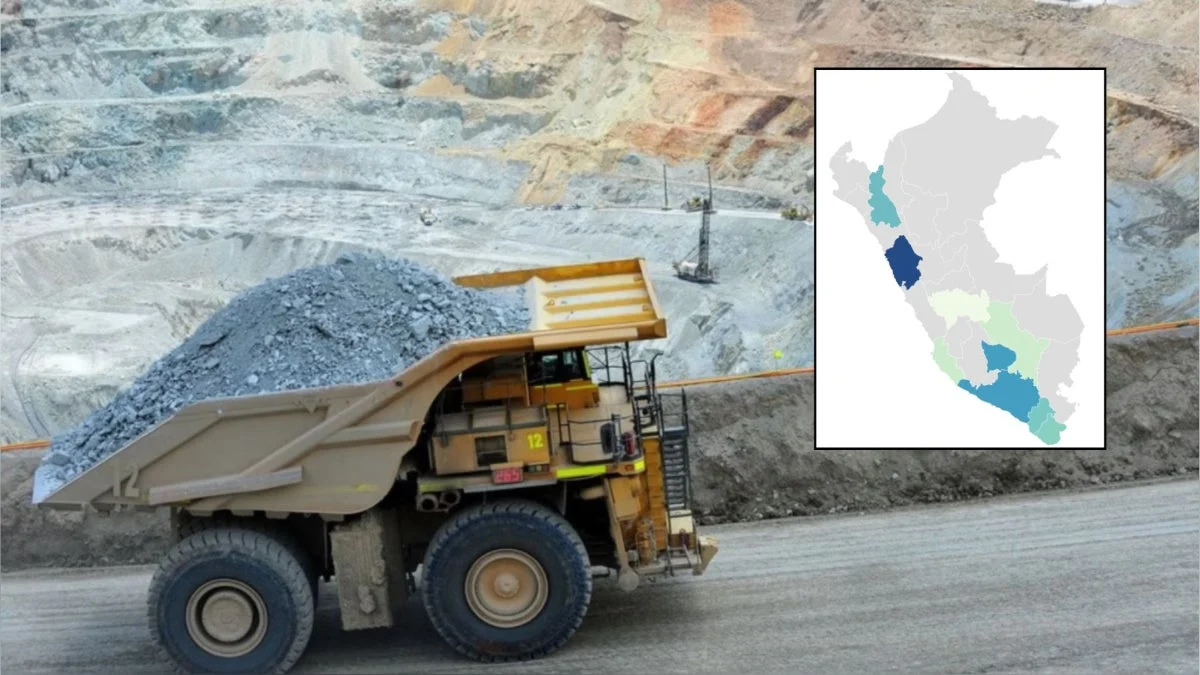
The distribution of this wealth is heavily concentrated. Four regions—Ancash, Arequipa, Apurímac, and Cajamarca—account for nearly half of the total mining transfers. Ancash leads the pack with over S/2.2 billion, followed closely by Arequipa and Apurímac with S/1.4 billion each, and Cajamarca with S/1.2 billion.
Cajamarca, in particular, serves as a cautionary tale. Despite being a powerhouse of mining production, it remains one of the poorest regions in the country. Its poverty rate hovers at 41%, significantly higher than the national average of 26%. This stark contrast between mineral wealth and social deprivation highlights the fundamental flaw in the current model: the decoupling of investment from actual human development.
Expert Perspectives: The Failure of Execution
Economists and social policy experts agree that the problem is not a lack of funds, but a chronic deficit in the capacity to execute those funds effectively.
Epifanio Baca, an economist at the Grupo Propuesta Ciudadana, argues that the current methodology for project selection is fundamentally broken. "If we analyze the last 15 years, the impact of the canon has been remarkably low," Baca notes. "Out of every 100 investments entered into the multi-year investment program, 60 or more are unplanned projects. They enter the execution phase without having undergone a rigorous evaluation of whether they actually close a social gap. We are spending vast amounts of money, but we are not solving the problems of the people."
![Más de S/13.000 millones de recursos del superciclo minero en manos de las próximas autoridades regionales y municipales [INFORME]](https://f.rpp-noticias.io/2026/10/02/342934_1914237.jpg?width=860&quality=80)
Former Minister of Development and Social Inclusion, Carolina Trivelli, echoes this sentiment, pointing to the perverse incentives that guide local politicians. "Authorities often prioritize projects that are politically profitable—such as large, visible works in district capitals—rather than addressing the urgent needs of the most marginalized populations in rural, high-poverty areas," she explains.
Trivelli further highlights a critical democratic deficit: the lack of public participation. "There is a complex void here. Without robust governance, investment decisions reveal more about the political interests of those in power than the actual needs of the territory. If we continue doing more of the same, we will get the same mediocre results, regardless of how many billions are added to the budget."
Official Responses and Policy Proposals
The Ministry of Energy and Mines (MINEM), led by Minister Guillermo Shinno, has acknowledged these systemic flaws. The government has signaled an intent to reform the distribution of mining resources, aiming to ensure that funds reach the communities directly affected by mining operations more effectively.
However, a concrete legislative proposal remains elusive. While the government deliberates, the pressure is mounting on the incoming regional and local authorities to break the cycle.
The consensus among analysts is that the first priority for the incoming government should be a "stop-gap" strategy:
- Inventory of Stalled Works: Coordinate with the Ministry of Economy and Finance (MEF) to identify all abandoned or unfinished projects that have already received significant investment.
- Prioritization over Innovation: Instead of initiating "vanity projects," new authorities must focus on completing the "mountain" of unfinished infrastructure that has been abandoned by their predecessors.
- Institutional Continuity: The "snowball effect" of new administrations ignoring the projects of the previous term must be halted through binding multi-year investment commitments.
The Long-term Implications
The mining windfall represents a once-in-a-generation opportunity to transform the nation’s social landscape. If the incoming authorities fail to pivot from "spending" to "investing," the country risks a scenario of "resource nationalism" where the benefits of extraction are perceived only by a political elite, further fueling social unrest and anti-mining sentiment.
The challenge for the new administration is clear: they have the capital. They now require the political courage to implement rigorous technical evaluations, demand transparency from contractors, and, most importantly, empower local communities to participate in the decision-making process.
Failure to do so would not only be an administrative oversight—it would be a betrayal of the promise that the nation’s mineral wealth should serve as the foundation for its development. As the electorate prepares to vote, the message is unequivocal: the era of "more money, same results" must come to an end. The future of these regions depends on the capacity of their leaders to prioritize long-term welfare over short-term political gains.
Ultimately, the true measure of success for the next four years will not be found in the budget reports of the Ministry of Economy, but in the measurable reduction of poverty, the improvement of health outcomes, and the closing of the infrastructure gaps that have persisted for too long in the shadow of the mines.