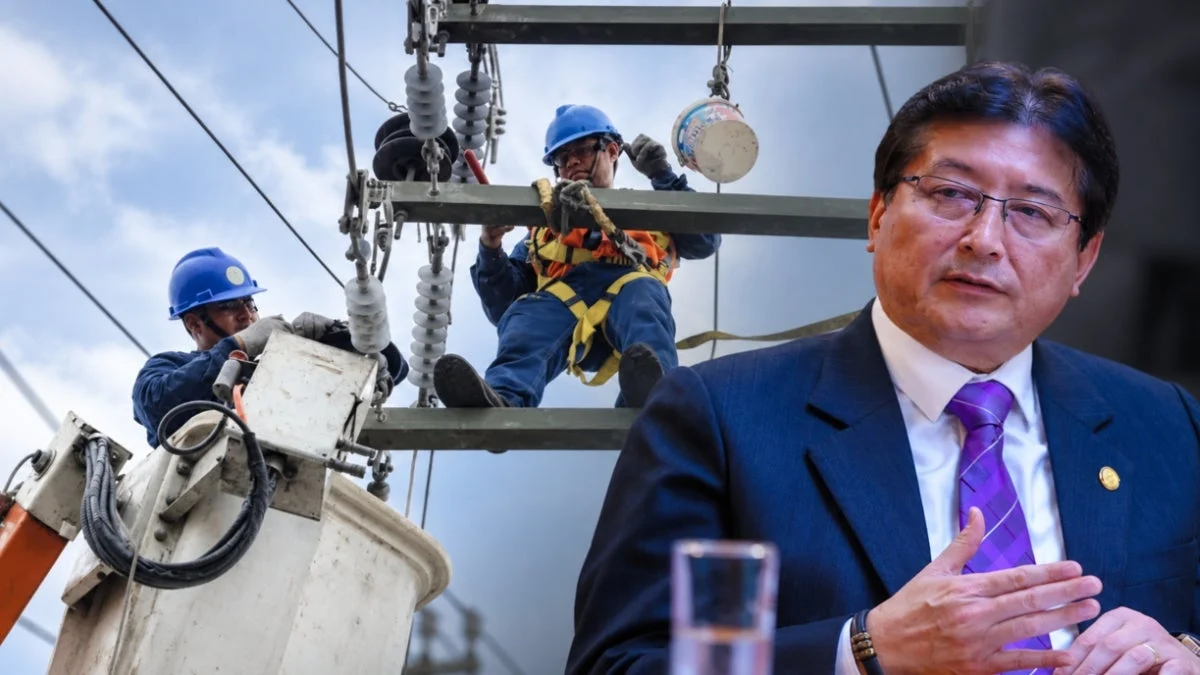
As the meteorological phenomenon known as "El Niño" looms over the horizon, bringing with it the threat of severe weather patterns, the Peruvian government is proactively bracing for potential infrastructure challenges. Guillermo Shinno, the Minister of Energy and Mines, has recently outlined a comprehensive strategy aimed at maintaining grid stability and ensuring the rapid restoration of electrical services should the country face significant climate-related damage.
While the prospect of power outages remains a technical reality in the face of potential flooding, mudslides, and structural damage, the Ministry of Energy and Mines (MINEM) has sought to temper public anxiety, particularly regarding the economic impact on household utility bills. By cutting bureaucratic red tape and prioritizing safety, the administration aims to navigate the upcoming season with minimal disruption to the national power supply.
Main Facts: The Government’s Contingency Framework
The core of the government’s response lies in the suspension of traditional, time-consuming permitting processes for energy infrastructure repairs during declared emergencies. Under normal circumstances, utility companies must navigate a complex regulatory landscape to obtain authorization for significant repairs or grid reconstruction. However, Minister Shinno confirmed that the government is drafting measures to bypass these administrative hurdles during the El Niño season.
The strategy is built on three key pillars:
- Regulatory Flexibility: Allowing electrical companies to execute emergency repairs immediately following damage, rather than waiting for standard bureaucratic approval.
- Safety-First Restoration: Prioritizing the speed of service restoration while strictly monitoring the safety of affected residential and commercial connections to prevent secondary accidents.
- Price Stability: Providing assurances that the temporary nature of potential climate-induced outages will not translate into long-term or significant surges in consumer electricity tariffs.
Chronology: The Evolution of Disaster Preparedness
The urgency of this policy shift stems from historical data and current climate modeling, which suggest that the upcoming El Niño could be particularly impactful.
- Pre-Season Assessment (Months Prior): The Ministry of Energy and Mines began conducting vulnerability assessments of the national grid, identifying high-risk areas where power lines and substations are most susceptible to heavy rainfall and geological instability.
- The Council Meeting: The recent announcement followed the meeting of the Peruvian-Chilean Business Council, where energy security was a primary topic of discussion. It was here that Minister Shinno publicly acknowledged the inevitability of some service interruptions.
- The Upcoming Policy Rollout: The government is scheduled to finalize and present the legal framework regarding these emergency measures by mid-October. This legislative effort aims to provide the legal "blanket" that allows utility providers to act decisively under pressure.
- Active Monitoring Phase: Once the phenomenon peaks, the government will shift into an active response phase, coordinating with local distribution companies to monitor the grid in real-time.
Supporting Data: Understanding Grid Vulnerability
To understand why these measures are necessary, one must look at the anatomy of the Peruvian power grid. Many of the nation’s transmission lines cross difficult, mountainous terrain that is highly prone to landslides triggered by intense El Niño-related rainfall.
Technical Risks
The primary threat is not just the rain itself, but the resulting earth movement. When a transmission tower loses its structural foundation due to soil liquefaction or a landslide, the damage is often extensive. Minister Shinno noted that in these scenarios, service cuts are not just possible—they are likely, either due to physical failure or as a proactive safety measure to prevent electrocution or fire.
Economic Context
Historically, the public fears that "force majeure" events will lead to astronomical increases in energy costs. However, the Ministry’s analysis suggests that the economic impact will be muted. Because the disruptions are expected to be short-term and localized, they do not constitute a systemic shift in generation costs. Unlike a sustained fuel shortage or a massive long-term generation deficit, localized damage to distribution infrastructure is treated as an operational expense rather than a structural change in the market, thus protecting the end-user from sudden price spikes.
Official Responses and Strategic Priorities
During his address at the Peruvian-Chilean Business Council, Minister Shinno was candid about the challenges ahead. "We have to be realistic," he noted. "Some structures will fall, and in some cases, we will have to cut the power to ensure the safety of the population."
The "Safety First" Mandate
A critical component of the Ministry’s stance is the refusal to restore power blindly. Minister Shinno emphasized that simply flipping the switch back on after a disaster is a recipe for tragedy.
"We are committed to restoring energy as quickly as possible, but we cannot do so if the affected homes or buildings are not electrically sound," Shinno warned. "If a house has been flooded or its electrical wiring has been compromised, restoring power immediately could lead to short circuits, fires, and lethal accidents. Our priority is the life of the citizen."
This position places a dual responsibility on the state and the consumer. While the utility companies are tasked with repairing the grid, local authorities and homeowners must ensure that internal household systems are inspected before they are re-energized.
Implications for the Future of Energy Infrastructure
The decision to streamline the permit process has significant implications for how Peru manages public infrastructure. It signals a move toward a "Crisis-Adaptive Governance" model. By pre-authorizing emergency reconstruction, the government is essentially acknowledging that the speed of climate-induced damage is outpacing the speed of traditional bureaucracy.
Impacts on Utility Companies
For electrical distribution companies, this provides a clearer path to fulfilling their service obligations. They are no longer caught between the pressure to provide light and the threat of legal sanctions for performing repairs without the proper, long-winded paperwork. However, this also shifts more accountability onto the companies to prove that their emergency interventions are necessary and professional.
Impacts on the Consumer
For the average citizen, the government’s message is one of cautious preparation. While the government is taking steps to ensure that the lights come back on quickly, the public is being advised to expect the possibility of intermittent service.
Furthermore, the stability of electricity tariffs is a welcome relief for a population already struggling with inflationary pressures. By de-linking the cost of natural disaster recovery from long-term tariff structures, the government is preventing a double-blow to the economy.
Conclusion: A Proactive Stance
The strategy articulated by Minister Shinno reflects a pragmatic approach to the uncertainty of climate change. By shifting from a reactive posture—where permits are requested after the disaster strikes—to a pre-authorized emergency framework, the Ministry of Energy and Mines is attempting to harden the national grid against the chaotic reality of El Niño.
As the October deadline for the new legal framework approaches, the focus remains on coordination. The government, the utility providers, and the public are all stakeholders in this effort. While the storms may be beyond human control, the efficiency of the response is not. Through clear communication, streamlined regulation, and a commitment to safety, Peru is preparing to weather the coming challenges, ensuring that while the rain may fall, the essential infrastructure remains as resilient as possible.
The coming months will serve as a definitive test of this administrative agility. Whether the measures are sufficient will depend on the intensity of the climatic events, but the framework established by the MINEM provides a necessary blueprint for maintaining stability in an increasingly volatile environment. For now, the message is clear: expect disruption, but rest assured that the recovery process is being designed to operate at the speed of the crisis itself.