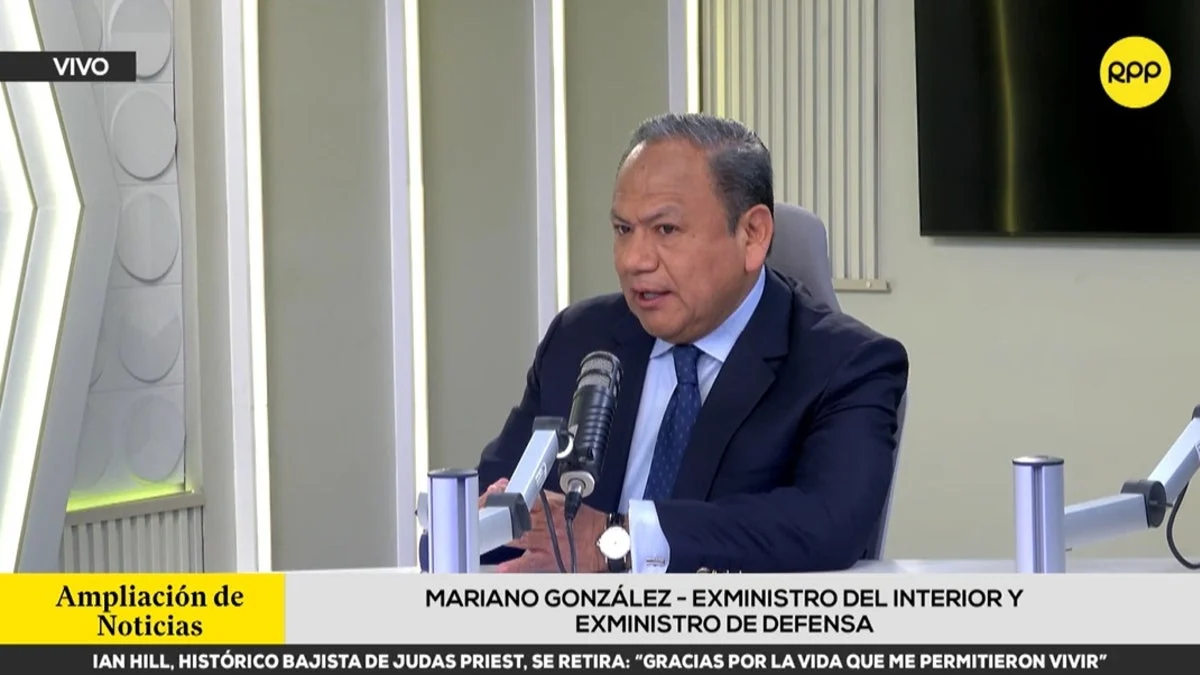
The Peruvian security landscape has reached a critical inflection point. As criminal syndicates solidify their grip on various regions and infiltrate the very foundations of the state, the traditional methods of law enforcement are being deemed insufficient. In a recent, high-profile intervention, former Minister of the Interior and Defense, Mariano González, issued a stark warning: Peru is no longer merely fighting a surge in delinquency; it is embroiled in a war against organized crime that threatens the survival of its democratic institutions.
González, a seasoned voice on national security, has formally proposed the immediate activation of a "Council of State"—a high-level body designed to force collaboration between the Executive, the Judiciary, the Public Ministry, and the Legislative branch. His remarks follow a period of intense public anxiety, underscored by recent Latinobarómetro data suggesting that 67% of Peruvians believe the nation is losing the battle against organized crime.
The Genesis of the Crisis: Penetration of the State
The core of the issue, according to experts and government insiders, lies in the evolution of criminal economies. Peru is no longer dealing with isolated gangs but with transnational networks fueled by illegal mining and large-scale drug trafficking. These illicit activities have moved beyond the fringes of society, penetrating the private sector, local economies, and, increasingly, the political machinery of the country.
Illegal mining, particularly in the southern regions like Puno, has become a multi-million-dollar industry that provides the capital necessary for criminal organizations to bribe officials, secure logistics, and undermine regional authorities. This "criminalization of the economy" has created a parallel power structure that weakens the state’s ability to enforce the rule of law. When illegal actors can influence judicial outcomes or political campaigns, the "social contract" is effectively severed.
Chronology of Recent Escalations
To understand the urgency of the current proposal, one must look at the sequence of events that has forced the government’s hand:
- Early 2024: A steady increase in extortion and contract killings in northern cities, particularly Trujillo, triggers localized emergency decrees.
- Mid-2024: Reports of criminal infiltration into municipal governments begin to surface, prompting fears of "narcopolitics."
- September 2024: The public perception of insecurity hits an all-time high, with major urban centers experiencing a spike in violent crime, leading to widespread protests by business owners and transport unions.
- Late 2024 (Present): The government officially pivots, launching a "Unified Command" in Trujillo—a militarized police-military hybrid structure—aimed at reclaiming control over territories held by criminal syndicates.
- Current Week: Mariano González publicly endorses the creation of the Unified Command but insists it is insufficient without a structural, top-down overhaul of the justice system.
The Need for a "Change of Approach"
Mariano González has spent months advocating for what he calls a "Doctrinal Shift" in security. In his recent interview with RPP, he argued that the current administration’s previous reliance on conventional police work was destined to fail.
"We are in a war against crime," González asserted. "But that war cannot be waged by the Executive branch in a vacuum. It requires a transversal commitment. If the police capture a criminal, but the Public Ministry fails to build a solid case, or the Judiciary releases them due to procedural loopholes, then the entire effort is wasted."
His call for a Council of State is not merely a bureaucratic suggestion; it is a plea for the political class to exercise "the capacity for renunciation." González argues that the current political climate, characterized by deep-seated animosity between the Legislative and Executive branches, prevents the necessary coordination to tackle a national security threat. He demands that leaders set aside partisan agendas to focus on a unified, state-wide strategy that prioritizes national defense over political point-scoring.
Supporting Data and Institutional Failures
The effectiveness of the state’s response is currently hampered by systemic bottlenecks. Statistical data from recent months highlights a recurring trend: a high rate of recidivism among criminal suspects. In cities like Trujillo, the police report that a significant percentage of those arrested for extortion are individuals who have been apprehended and released multiple times in the past two years.
This "revolving door" phenomenon has become a point of contention between the Ministry of the Interior and the Judiciary. While the Judiciary maintains that it operates strictly within the bounds of due process and the Penal Code, the Executive argues that the current legal framework is too lenient to combat high-impact organized crime.
Furthermore, the infiltration of criminal money into the political system has created a "capture" effect. When organized crime funds political campaigns, it effectively buys immunity from future prosecution. This is the "existential threat" that González refers to—it is not just about robberies on the street, but the erosion of the integrity of the state itself.
Official Responses and Political Dynamics
The discourse surrounding the new Unified Command in Trujillo has been polarized. On one side, the Executive branch, led by the President, views the militarization of security in the north as a necessary, short-term deterrent. By deploying specialized military units to support the National Police (PNP), the government aims to restore public order and provide a sense of safety to the business community.
However, the political opposition and some legal scholars have raised concerns regarding the role of the armed forces in internal security. Critics argue that the military is not trained for civilian policing and that this shift risks human rights abuses. Conversely, proponents like González argue that when the state’s monopoly on violence is challenged by criminal groups with military-grade weaponry, the traditional distinction between police and military operations becomes obsolete.
The recent rhetoric from the government—calling for a more robust role for the Public Ministry—is a clear signal that the administration is feeling the pressure to show results. The challenge, however, remains the lack of trust between the institutions. Without a forum like the Council of State to mediate these tensions, individual agencies are likely to continue blaming one another for the persistence of violence.
Implications for the Future of Peru
If the government fails to implement a cohesive strategy, the implications for Peru could be severe:
- Erosion of Foreign Investment: As extortion and insecurity increase, the cost of doing business in Peru rises. Major industries, particularly mining and agriculture, are already reporting increased costs due to "security taxes" imposed by criminal groups.
- Institutional Fragility: Continued failures in the justice system will further alienate the citizenry from the state, potentially creating a vacuum that could be exploited by populist or extremist political movements.
- Transnational Risks: Peru risks becoming a failed state node in international drug trafficking routes, which would invite stronger sanctions and scrutiny from international bodies.
Conclusion: A Call for Unity
Mariano González’s proposal serves as a wake-up call. The "war against crime" is not a battle to be won with individual initiatives or isolated military deployments. It is a systemic struggle that requires the collective will of every constitutional organ in the country.
As the government moves forward with the Unified Command, the success of this initiative will be measured not by the number of arrests, but by the number of effective convictions and the restoration of state presence in areas that have been abandoned to organized crime. The path forward requires a level of political maturity that has been largely absent in recent years. Whether the political class is capable of setting aside their differences to save the state remains the defining question of this administration.
The message is clear: the state must act as a single, indivisible entity. In the face of a threat that knows no borders and respects no laws, the only defense is a united front. Without a coordinated Council of State to align the nation’s efforts, the battle against the mafias will continue to be a losing one, at the expense of the millions of Peruvians who simply demand the right to live in peace.