By Economic Analysis Desk
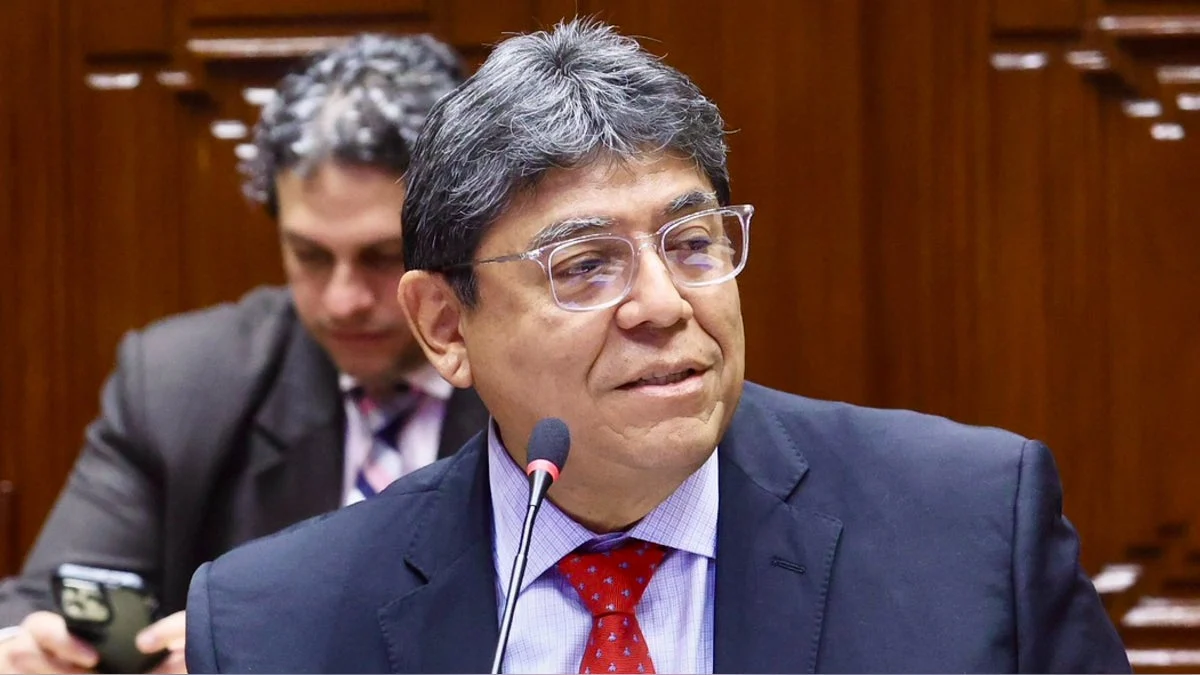
Despite a challenging global climate and the looming threat of an intensified El Niño phenomenon, the Peruvian government has doubled down on its economic growth targets for 2026. Minister of Economy and Finance, Elmer Cuba, appearing before the Congressional Bicameral Budget Committee, outlined a bold fiscal strategy designed to sustain momentum while insulating the country’s most vulnerable sectors.
At the heart of the government’s plan is a proposed supplemental credit of S/ 8.2 billion—a massive injection of liquidity intended to bolster public spending in the final quarter of the year. Minister Cuba’s message was one of cautious optimism, asserting that Peru’s macroeconomic fundamentals remain robust enough to withstand both environmental shocks and global volatility.
The Core Economic Outlook: Navigating the Storm
Minister Cuba’s testimony provided a detailed diagnostic of the current state of the Peruvian economy. Acknowledging that the country has faced significant headwinds, particularly due to the recurring El Niño weather phenomenon—which he described as the most severe in seven decades—the Minister emphasized that the economy has displayed surprising resilience.
A Turnaround in Sight
According to official projections from the Ministry of Economy and Finance (MEF), the economy hit its nadir in June. "According to our calculations, the worst month of the year in terms of activity was June," Cuba told the committee. However, he remains confident that the subsequent months will show a steady climb. The government anticipates growth between 2.5% and 3% for the final quarter, which would culminate in an annual growth rate of 3.4% for 2026.
This 3.4% target is a pivotal figure for the administration. It signals that despite the adverse climatic conditions, the "engine" of the Peruvian economy is not stalling. Looking beyond the immediate impact of the current weather patterns, Cuba projected a bright future, noting that once the post-El Niño period stabilizes, the country is well-positioned to grow at an annual rate of approximately 4%.
Chronology of Fiscal Strategy: The Road to the Supplemental Credit
The proposal for the S/ 8.2 billion supplemental credit did not emerge in a vacuum. It is the result of a deliberate fiscal recalibration aimed at ensuring that the government can meet its obligations in education, health, and security during the final months of the year.
- Q1-Q2 2026: Economic indicators suggested a deceleration, largely influenced by climate-related disruptions in the agriculture and fishing sectors.
- June 2026: Identified by the MEF as the month of lowest economic activity, prompting an urgent review of budget requirements.
- Late Q3 2026: The executive branch finalized the design of the supplemental credit, balancing the need for public investment with the maintenance of fiscal responsibility.
- Present Day: Minister Cuba formally presents the plan to the Congressional Bicameral Budget Committee, seeking legislative approval to deploy the funds before the end of the fiscal year.
Supporting Data: Why Peru Outperforms the Region
One of the most compelling arguments presented by Minister Cuba was a comparative analysis of Peru’s growth trajectory versus its Latin American neighbors. Citing data from LatinFocus, the Minister highlighted that while Latin America and the Caribbean are expected to post an average growth rate of 2.3% leading into 2030, Peru is projected to reach an expansion of 3.8%.
Comparative Growth Projections (2026–2030)
| Region/Country | Projected Annual Growth |
|---|---|
| Latin America & Caribbean | 2.3% |
| Peru | 3.8% |
| Colombia | Lower than Peru |
| Chile | Lower than Peru |
| Argentina | Lower than Peru |
This data serves as a cornerstone of the Ministry’s narrative: that despite internal and external challenges, Peru remains a regional leader in economic stability and growth potential. The Minister noted that this performance is not merely accidental but the result of disciplined fiscal management and a competitive, diversified economy.
Financing the Expansion: A Dual-Pronged Approach
A critical question posed by the committee members concerned the origin of the S/ 8.2 billion. Minister Cuba provided a transparent breakdown of the financing strategy, which avoids excessive reliance on a single source.
1. Own Resources (54%)
More than half of the required funds will be generated through the state’s own revenue streams. This is bolstered by three key factors:
- Enhanced Tax Collection: The tax authority (SUNAT) has shown improved performance in revenue administration.
- Commodity Prices: Favorable global prices for Peru’s key exports continue to provide a healthy inflow of foreign currency and tax revenue.
- Economic Dynamism: Despite the slowdown, the underlying activity in key sectors continues to generate revenue for the public coffers.
2. Public Debt (46%)
The remaining 46% will be financed through public credit operations. Specifically, the government plans to issue sovereign bonds. Minister Cuba defended this move as a standard and sustainable practice, noting that Peru maintains a strong credit rating and that debt levels remain within manageable parameters, allowing the state to leverage its balance sheet to spur growth when needed.
Implications: Where the Money Will Go
The allocation of the S/ 8.2 billion reflects the government’s immediate priorities. The distribution is split between current expenditures and capital investments, ensuring that the impact is felt both in day-to-day operations and long-term infrastructure.
Sectoral Priorities
- Current Expenditures (54%): These funds are earmarked for the operational costs of the state, ensuring the continuity of essential services.
- Capital Investment (45%): A significant portion is dedicated to equipment and infrastructure. This is critical for sectors that have been neglected or require modernization.
Minister Cuba explicitly identified the priority sectors: Education, Health, Defense, and Interior. By increasing the budget for these areas, the administration aims to improve the quality of public services and strengthen national security—two pillars that the government believes are essential to maintaining public confidence and social stability.
Official Responses and Future Policy
The Minister’s testimony concluded with a forward-looking vision regarding fiscal space. Cuba argued that the current supplemental credit is a bridge to a more sustainable future. He emphasized that the government is aggressively working to reduce tax evasion, viewing it as the primary mechanism to expand fiscal space in the coming years.
"The goal is that the reduction of evasion will allow us to have more resources to finance the needs of the State and sustain economic growth," Cuba stated. By closing loopholes and improving tax compliance, the government hopes to rely less on borrowing and more on its own domestic capacity.
The Cabinet’s Unified Front
Following his presentation, Minister Cuba opened the floor to other members of the Cabinet, who provided sector-specific details on how these funds would be utilized. This synchronized approach was designed to demonstrate to Congress that the executive branch has a cohesive, well-thought-out plan for the final quarter of 2026.
As the debate moves forward in Congress, the success of this fiscal injection will depend on the speed of implementation. For the Peruvian government, the stakes are high: effectively deploying these funds is not just an economic imperative, but a political one, as the administration seeks to prove that its economic management can deliver tangible improvements to the lives of citizens, even in the face of the most challenging climate conditions in a generation.
Conclusion: A Test of Resilience
The current economic strategy of the Peruvian government represents a high-stakes balancing act. Minister Elmer Cuba’s defense of the 3.4% growth target is a clear signal that the administration believes in the structural strength of the Peruvian economy. By balancing self-generated revenue with strategic borrowing, and by focusing heavily on critical social sectors, the government is attempting to weather the El Niño crisis while laying the groundwork for a robust 2027 and beyond.
As the country navigates the final months of 2026, the focus will remain on the efficacy of these S/ 8.2 billion in stimulating demand and protecting the most vulnerable sectors. If successful, this fiscal policy could serve as a model for regional stability, confirming Peru’s status as a resilient player in the volatile Latin American landscape.