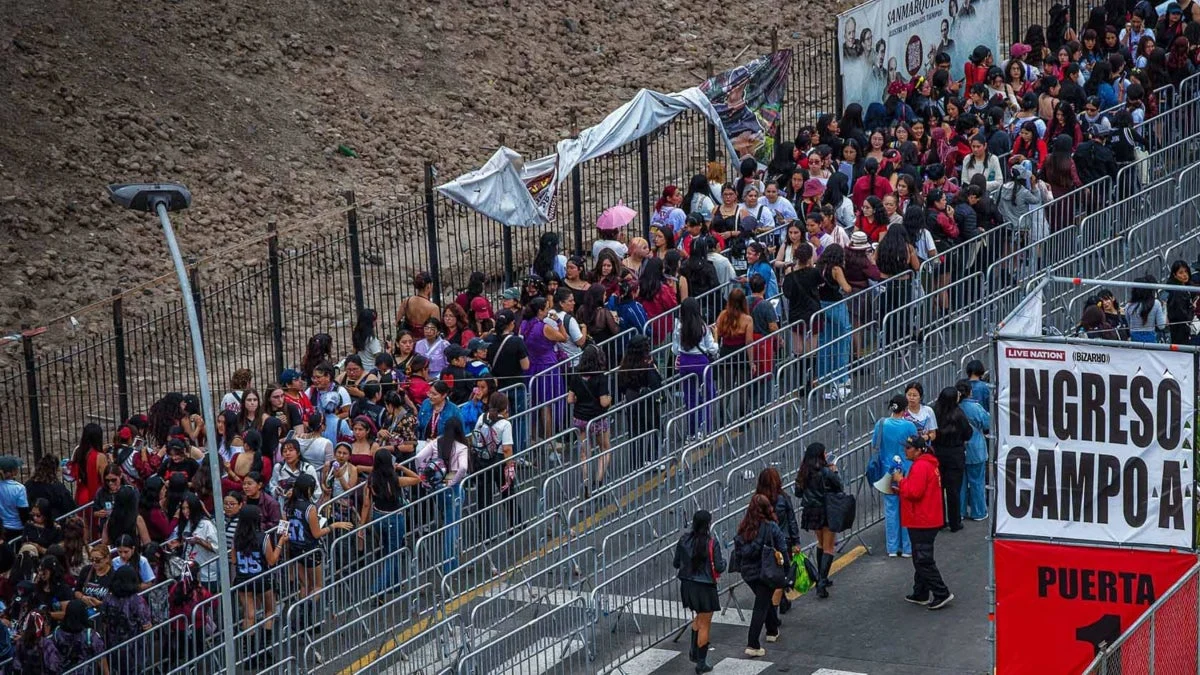
The phenomenon of global pop music reaching Latin American shores has long been a source of cultural excitement, but when the world’s biggest boy band, BTS, announces a triple-header in Lima, the implications shift from the artistic to the macroeconomic. With three massive shows scheduled for October 7, 9, and 10, the "Bangtan Fever" is set to provide a significant stimulus to the Peruvian capital’s economy.
According to official projections from the Ministry of Foreign Trade and Tourism (Mincetur), these concerts are not merely musical milestones; they are catalysts for a massive influx of capital, expected to generate an economic impact of US$ 18.7 million. As thousands of fans, collectively known as the "ARMY," descend upon the city, Lima is bracing for a surge in demand that will test and invigorate its tourism, hospitality, and service sectors.
Main Facts: The Scope of the "Bangtan" Effect
The logistical scale of this event is unprecedented for a single musical act in Lima. Mincetur’s comprehensive report estimates that the three-night residency will draw a total of 150,000 attendees. This crowd will not be limited to the local population of Lima; rather, it will be comprised of a diverse demographic of national and international travelers.
Of the total expected attendance, over 50,000 are categorized as tourists or excursionists—individuals traveling from outside the capital specifically to witness the performance. This influx is broken down into two primary segments:
- Tourists: Over 36,500 fans who will travel to Lima and stay for at least one night, contributing significantly to hotel occupancy and local dining.
- Excursionists: More than 14,000 visitors who will attend the concert and return to their home regions or countries without staying overnight, still contributing to local transport and event-day retail.
The US$ 18.7 million economic impact is projected to be distributed across several key pillars of the tourism industry: US$ 8.1 million will be generated through "receptive tourism" (international visitors), US$ 9.9 million through domestic tourism, and US$ 760,000 through regional excursionism.
Chronology: The Road to the October Residency
The lead-up to the October dates has been characterized by meticulous planning by both the organizers and the Peruvian government.
- Announcement Phase: Following the initial confirmation of the dates, demand for tickets shattered local records, prompting a secondary market surge and a massive logistical preparation by Mincetur to manage the influx of visitors.
- Pre-Concert Surge (October 1–6): The days leading up to the first show are expected to see the highest velocity of travel, with hotels and short-term rentals experiencing near-total capacity.
- The Performance Window (October 7, 9, 10): The event dates themselves will serve as the peak for the service industry. Transport systems, including Lima’s transit network and private taxi services, are preparing for unprecedented traffic flow toward the concert venue.
- Post-Event Economic Tail (October 11 onwards): Analysts expect a sustained economic benefit as international visitors often extend their stays for cultural tourism, visiting local landmarks, museums, and gastronomic hubs, further cementing the financial windfall.
Supporting Data: Mapping the Origins of the ARMY
The geographic diversity of the concert attendees is a testament to the global reach of BTS. Mincetur’s data reveals a clear "migration map" of fans converging on Lima.
Domestic Influx
The domestic tourism sector remains the primary driver of the event’s success. Approximately 28,000 ticket holders reside outside of the Lima metropolitan area. The regional distribution is as follows:
- Arequipa: Leading the charge with 21.3% of the regional attendees.
- Trujillo: Contributing 11.9%.
- Cusco: Representing 7.8%.
- Chiclayo: Adding 7.5%.
- Other key regions: Including Piura (4.5%), Tacna (4.1%), and Ica (3.8%).
International Reach
Perhaps most impressively, 5.7% of the ticket holders reside outside of Peru, amounting to more than 8,500 international fans. This cross-border movement highlights Lima’s role as a regional hub for major events. The international contingency is led by:
- Ecuador: 27.9% of the international audience.
- Mexico: 12.2%.
- Bolivia: 10.6%.
- United States: 9.1%.
- Chile: 6.8%.
Official Responses and Strategic Implications
Mincetur has framed these concerts as a key opportunity to showcase Peru’s infrastructure and hospitality on a global stage. By analyzing the spending patterns of these fans, the government aims to create a blueprint for future large-scale cultural events.
"This is not just about a concert; it is about the integration of service sectors," noted a representative from the Ministry. The strategy involves not only facilitating the entry of tourists but also ensuring that the "ARMY" experience is positive, which may lead to repeat visits. Government agencies are working in tandem with the private sector to ensure that public transportation, security, and sanitation services are optimized for the high volume of foot traffic expected around the venue.
Moreover, the economic data suggests a shift in the traditional tourism profile. Unlike standard seasonal tourism, which relies on vacation planning, "event-driven tourism" is highly resilient and provides a massive, immediate injection of liquidity into the economy. This is particularly vital for small and medium-sized enterprises (SMEs) in the restaurant and retail sectors, which have historically been sensitive to fluctuations in consumer confidence.
Broader Implications: The Future of Events in Lima
The success of the BTS residency could serve as a "proof of concept" for Lima to position itself as a primary venue for major international tours in South America. The ripple effects of this event are expected to be felt in several areas:
1. Strengthening the Tourism Brand
By successfully hosting such a massive influx of international travelers, Lima enhances its reputation as a safe and capable host city. This is crucial as the country looks to hit ambitious tourism targets set for 2026.
2. Service Sector Modernization
The pressure exerted on local businesses—from hotel booking platforms to ride-sharing apps—is forcing an acceleration in digital transformation. Businesses that adapt quickly to the demand, offering multilingual support or K-Pop-themed packages, are seeing higher profit margins, a trend that may stick long after the band leaves.
3. Cultural Diplomacy
The influx of fans from countries like Ecuador and Mexico highlights the growing interconnectedness of Latin American youth culture. The BTS concerts act as a soft-power tool, creating cross-cultural bonds that often lead to long-term cultural exchange programs and increased regional tourism.
4. Economic Resilience
The ability to generate nearly US$ 20 million in a matter of days demonstrates the potential of the "orange economy" (the creative and cultural economy) to act as a stabilizer for the national GDP. As Peru continues to recover from pre-pandemic economic sluggishness, the focus on high-impact cultural events provides a much-needed boost to internal consumption.
Conclusion
As the city prepares for the arrival of the ARMY, the atmosphere in Lima is one of electric anticipation. While the music will undoubtedly be the highlight for the 150,000 fans in attendance, the underlying economic engine driving these events is equally remarkable. With a carefully planned strategy, robust support from the Ministry of Foreign Trade and Tourism, and an enthusiastic regional and international audience, the BTS residency stands as a landmark case study in how modern entertainment can serve as a potent engine for national economic growth.
Lima is ready, the hotels are filling up, and the logistics are in place. The stage is set not just for a concert, but for a transformative week that will likely be remembered as a high-water mark for Peru’s cultural and economic engagement on the world stage.