The infrastructure project, a critical artery for Peru’s agricultural powerhouse, marks a significant milestone in government-to-government cooperation and regional water security.
Executive Summary: A New Era for Irrigation
In a strategic move to bolster Northern Peru’s agricultural capacity, the Peruvian government has solidified a pivotal agreement with Canada to finalize the construction of "Sifón 3," a cornerstone component of the expansive Chavimochic irrigation project. Marco Vinelli Ruiz, the Minister of Agrarian Development and Irrigation (Midagri), announced that the project—valued at S/ 144 million (excluding taxes)—is officially underway with a strict delivery timeline of 50 weeks.
This infrastructure is not merely a pipeline; it is a lifeline for thousands of hectares of arid land in the La Libertad region. By optimizing the distribution of water resources, the completion of Sifón 3 will serve as the technical foundation for the future construction of a major dam, scheduled for completion by 2028. This move signifies a broader commitment by the administration to secure long-term water stability for the country’s agro-export sector.
Chronology: From Planning to Implementation
The history of the Chavimochic project is one of ambition and technical complexity. For decades, the project has been the backbone of economic development in La Libertad, yet it has faced repeated delays due to bureaucratic hurdles and engineering challenges.
- The Conceptual Foundation: Chavimochic was designed to divert water from the Santa River to transform desert landscapes into high-yield agricultural hubs. Sifón 3 was identified early on as a critical point of failure or bottleneck that required state-of-the-art engineering.
- The Government-to-Government (G2G) Shift: Recognizing the need for efficiency and transparency, the Peruvian government opted for the G2G model. By partnering with Canada—a nation with extensive expertise in hydraulic engineering—Peru seeks to bypass traditional procurement pitfalls.
- The Agreement Signing (2026): After months of rigorous negotiations, the contract was formalized in September 2026. This agreement covers not only the construction but also the sophisticated design and engineering oversight required to navigate the region’s challenging topography.
- The 50-Week Countdown: With the contract now active, the clock has started. Minister Vinelli confirmed that site mobilization and initial excavation phases have commenced, aiming for a grand opening in 2027.
Technical and Financial Scope
The scale of the investment reflects the complexity of the engineering required for Sifón 3. At a cost of S/ 144 million, the project is designed to withstand both geological shifts and the potential stresses of climate-driven hydrological changes.

Engineering Challenges:
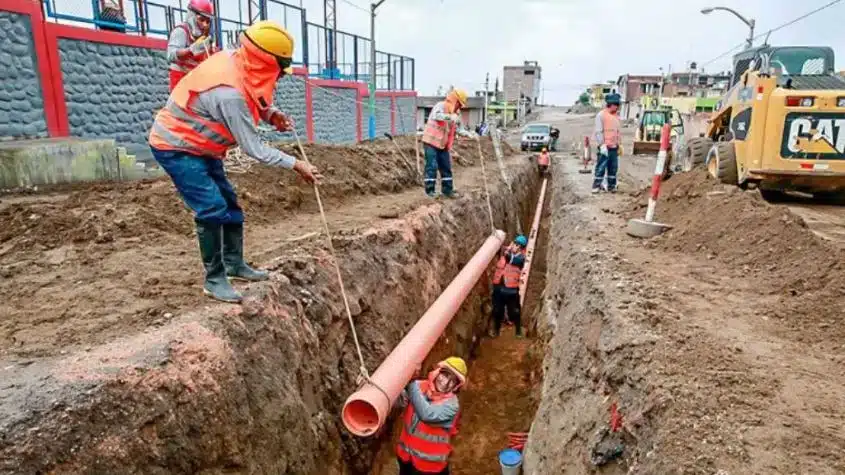
The "sifón" (inverted siphon) is a gravity-fed structure that allows water to traverse deep depressions or valleys. Given the seismic nature of the Peruvian coast, the design incorporates advanced materials and seismic dampening technology. The Canadian technical team has been tasked with ensuring that the structural integrity of the siphon meets international safety standards, particularly in light of the recurring threats posed by the "El Niño" phenomenon, which has historically caused catastrophic damage to regional infrastructure.
Financial Structure:
The S/ 144 million investment is a direct allocation from the national budget, underscored by a G2G framework that mandates strict adherence to international anti-corruption and quality-control benchmarks. By excluding the IGV (General Sales Tax) from the base investment figure, the government aims to focus the capital strictly on technical execution and material acquisition.
Official Perspectives: Minister Vinelli’s Stance
During a recent briefing following an event with the National Agricultural Health Service (Senasa), Minister Marco Vinelli emphasized the urgency of this project. His message was clear: the government views this infrastructure as non-negotiable for regional development.
"We are moving forward with precision," Vinelli stated. "The 50-week execution period is not just a target; it is a commitment to the farmers and the agricultural entrepreneurs who depend on this water flow. When the siphon is ready next year, we will have unlocked the path for the 2028 dam project, effectively doubling the efficiency of the entire irrigation system."
The Minister also addressed the political climate surrounding the project. In a broader discussion regarding the administration’s request for legislative powers, Vinelli linked the need for efficient infrastructure execution to the broader necessity of responsive governance. "If certain political factions impede our ability to deliver, they are not hurting the ministry—they are hurting the population that relies on these resources for their livelihoods and safety against natural disasters," he argued.

Strategic Implications for Peru
The completion of Sifón 3 is more than a construction project; it is a catalyst for economic stability. The implications are multi-faceted:
1. Economic Growth and Agro-Exports
La Libertad is a major exporter of blueberries, asparagus, and avocados. These crops require consistent water supply to maintain global market standards. Sifón 3 will stabilize the water pressure and availability across the Chavimochic network, ensuring that farmers can commit to long-term planting cycles without fear of water shortages during dry seasons.
2. Resilience Against Climate Change
With the persistent threat of the El Niño phenomenon, the construction sector in Peru has been under pressure to build "smarter." Recent data from the Peruvian Chamber of Construction (CAPECO) shows a 10.6% growth in the sector between January and August, but it also highlights the vulnerability of existing infrastructure. By incorporating modern, resilient designs into the Sifón 3 project, the government is effectively "future-proofing" the region against the extreme weather events that have previously set the country back by years.
3. Strengthening International Relations
The G2G partnership with Canada is a strategic play. By leveraging Canadian expertise, Peru is fostering a collaborative environment that encourages foreign investment. This model of cooperation is likely to be replicated in future water management projects across the Andes, positioning Peru as a leader in sustainable hydraulic development in South America.
Challenges Ahead
While the optimism surrounding the 2027 completion date is high, the road ahead is not without obstacles.

- Logistical Hurdles: Transporting specialized equipment to the construction site in the La Libertad region remains a challenge. The government must ensure that local supply chains remain uninterrupted.
- Political Consensus: As mentioned by Minister Vinelli, the government’s ability to manage large-scale projects is often tied to its ability to secure legislative support. Any further gridlock in Congress regarding budget allocations could jeopardize the 50-week timeline.
- Environmental Oversight: The construction must adhere to strict environmental impact assessments (EIA) to ensure that the diversion of water does not negatively impact local ecosystems or upstream communities.
Conclusion: A Vision for 2028 and Beyond
As the construction of Sifón 3 progresses, the eyes of the agricultural sector remain fixed on the 2027 milestone. If the project remains on track, it will provide the necessary momentum to complete the dam system by 2028, effectively closing a significant chapter in the development of the Chavimochic irrigation system.
The collaboration with Canada serves as a blueprint for how Peru can modernize its national infrastructure through transparent, high-level technical partnerships. Ultimately, the success of Sifón 3 will be measured not just by the concrete and steel laid in the ground, but by the water that reaches the fields of the North, ensuring food security and economic prosperity for years to come.
As the government pushes forward, the message from the Ministry of Agriculture remains one of resolute determination: despite political friction and environmental challenges, the work on Chavimochic will continue, securing the future of the nation’s most vital irrigation network.