Introduction: An Emblem of Abandonment
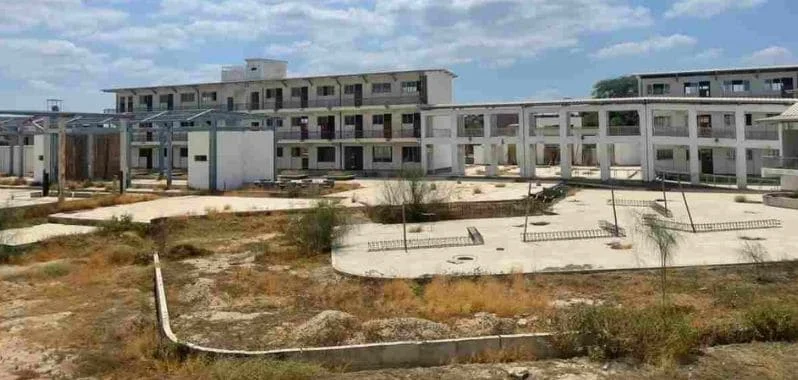
In the heart of Sullana, Piura, stands a structure that has become the definitive symbol of bureaucratic paralysis and systemic inefficiency in Peru. The Carlos Augusto Salaverry school, once envisioned as a beacon of educational progress, has languished in a state of suspended animation for over a decade. After being initiated in 2015, the project has passed through the hands of four consecutive construction companies, consuming over S/ 60 million in public funds without ever reaching completion.
Minister of Education José Antonio Chang Escobedo recently visited the site, expressing indignation at the state of the facility and promising an immediate, accelerated effort to finalize the construction. For the 1,200 students currently relegated to makeshift, pre-fabricated classrooms, this announcement is a long-awaited glimmer of hope in a story defined by broken promises and lost opportunities.
The Chronology of a Stalled Project
2015: The Commencement
The construction of the Carlos Augusto Salaverry school was launched with significant fanfare in 2015. It was designed to be a modern educational complex capable of housing thousands of students. However, the initial optimism was short-lived as the project immediately encountered contractual and administrative hurdles that would plague it for the next eleven years.
The Cycle of Failed Contractors
The project’s history is a litany of mismanagement. Over the course of its decade-long abandonment, four different construction firms were awarded contracts to complete the work. Each transition was marked by legal disputes, lack of oversight, and eventually, total abandonment. As firms went bankrupt or breached their contracts, the physical infrastructure began to deteriorate.
Years of Neglect
During the period of inactivity, the site was left vulnerable. As Minister Chang noted, the lack of security and maintenance led to the systematic looting of valuable assets. Cables were stripped, plumbing fixtures were stolen, and even doors and windows were removed by vandals, effectively stripping the school of its potential before it even opened its doors.

Supporting Data: The Human and Financial Cost
The Financial Drain
The investment in this project has been substantial, yet the return on investment has been zero for the community. With over S/ 60 million in taxpayer money already sunk into the site, the project stands as a testament to the high cost of corruption and inefficiency. This funding, intended for state-of-the-art laboratories, sports facilities, and classrooms, has essentially evaporated into the structure’s decaying walls.
The Educational Crisis
The real tragedy lies in the human impact. According to reports from the Ombudsman’s Office (Defensoría del Pueblo) as of June 2026, more than 1,200 students have been forced to receive their education in cramped, uncomfortable pre-fabricated modules. These temporary structures, which were never intended for long-term use, have become the permanent reality for a generation of Sullana youth. The absence of proper laboratory equipment and secure infrastructure has undeniably disadvantaged these students in a competitive academic landscape.
Official Responses and Political Accountability
Minister Chang’s Stance
During his site inspection, Minister José Antonio Chang Escobedo did not mince words. His rhetoric highlighted a frustration shared by the community. "It is outrageous," the Minister stated, "to witness the indolence of previous governments that left this work abandoned for 11 years, despite having spent 60 million soles. Cables, doors, bathrooms—they were all stolen, and nothing was done to prevent it. This cannot continue."
A New Commitment
The Ministry of Education has promised a new strategy. Recognizing that traditional methods have failed, the government is implementing an accelerated execution mechanism. The goal is to bypass the typical bottlenecks that have stifled the project for the last decade. "We will fulfill our word and turn this abandoned project into reality," Chang affirmed. "We will reverse this situation quickly by applying an agile system of study, construction, and execution that guarantees results. That is my promise."
Stakeholder Involvement
The visit was not a solitary ministerial action. The Minister was accompanied by local representatives, including deputies Eduardo Castillo Rivas and María Luisa Silupú, as well as the school’s director, Williams Furgong. Their presence underscores the pressure on the national government to resolve a localized issue that has become a national embarrassment.

Implications for the Future of Sullana
Benefiting Thousands
The Carlos Augusto Salaverry school is not just a building; it is a critical hub for the regional educational system. Once fully operational, the facility is expected to serve over 2,300 students. The scope of the project includes:
- Initial Education: Providing early childhood development.
- Secondary Education: The core of the school’s mission.
- CEBA (Basic Alternative Education): Ensuring that adult students and those who missed traditional schooling have a path forward.
- Technical Productive Training: Equipping students with the skills necessary for the modern workforce, directly addressing the economic needs of the Piura region.
The Structural Challenge
The path forward is not without challenges. The buildings, having sat exposed to the elements and vandalism for years, will likely require significant structural audits before construction can resume. The government’s "agile system" will need to address not only the completion of unfinished parts but the rehabilitation of structures that have already begun to degrade.
Conclusion: A Turning Point?
The saga of the Carlos Augusto Salaverry school is a stark reminder of the importance of project oversight and the dangers of political neglect. For the citizens of Sullana, the 11-year wait has been a trial of patience and resilience. While the Minister’s promises offer a new path, the community remains cautiously optimistic, waiting to see the first signs of real, sustained progress on the ground.
The commitment to finish the school is more than a construction project; it is an attempt to restore trust in public institutions. If the government can successfully deliver on this promise, it will not only provide a high-quality educational environment for thousands of students but also demonstrate that, even after a decade of failure, institutional accountability can eventually prevail. The eyes of the region remain fixed on Sullana, waiting for the day when the gates of the Carlos Augusto Salaverry school finally open to the students it was meant to serve all along.