Introduction: A New Paradigm in Legislative Relations
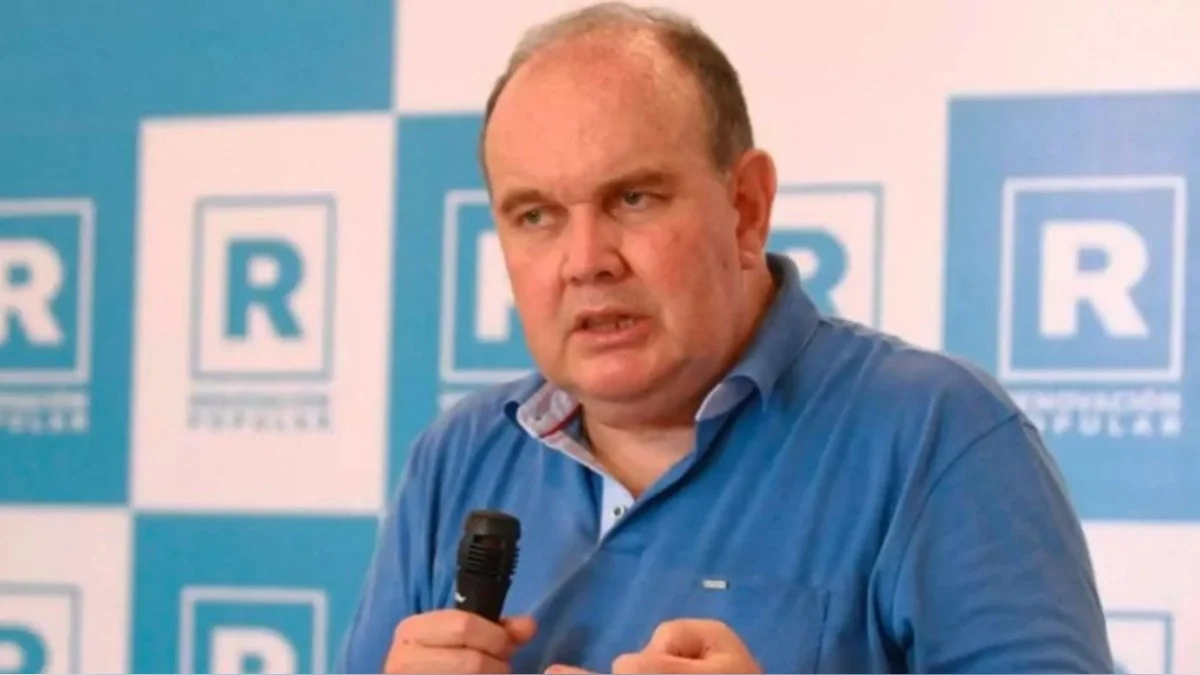
In a significant shift regarding the balance of power within the Peruvian political landscape, Rafael López Aliaga, the leader of the Renovación Popular party, has publicly outlined a strategy that marks a departure from traditional parliamentary diplomacy. Speaking before a crowd of supporters in the Manchay sector of the Pachacámac district, the former Mayor of Lima and prominent political figure asserted that his party’s legislative support for the administration of President Keiko Fujimori would no longer be unconditional. Instead, the "celeste" (sky blue) party leader declared that he intends to use the strategic weight of his parliamentary caucus—specifically within the Senate—to demand tangible improvements in public services and social infrastructure.
López Aliaga’s rhetoric reflects a growing trend in Peruvian politics where regional and national figures are leveraging legislative bottlenecks to force executive action. By characterizing his party’s votes as the decisive factor for the government’s success, he has effectively served notice that the legislative agenda of the Executive branch now sits at the mercy of his party’s social demands.
Main Facts: The "Conditioned Support" Doctrine
The core of the controversy lies in López Aliaga’s explicit confirmation that his party will engage in a "transactional" relationship with the current government. During his visit to the marginalized sectors of Manchay, the leader of Renovación Popular did not mince words regarding the current legislative climate.
"We are going to bring order now that I have a powerful caucus, because everything in the Senate now depends on Renovación Popular," he stated. "They need our votes for everything."
The "demands" he has placed on the table are far-reaching and touch upon the most sensitive aspects of Peruvian socio-economic life. He explicitly listed the conditions for his party’s cooperation:
- Water and Sanitation: A critical issue in areas like Manchay, where many families lack access to basic potable water.
- Food Security: Addressing rising costs and availability.
- Technological Integration: The provision of tablets and satellite internet to bridge the digital divide in rural and semi-urban communities.
- Public Health: The urgent construction and equipping of hospitals.
López Aliaga’s declaration, "Of course I am going to condition [my support]—I am going to condition it for water, for food, for technology, for health," suggests a move away from ideological alignment toward a model of "results-based political support."
Chronology: The Road to the Senate Power Play
To understand the gravity of these statements, one must analyze the recent timeline of the Renovación Popular movement:
- Early 2024: Renovación Popular consolidates its presence in the newly established Senate, positioning itself as a pivotal "swing" block that can either facilitate or paralyze the government’s legislative agenda.
- Mid-2024: As the administration of President Keiko Fujimori faces increasing pressure from various political factions, the "celeste" caucus begins to distance itself from the government’s internal caucus, signaling a desire for greater influence over policy.
- September 2024 (One week before regional/municipal elections): The rhetoric intensifies. During a high-stakes campaign event in Pachacámac, López Aliaga shifts from subtle critiques to an open, public ultimatum.
- The Manchay Rally: The event serves as the primary stage for his announcement, timed to coincide with the final week of campaigning, thereby maximizing his visibility among the electorate.
Supporting Data: The Legislative Weight of Renovación Popular
The influence of Renovación Popular is not merely rhetorical; it is rooted in the mathematical reality of the current Senate. In a chamber where the governing party often lacks a simple majority, the "celeste" caucus acts as the ultimate arbiter.
Analysts note that the current legislative session has seen a decrease in the efficiency of law-making, largely due to the fragmented nature of the Senate. When a party holds the "swing" votes, it possesses the power to block budget approvals, cabinet appointments, and emergency decrees.
Furthermore, the focus on Manchay is not accidental. The district of Pachacámac, like many areas on the outskirts of Lima, faces significant infrastructure deficits. According to recent data from the National Institute of Statistics and Informatics (INEI), the lack of basic services in these peripheral zones remains the primary driver of political disillusionment. By promising to "condition" national support on the resolution of these local grievances, López Aliaga is attempting to bridge the gap between national legislative politics and the immediate survival needs of the most vulnerable citizens.
Official Responses and Political Reactions
The response from the Fujimori administration has been measured but cautious. Official government spokespeople have reiterated the need for "constructive dialogue" and "consensus," avoiding a direct confrontation that could further jeopardize their legislative standing.
Meanwhile, political analysts have expressed mixed views. Supporters of López Aliaga argue that this is a pragmatic, "business-like" approach to governance—ensuring that the Executive branch is held accountable for the delivery of public works. Conversely, critics from the opposition and legal experts have labeled the tactic as a form of "political extortion," arguing that the legislative role is to enact laws for the common good, not to hold the state hostage to fulfill specific regional promises in exchange for votes.
"This sets a dangerous precedent," says one political scientist at the Pontifical Catholic University of Peru. "If every political leader conditions their vote on a laundry list of services, the executive branch becomes paralyzed by the interests of the smallest, most powerful faction."
Implications for the Future of the Government
The implications of this "conditional support" strategy are twofold:
1. The Erosion of Executive Autonomy
If the administration yields to these demands, it sets a template for other minority parties to follow suit. The Executive branch may find itself in a position where it must constantly negotiate for every bill, effectively turning the Senate into a marketplace where votes are exchanged for specific departmental or regional projects.
2. The Rise of "Populist Pragmatism"
López Aliaga’s approach suggests a shift toward what some might call "populist pragmatism." By focusing on tangible goods—tablets, satellite internet, and water—he is speaking directly to the daily anxieties of the population, bypassing the abstract ideological debates that often dominate the capital’s political salons. This could potentially bolster his standing in upcoming elections, as he positions himself as a "doer" rather than just a legislator.
3. Legislative Stability
Conversely, the risk of instability is high. Should the Executive branch refuse to meet these conditions, the result could be a complete legislative stalemate. The inability to pass a budget or approve necessary reforms could lead to a constitutional crisis or a call for early elections, a scenario that is already being discussed in the corridors of power.
Conclusion: A High-Stakes Gamble
As the election date approaches, the political temperature in Peru continues to rise. Rafael López Aliaga’s ultimatum in Manchay is more than just campaign rhetoric; it is a declaration of intent to redefine the relationship between the legislative and executive powers.
Whether this strategy will lead to the promised improvements in public services for the people of Pachacámac or simply descend into a period of prolonged political gridlock remains to be seen. What is clear, however, is that the era of "automatic" legislative support in Peru is over. The government must now navigate a new reality where every vote carries a price tag, and the political survival of the Executive depends on its ability to satisfy the demands of those who hold the keys to the Senate.
For the citizens of Peru, the next few months will be a crucial indicator of whether this "conditioned support" will result in the modernization of infrastructure and improved social services, or if it will simply contribute to the growing instability of the nation’s democratic institutions. The eyes of the country remain fixed on the Senate floor, where the balance of power has shifted, and the stakes of the game have never been higher.