Executive Summary: A Targeted Economic Response
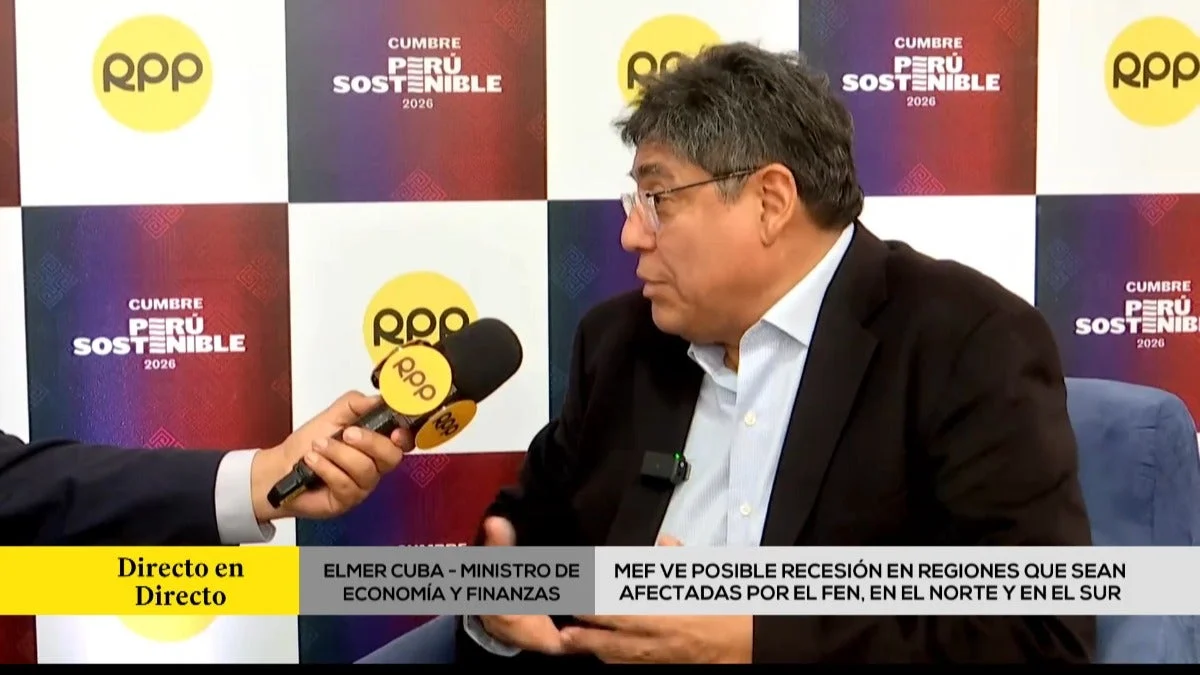
The Peruvian government, led by the Ministry of Economy and Finance (MEF), is proactively developing a robust contingency plan to mitigate the socioeconomic fallout of the anticipated extraordinary El Niño phenomenon. Minister of Economy Elmer Cuba, speaking exclusively to RPP following his participation in the "Peru Sustainable 2026 Summit," revealed that the administration is preparing a two-pronged strategy: direct fiscal transfers to vulnerable households and tailored financial flexibility for impacted business sectors.
As the National Study of the El Niño Phenomenon (ENFEN) continues to warn of an event with a high probability of reaching extraordinary intensity, the government is shifting its focus from broad, pandemic-style stimulus packages toward localized, high-impact interventions. The objective is clear: to prevent a localized economic collapse in regions where climate-induced disasters threaten to dismantle livelihoods, infrastructure, and commercial activity.
The Chronology of an Impending Crisis
Early Warning Signs and Scientific Consensus
The alarm was first raised by the ENFEN committee, which noted significant sea surface temperature anomalies off the Peruvian coast. Throughout the preceding months, oceanographic data has mirrored the conditions that preceded the devastating 1997-1998 and 2017 El Niño events.
From Monitoring to Policy Formulation
Following the initial climate reports, the MEF began conducting stress tests on regional economies. By mid-year, the government recognized that the traditional infrastructure-heavy approach to disaster management was insufficient. Minister Cuba’s recent announcements mark the transition from the "monitoring phase" to the "implementation phase," where budgetary allocations are being redirected to support the most exposed sectors.
The Near-Term Outlook
As the Southern Hemisphere moves into the coming months, the government anticipates a surge in meteorological instability. The primary concerns include the overflowing of river basins, the systemic destruction of transportation networks—which acts as a catalyst for supply chain paralysis—and the resulting isolation of rural and peri-urban populations. The current policy framework aims to have these financial relief mechanisms operational before the peak of the climate event.
Supporting Data: Economic Vulnerability and Sectoral Impact
The Reality of Localized Recession
While national macroeconomic projections remain relatively optimistic, with anticipated growth figures exceeding 3% for the current year, the aggregate data masks a more precarious reality. Minister Cuba explicitly warned of a "localized recession" phenomenon.
In sectors such as the fishing industry—already reeling from temperature-induced shifts in fish stocks—and the textile sector, the contraction is already visible. When these sectoral downturns intersect with geographical disasters (e.g., mudslides in the north or floods in the south), the economic impact is compounded.
Economic Indicators
- Sectoral Contraction: Fishing and textile production are currently identified as the most at-risk sectors.
- Geographic Vulnerability: Regions in the North and South are flagged as "high-alert" zones, where logistical interruptions are most likely to paralyze trade.
- Macro vs. Micro: The 3% national growth forecast is decoupled from the reality of provinces that may face negative growth, necessitating a "mimetized" government response that specifically targets these shrinking economic pockets.
Official Responses and Strategic Policy
Direct Assistance: The "Bono" Strategy
Minister Cuba was categorical regarding the nature of the government’s support for families. Drawing a clear distinction between the pandemic-era Reactiva Perú program—which focused on corporate liquidity—and the current climate-ready plan, he emphasized the priority of household welfare.
"Reactiva was for businesses; the bonuses are for families," Cuba explained. The government is designing a direct subsidy program aimed at the most vulnerable populations in the northern and southern regions. This assistance is intended to provide a financial safety net for households that lose their primary income source due to climate-related displacement or the destruction of local trade hubs.
Financial Flexibility for Businesses
For the private sector, the government is eschewing mass credit injections in favor of targeted financial relief. The proposal includes:
- Emergency Sector Declarations: Designating specific industries or regions as "in emergency," which triggers automatic extensions on credit maturity dates.
- Optimized Banking Treatment: Working with the financial system to ensure that credit extensions are not penalized, preventing the credit rating of businesses from plummeting due to external climate factors.
- Guarantee Programs: Implementing state-backed guarantees that encourage commercial banks to remain engaged with local enterprises rather than restricting lending during the crisis.
Implications: A New Era of Climate-Responsive Governance
The End of "Massive" Stimulus
The Minister’s comments signal a significant shift in fiscal philosophy. Unlike the pandemic, where the scale of the crisis necessitated a massive, liquidity-focused intervention, the El Niño response requires surgical precision. By avoiding the massive scope of previous programs, the government intends to preserve fiscal discipline while ensuring that aid reaches those who cannot access formal credit markets.
The Resilience of Supply Chains
The threat of infrastructure failure—specifically the interruption of highways and bridges—is perhaps the most significant threat to the Peruvian economy. If the supply chain is severed, businesses in affected regions will find themselves with stranded inventory and no way to reach markets. The MEF’s plan to provide financial flexibility acts as a bridge, allowing these businesses to survive the period of isolation without resorting to bankruptcy.
Social Stability and Political Risk
The potential for widespread economic distress poses a significant risk to social stability. By pre-emptively declaring potential emergency zones and outlining the criteria for subsidies, the government is attempting to mitigate the risk of civil unrest that often accompanies climate-induced food and income shortages.
Conclusion: The Path Forward
The government’s strategy represents a sophisticated understanding of the modern climate-economic nexus. By acknowledging that a nation can be growing in the aggregate while simultaneously suffering from deep, localized recessions, the MEF is attempting to move toward a more nuanced, decentralized economic policy.
However, the success of these measures depends heavily on the speed of implementation. The bureaucratic machinery must be ready to deploy funds and financial relief at the exact moment the climatic conditions deteriorate. Minister Cuba’s dialogue with the private sector and the public via RPP serves as both a warning of the challenges to come and a reassurance that the government is not taking the potential "extraordinary" nature of this El Niño lightly.
As Peru faces the coming months, the integration of climate science into economic planning will be the definitive factor in whether the nation emerges from this phenomenon with its productive base intact or faces a prolonged recovery period. The focus on direct family support and localized credit relief is, for now, the most significant defensive move in the government’s arsenal.
Key Takeaways for Stakeholders:
- Households: Expect potential rollout of direct bonus schemes in high-risk departments.
- Businesses: Look for upcoming regulatory announcements regarding "emergency sector" status and credit extension frameworks.
- Investors: Monitor regional economic data in the North and South, as these will be the primary indicators of potential fiscal strain on the national budget.
- Government: The shift from "blanket" aid to "targeted" aid indicates a tighter fiscal stance, prioritizing long-term sustainability over short-term inflationary stimulus.