The landscape of the Constitutional Province of Callao is undergoing a profound transformation. As Peru positions itself to handle increased international logistics and tourism flows, the construction of the Santa Rosa Bridge has emerged as the linchpin of a broader urban and logistical revitalization. This ambitious megaprotocol, designed to serve as the definitive access point to the new Jorge Chávez International Airport terminal, has recently reached significant technical milestones, signaling a new chapter in the nation’s infrastructure development.
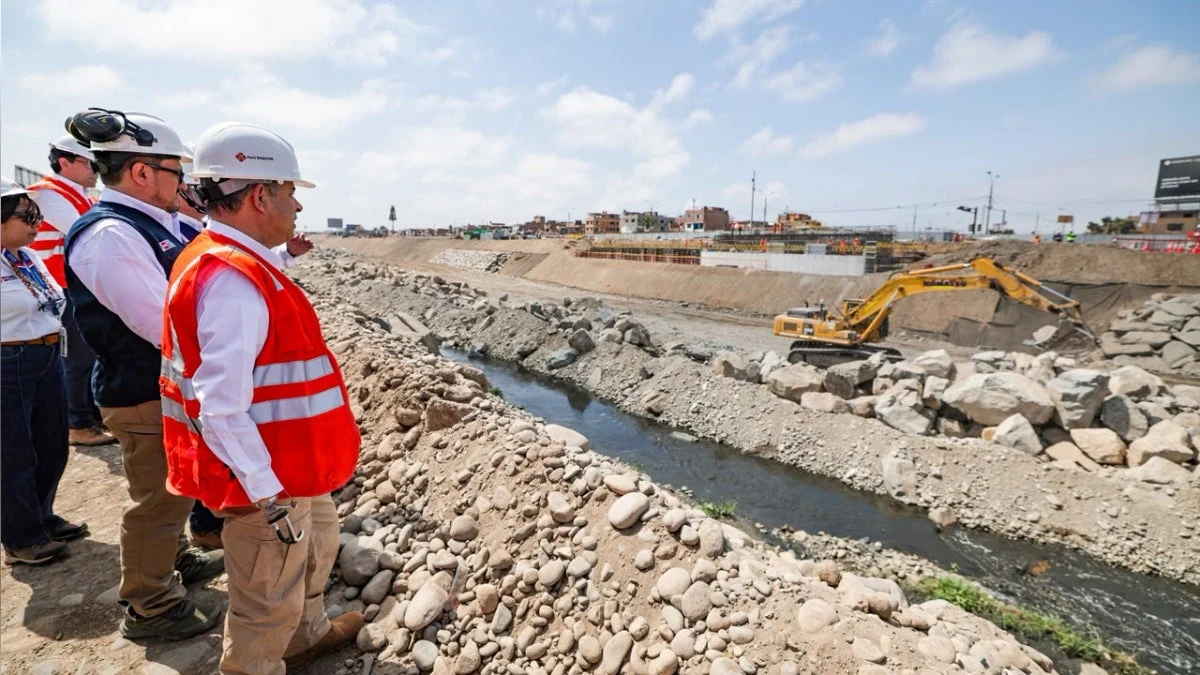
During a high-level technical inspection led by the President of the Council of Ministers, Luis Galarreta, the project’s progress was put under the spotlight. The visit underscored the government’s commitment to delivering a world-class gateway that will not only facilitate airport transit but also harmonize the heavy industrial traffic of the Callao port with the surrounding urban fabric.
The Core of the Project: Engineering and Scope
The Santa Rosa Bridge is far more than a simple crossing over the Rímac River. It represents a comprehensive civil engineering challenge that integrates multi-modal connectivity with long-term urban sustainability. The project scope encompasses:
- The Main Span: A 67-meter definitive bridge spanning the Rímac River.
- Interconnectivity Hubs: An extensive network of secondary bridges facilitating traffic in both directions.
- Grade Separation: A double-lane underpass at the Morales Duárez Avenue intersection to prevent bottlenecks.
- Urban Integration: The inclusion of pedestrian bridges, dedicated cycle paths, and comprehensive architectural landscaping to improve the quality of life in the immediate vicinity.
By creating a seamless flow between the airport and the city’s major arteries, the project aims to solve the chronic congestion that has plagued the Jorge Chávez area for decades.
Chronology of Development: From Groundbreaking to Operational Vision
The timeline of the Santa Rosa Bridge reflects the complex nature of modern Peruvian infrastructure projects.
- May 2026: The project officially broke ground, marking the commencement of excavation and foundational works.
- Late 2026 – Early 2027: A period of intense activity focused on structural stability, including the installation of deep-seated pilings and concrete abutments.
- Mid-2027 (Projected): The operational handover of the main river-crossing structure, strategically timed to coincide with the Lima Pan American Games.
- Second Semester 2028: The projected completion of the entire project, including full interchange functionality and urban development surrounding the site.
Supporting Data: The Technical Foundation
Engineering excellence is the cornerstone of the Santa Rosa project. According to data released by the Presidency of the Council of Ministers, the structural integrity of the bridge is secured by a robust foundation system.
Engineers have successfully installed 32 massive pilings—16 on each bank of the Rímac River—drilled to a depth of 24 meters to ensure stability against seismic activity and geological shifts. Furthermore, the construction of the abutments on both ends of the bridge is now complete. This phase required the pouring of approximately 1,200 cubic meters of high-resistance concrete, a testament to the scale of the operations.
Currently, the construction site operates across 10 distinct working fronts, allowing for simultaneous progress on the main bridge structure, the interchange ramps, and the critical riverbank defense system. This multi-front strategy is essential for meeting the aggressive deadlines set by the Ministry of Transport and Communications (MTC).
Environmental Protection: The Rímac River Defense
A critical component often overlooked by the general public is the riverbank protection work. Given the unpredictable nature of the "El Niño" phenomenon, the project includes a robust defense mechanism along the Rímac.
The objective for the current year is the installation of 1.5 kilometers of reinforced rock armoring (enrocado) along the left bank of the river. This protective barrier serves as a vital safeguard for the bridge’s infrastructure, preventing erosion and flooding during periods of high water volume, thereby ensuring the longevity of the entire terminal access route.
Official Responses and Stakeholder Alignment
The technical inspection served as a forum for high-level coordination. Premier Luis Galarreta was accompanied by a delegation of top-tier officials and stakeholders, including:
- José Angello Tangherlini: Minister of Transport and Communications.
- Alex Díaz Guevara: Executive Director of Provías Nacional.
- Jaime Rodríguez: Director of PMO Vías.
- José Luis Vilaplana: Country Director of Sacyr.
- Gonzalo Lozano: Director of the AAM Supervisor Consortium.
The consensus among these leaders is that the project remains on a steady trajectory. The presence of international firms like Sacyr, in conjunction with local oversight from Provías Nacional, emphasizes the project’s adherence to international standards of project management and structural safety. The PMO Vías (Project Management Office) has been instrumental in ensuring that technical standards are maintained while navigating the complexities of urban construction in a dense metropolitan environment.
Strategic Implications: The 2027 Pan American Games and Beyond
One of the most anticipated milestones is the potential delivery of the main bridge structure by mid-2027. This timeline is not merely a logistical goal but a strategic maneuver tied to the upcoming Pan American Games in Lima.
The influx of athletes, international delegations, and media representatives during the games requires a transit infrastructure that is both efficient and reliable. By prioritizing the main crossing over the Rímac, authorities aim to ensure that the primary access route to the airport can handle the surge in traffic without disrupting the daily logistical flow of the Callao port.
Beyond the immediate utility of the games, the project holds profound long-term implications:
- Logistical Efficiency: By segregating airport-bound traffic from the heavy cargo vehicles headed to the Callao port, the city will experience a reduction in transit friction, which is essential for Peru’s export-oriented economy.
- Urban Revitalization: The architectural and pedestrian-focused elements of the project signal a move toward more human-centric urban planning, transforming what was once a chaotic industrial corridor into a modern, accessible, and aesthetically pleasing transit gateway.
- Economic Growth: Reliable access to the Jorge Chávez terminal is a prerequisite for Peru’s continued growth as a regional hub for tourism and business. As the new airport terminal nears full capacity, the Santa Rosa Bridge will serve as the essential link that makes this expansion viable.
Conclusion
The Santa Rosa Bridge is a testament to the resilience and ambition of Peru’s infrastructure sector. Through rigorous engineering, careful environmental management, and strategic inter-agency cooperation, the project is steadily overcoming its challenges to become a centerpiece of Lima’s modern landscape. As the site prepares for the next phase of construction, the focus remains clear: delivering a safe, efficient, and transformative piece of infrastructure that will serve the people of Callao and the visitors of the world for generations to come. The goal of mid-2027 stands as a beacon for what is possible when technical expertise and political resolve converge.