By Editorial Staff | Infrastructure & Development News
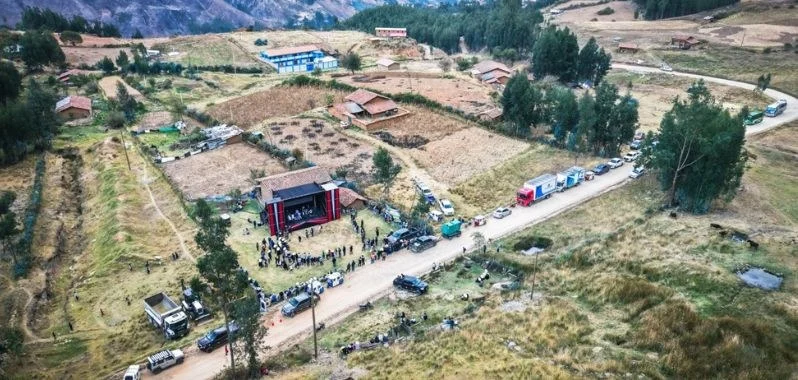
In a landmark move to address the chronic water scarcity affecting Northern Peru, the Regional Government of La Libertad has officially commenced the construction of the second major potable water treatment plant in the Trujillo metropolitan area. Located in the district of Salaverry, this ambitious infrastructure project, valued at S/ 87.4 million, marks a pivotal moment in the region’s quest to guarantee universal access to clean, reliable water for its growing population.
With the ceremonial placement of the first stone, authorities have set in motion an 18-month execution plan that promises to fundamentally alter the daily lives of nearly one million residents. By leveraging advanced hydraulic engineering and modern filtration systems, the project is poised to serve as a national benchmark for water management and public health infrastructure.
Main Facts: A Technical Overview of the Project
The new Salaverry water treatment plant is designed to be more than just an expansion; it is a modernization of the entire regional water delivery system. Currently, the existing infrastructure struggles to meet the rising demand of the Trujillo metropolitan area, often resulting in erratic service and limited hours of water availability for thousands of households.
Key technical specifications of the project include:

- Total Investment: S/ 87.4 million for the first phase.
- Production Capacity: An increase of 750 liters per second (L/s).
- System Integration: Total capacity will rise from 1,500 L/s to 2,250 L/s.
- Execution Timeline: 18 months.
- Technological Components: Implementation of hydraulic flocculation, high-rate lamellar sedimentation, and rapid filtration utilizing the "De Nora" Leopold-type false bottom system.
These sophisticated systems are designed to ensure the highest standards of water quality while allowing for a high degree of automation. Once processed, the distribution of this water will be managed by Sedalib, the local utility company, ensuring that the enhanced capacity reaches the neighborhoods that need it most.
Chronology: From Concept to Reality
The genesis of this project dates back to 2022, a period defined by the identification of a critical infrastructure deficit in the La Libertad region. Previous regional administrations recognized that the rapid urban expansion of Trujillo—one of Peru’s most economically vibrant cities—was outpacing its utility infrastructure.
- 2022 (Identification Phase): The regional government identifies the necessity of a second treatment plant to mitigate the risk of severe water shortages. The project is prioritized within the regional development plan.
- 2023–2024 (Planning and Design): The project is structured under a "Design-Build" (Concurso-Oferta) modality. This approach allows the winning contractor, the Consorcio Ejecutor Valle Alto, to oversee the technical file development, final approval, and physical construction, streamlining the delivery process.
- September 2026 (Commencement): Official ground-breaking ceremony. Construction equipment and labor teams are deployed to the Salaverry site.
The continuity of this project across administrations underscores the importance of long-term planning in Peruvian public policy. Officials have publicly emphasized that the successful completion of this project will require a commitment from incoming administrations to ensure the continuity of funding and oversight until the final valve is turned.
Supporting Data: Addressing the Water Crisis
The current reality for many Trujillanos is one of severe water rationing. In several districts, water availability is limited to just two or three hours per day, forcing families to rely on water storage tanks or informal deliveries. This situation not only creates significant economic pressure on lower-income families but also introduces severe public health risks.
The regional government reports that the new plant will directly address these disparities. By increasing the available supply, the project aims to extend daily service to four or five hours in the most affected sectors. This incremental gain—effectively doubling the access time for many—is expected to have a cascading positive effect:

- Public Health Improvement: Increased access to clean water is a primary defense against the proliferation of water-borne illnesses and is a critical factor in the fight against dengue, as improved storage and delivery systems reduce the need for stagnant water containers.
- Economic Stabilization: Reliable water access allows for more stable household management and supports local micro-economies that depend on consistent water supply.
- Metropolitan Scalability: With a total capacity increase of 50%, the city of Trujillo will be better positioned to accommodate future population growth without facing a systemic collapse of its basic utilities.
Official Responses and Strategic Vision
During the inaugural ceremony, representatives from the Regional Government of La Libertad and the Proyecto Especial Chavimochic (PECH)—the project’s executing agency—highlighted the collaborative nature of the initiative.
"This is not just about building a structure; it is about building a future for the families of Trujillo," a spokesperson for the regional government stated. "By modernizing our treatment processes, we are ensuring that the water delivered to the taps is of the highest quality, meeting international standards for human consumption."
The choice of the Salaverry site is strategic, leveraging existing geographic advantages for water distribution. The administration has also been clear about the "transcendent" nature of the work. By prioritizing a project that originated in a previous administration, the current government aims to set a precedent for "policy continuity," where infrastructure development is viewed as a state commitment rather than a partisan endeavor.
Implications: A Roadmap for the Future
The construction of the Salaverry plant is merely the first act in a larger, multi-stage development strategy. While the current focus is on the treatment facility, the master plan includes a second, critical phase: the construction of a dedicated conduction line from Trujillo to the district of Florencia de Mora.
When viewed as a holistic program, the total investment for this comprehensive water security plan is estimated to reach approximately S/ 128 million. This broader scope highlights the complexity of modernizing urban utility grids in rapidly developing cities.

Long-term Impact on Trujillo Metropolitano
The implications of this investment extend beyond the immediate benefits of increased water volume. The integration of "De Nora" type filtration and automated flocculation systems marks a technological leap for the region. It signals a move away from manual, labor-intensive water treatment toward high-efficiency, sustainable, and data-driven management.
Furthermore, the project serves as a test case for the Concurso-Oferta delivery model in the water sector. If successful, this model could be replicated across other regions in Peru where infrastructure projects are frequently delayed by the disconnect between design phases and construction execution.
As the heavy machinery begins its work in Salaverry, the citizens of Trujillo look forward to a future where water scarcity is no longer a defining characteristic of their daily lives. The project represents a significant step toward regional resilience, proving that with careful planning, technological investment, and administrative continuity, the challenges of modern urbanization can be met with robust, sustainable solutions.
The next 18 months will be closely watched by stakeholders, international development observers, and, most importantly, the million-plus residents who rely on the promise that their water, and their quality of life, will soon be significantly improved.