
The landscape of artificial intelligence is undergoing a profound metamorphosis. For the past several years, the public has been captivated by the capabilities of generative models—chatbots that can draft essays, write code, or generate photorealistic imagery from a simple prompt. However, the technology industry has moved beyond mere content generation, entering a sophisticated new frontier: the era of "Agentic AI." In this paradigm, software is no longer a passive respondent; it is an active, autonomous participant capable of planning processes, consulting vast data repositories, utilizing external software tools, and executing complex code sequences in real-time.
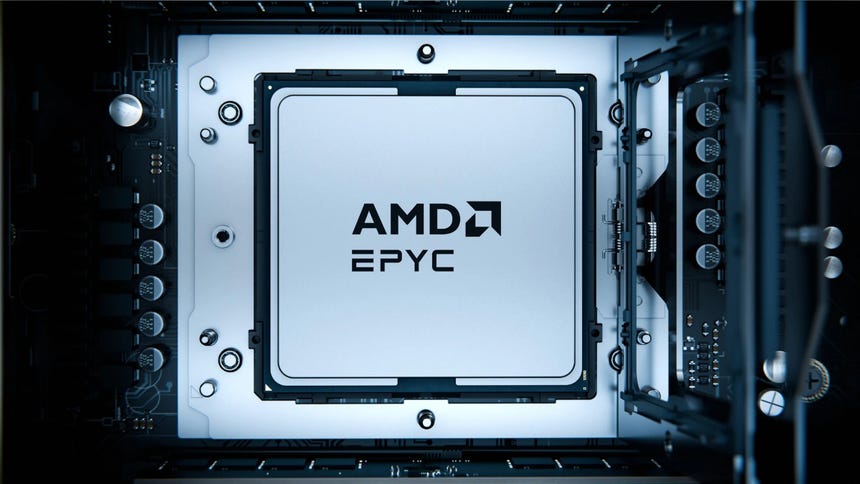
As these AI agents become the new backbone of enterprise operations, they place unprecedented demands on the digital infrastructure that sustains the global economy. To address this, hardware giants like AMD are pivoting their strategy. With the introduction of the sixth-generation AMD EPYC 9006 series processors, the company is attempting to redefine how data centers handle the massive, multifaceted workloads required by these autonomous digital agents.
The Shift Toward Agentic Intelligence
At its core, Agentic AI represents a transition from "AI as a tool" to "AI as a coworker." Unlike traditional large language models that generate text based on statistical probability, an agentic system is goal-oriented. It possesses the agency to decompose a high-level objective into actionable steps, navigate software interfaces, and verify its own results against dynamic, real-world data.
The complexity of these workflows is immense. Consider a scenario where an AI agent is tasked with managing a corporate travel emergency. Instead of simply providing a list of flights, an agentic system must simultaneously:
- Authenticate the user’s identity across secure portals.
- Query real-time airline inventory systems.
- Interact with banking APIs to initiate complex international refunds.
- Execute logistics scripts to rebook hotels and ground transportation.
- Log the entire audit trail in a corporate database.
Each of these sub-tasks requires high-speed memory access, low-latency network input/output, and massive computational throughput. This shift has forced a fundamental change in data center strategy: the industry is realizing that while GPUs are essential for training models, the CPU remains the "orchestrator" of these complex, multi-threaded agentic workflows.
Chronology of a Computing Revolution
The trajectory toward high-performance, agentic-ready infrastructure did not happen overnight. The following timeline outlines the evolution that led to the current necessity for processors like the AMD EPYC 9006:
- 2020–2022: The Transformer Era. The industry focused heavily on scaling model parameters. Data centers were built primarily to accommodate massive GPU clusters for training, with CPUs relegated to supporting roles.
- 2023: The Chatbot Explosion. The rise of ChatGPT and similar tools shifted focus to inference. Infrastructure began to strain under the weight of thousands of simultaneous user requests, highlighting the bottleneck of CPU-to-memory data transfer.
- 2024: The Rise of Function Calling. AI models began to be integrated with external tools (API calls, SQL database queries). This necessitated CPUs with higher core counts and faster memory channels to manage the "orchestration" overhead.
- 2025: The Agentic Threshold. The industry reached a point where AI models are capable of executing long-term tasks. The demand shifted from simple inference to high-availability, low-latency execution environments.
- 2026: The EPYC 9006 Launch. AMD introduces the 9006 series, specifically architected for high-density, agent-heavy environments, focusing on power-per-watt efficiency and massive I/O throughput to sustain autonomous workloads.
Supporting Data: Why CPU Architecture Matters
In an agentic environment, the bottleneck is rarely the raw calculation speed of the AI model itself, but rather the "data orchestration" required to feed that model.
According to internal benchmarks and industry analysts, modern data centers handling agentic AI are seeing a 40% increase in CPU cycles dedicated to data management, API handshaking, and memory management compared to standard web-hosting tasks. The AMD EPYC 9006 series addresses this through a modular "chiplet" architecture. By decoupling the compute cores from the I/O and memory controllers, AMD has managed to pack significantly more performance into the same physical footprint.
Key performance metrics for the 9006 series include:
- Increased Memory Bandwidth: Allowing for faster processing of massive datasets that agents must query before making decisions.
- Enhanced I/O Throughput: Critical for the simultaneous execution of multiple API calls and background database tasks.
- Deterministic Latency: Ensuring that when an agent makes a decision, the response time is consistent, preventing the "stutter" that can cause process failure in automated workflows.
Official Responses and Strategic Implications
AMD’s leadership has framed the EPYC 9006 series not just as a hardware upgrade, but as a response to the "sustainability crisis" in data centers. As AI agents proliferate, the energy requirements of these data centers threaten to exceed local power grid capacities and corporate sustainability budgets.
"The challenge is not just performance," an AMD spokesperson noted during the technical briefing. "It is about intelligent density. We are building the infrastructure that allows companies to do more with less—less energy, less physical space, and less thermal output per compute unit."
The integration of advanced power-management technologies—including dynamic power scaling and thermal balancing—means that the processor can throttle its energy consumption in real-time based on the load. If an agent is idle or performing a background task, the CPU minimizes energy draw; when a complex transaction is triggered, the chip shifts to peak performance in milliseconds. This is a critical feature for hyperscalers who are struggling to manage the escalating heat density of their server racks.
Broader Implications for the Digital Economy
The implications of this hardware evolution extend far beyond the technology sector. As businesses integrate agentic AI into their core operations—ranging from automated fraud detection in banking to autonomous supply chain logistics—the "invisible" infrastructure of the CPU becomes the bedrock of trust.
- Financial Stability: For high-frequency trading and banking, the ability of an AI agent to execute complex, multi-step transactions without failure is paramount. The reliability of the 9006 series ensures that these financial agents operate with high uptime.
- Healthcare Efficiency: Agents managing patient data and treatment scheduling require high-speed access to secure databases. The modular architecture of these new CPUs provides the bandwidth necessary to handle sensitive health data securely and quickly.
- Sustainability and ESG Goals: Large corporations are under immense pressure to meet carbon neutrality targets. By optimizing the efficiency of the server rack, AMD is enabling businesses to scale their AI adoption without exponentially increasing their carbon footprint.
Conclusion
We are currently witnessing the transition from the "Search Era" to the "Action Era." As AI evolves from a tool that gives us answers to a system that performs our work, the requirements for the hardware underneath change fundamentally.
The AMD EPYC 9006 series is a testament to the fact that the future of artificial intelligence will not be won solely by the most powerful GPU, but by the most efficient, responsive, and capable orchestrator—the CPU. As these autonomous agents become an integral part of our daily lives, the silent, high-performance work of these processors will remain the heartbeat of the modern digital economy, enabling a level of automation that was, until very recently, confined to the realm of science fiction. The infrastructure is finally catching up to the ambition of the software, setting the stage for a more autonomous, efficient, and interconnected future.