In a significant push toward regional decentralization and economic stimulation, the Ecuadorian government, led by President Daniel Noboa, has launched a comprehensive initiative to revitalize the agricultural and infrastructural landscape of the El Oro province. The multi-faceted program, which combines the distribution of modern farming technology with heavy-duty civil engineering assets, underscores a strategic pivot toward rural empowerment and the modernization of local tourism infrastructure.
Main Facts: A Holistic Approach to Provincial Development
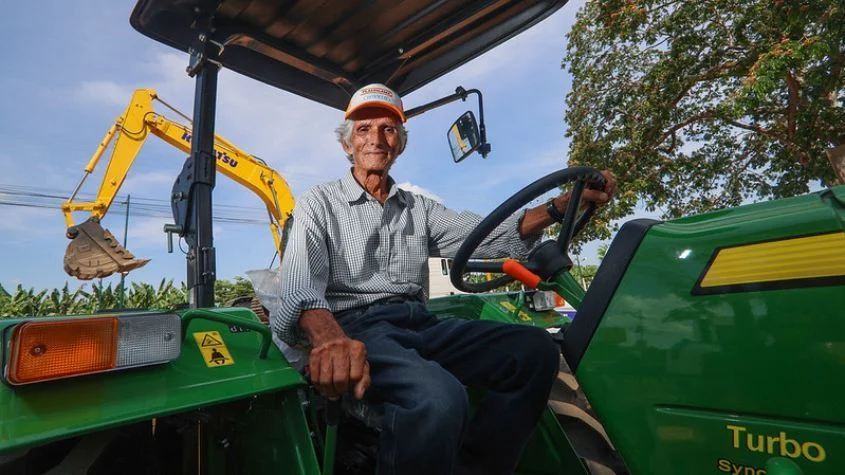
The government’s recent intervention in the province of El Oro represents a calculated effort to bridge the economic gap between rural agricultural sectors and regional development benchmarks. During a high-profile visit to the city of Santa Rosa, President Noboa oversaw the distribution of essential agricultural inputs—including tractors, specialized farming vehicles, and legal property titles—aimed at formalizing and modernizing the local agrarian economy.
The immediate injection of USD 352,000 into the El Oro, Loja, and Zamora Chinchipe regions serves as the pilot phase for a broader national strategy. By providing farmers with the tools necessary to scale their operations, the administration aims to enhance food security and increase export capacity. Beyond agriculture, the government has addressed a long-standing bottleneck in regional development: the state of local infrastructure. By delivering a fleet of heavy machinery to the cantón of Piñas, the administration is empowering local municipalities to take direct control of their road rehabilitation projects, effectively cutting down on the logistical hurdles that have previously hindered commerce and transit in the southern highlands.
Chronology of the Initiative
The current deployment is not an isolated event but rather the culmination of a nationwide strategic rollout that has gained momentum over the past several months.

- Early September 2026: Preliminary assessments of rural connectivity and agricultural output were finalized by the Ministry of Agriculture and the Ministry of Transport and Public Works. These reports highlighted the urgent need for machinery in provinces that had been neglected during previous administrative cycles.
- Mid-September 2026: The central government finalized a national procurement strategy, allocating USD 3.7 million to distribute high-capacity farming equipment across 11 provinces. This logistics operation involved the procurement of 41 specialized tractors and 41 multi-purpose utility vehicles.
- The Santa Rosa Summit: On the day of the official announcement, President Noboa convened with local stakeholders, agricultural cooperatives, and municipal leaders in Santa Rosa. The distribution ceremony saw the formal transfer of assets to local beneficiaries, marking the official commencement of the localized infrastructure upgrade.
- Post-Deployment Phase: Following the handover, the government announced the specific allocation of funds for the Chorro Viringo tourism project in Piñas. This stage of the initiative is currently transitioning into the procurement and planning phase, with funds being funneled through the Banco de Desarrollo del Ecuador.
Supporting Data and Technical Specifications
The scope of this investment is best understood through the technical capabilities of the equipment delivered. The government has focused on providing "turnkey" solutions for municipal road maintenance.
The Machinery Arsenal for Piñas
The delivery to the cantón of Piñas is particularly robust, featuring heavy-duty equipment designed for the rugged, high-altitude terrain characteristic of the region. The inventory includes:
- One Motoniveladora (Motor Grader): Essential for road grading and surface leveling.
- One Excavadora (Excavator): Necessary for deep earthwork, drainage, and landslide mitigation.
- One Cargadora Frontal (Front Loader): To facilitate the rapid movement of construction materials.
- Three Volquetas (Dump Trucks): Each with a 14m³ capacity, optimized for transporting aggregate and debris.
- One Plataforma Alta (High-Platform Truck): For the logistics of moving smaller equipment and essential materials to remote project sites.
National Reach
The national scale of this initiative provides a clearer picture of the government’s ambition. By impacting 5,987 producers across 11 provinces, the administration is effectively touching a significant percentage of the country’s small-to-medium enterprise (SME) agricultural sector. The total investment of USD 3.7 million reflects a cost-effective approach to public spending, prioritizing direct asset ownership for producers over bureaucratic subsidies.
Official Responses and Strategic Vision
During his address, President Noboa emphasized that the primary goal of this intervention is to foster "self-sustaining regional growth." Government spokespeople have framed these actions as a departure from centralized planning, arguing that by placing machinery directly into the hands of municipalities and providing land titles to farmers, the state is creating the conditions for long-term economic independence.

"Our commitment is to remove the barriers that prevent the Ecuadorian farmer from competing on the global stage," a representative from the Ministry of Agriculture stated. "When we provide a title of property, we provide security. When we provide a tractor, we provide the means to transform a subsistence farm into a productive business."
Regarding the tourism sector, the municipal government of Piñas has expressed gratitude for the USD 115,000 grant dedicated to the Chorro Viringo site. Local officials noted that this project is essential for diversifying the local economy, which has historically been overly reliant on mining and traditional agriculture. By enhancing the ecological and tourist value of the Moromoro parish, the municipality hopes to draw domestic and international visitors, thereby creating a secondary income stream for the local population.
Implications for the Future
The implications of these developments are twofold: they represent a significant win for local infrastructure maintenance and a test case for the government’s broader economic philosophy.
Infrastructure Autonomy
By equipping municipalities like Piñas with their own heavy machinery, the government is reducing the "dependency loop" where small towns must wait for regional or national contractors to perform basic road maintenance. This decentralization of power is expected to lead to faster response times for road damage caused by the rainy season—a perennial issue in the Andean region.

The Tourism-Ecology Nexus
The investment in Chorro Viringo is indicative of a broader trend toward "Green Infrastructure." As the world shifts toward sustainable travel, Ecuador is attempting to leverage its natural geography. The emphasis on "responsible tourism" suggests that the government is aware of the environmental sensitivity of the El Oro region. By upgrading facilities, the project aims to formalize visitor management, ensuring that increased foot traffic does not degrade the local ecosystem.
Potential Challenges
While the initiative has been met with positive feedback, economists suggest that the long-term success of these programs will depend on the maintenance and management of the equipment. The durability of the machinery delivered will require a structured maintenance program and technical training for municipal operators. If managed correctly, these assets could serve the province for over a decade. However, failure to implement rigorous oversight could see the equipment fall into disrepair within a few years.
Conclusion
The recent actions taken by the administration in the province of El Oro signify a proactive, if ambitious, attempt to modernize the Ecuadorian interior. By prioritizing the intersection of agricultural productivity and physical connectivity, the government is attempting to build a foundation that can withstand the economic volatility of the region. Whether these investments will translate into a sustained rise in provincial GDP remains to be seen, but for the 5,987 producers and the residents of Piñas, the arrival of this machinery marks a tangible step toward a more modernized and connected future. As the project enters its execution phase, all eyes will be on how effectively these rural hubs utilize their new tools to transform their local economies.