
Date: September 11, 2026
For decades, the discourse surrounding the national economy has been dominated by a persistent, yet fundamentally flawed, narrative: that the constitutional economic framework is the primary culprit behind the nation’s stunted industrialization. Critics from the left frequently argue that the constitutional chapter on economics acts as a barrier, preventing the country from evolving into a manufacturing powerhouse.
However, a closer examination reveals that this is a misconception. The Constitution serves merely as a foundational set of rules—a bedrock establishing private initiative as the engine of development. The true impediment to progress is not found in the constitutional text, but rather in the suffocating "regulatory jungle" that exists beneath it. This thicket of laws, bureaucratic procedures, and mounting requirements has systematically stripped enterprises of the flexibility necessary to innovate, invest, and compete on a global scale.
The Regulatory Labyrinth: Why Industrialization Stalls
The failure to achieve a more robust industrial sector is not the result of a faulty economic model, but rather a consequence of legislative and bureaucratic interference. Over the years, populism has distorted the constitutional mandate, replacing the vision of an agile, market-driven economy with a web of red tape.
The Cost of Bureaucratic Inertia
When entrepreneurs are forced to navigate endless permitting processes and shifting regulatory requirements, the "cost of doing business" skyrockets. This creates a scenario where only the largest, most entrenched companies can survive, while potential innovators are discouraged from entering the market. By prioritizing control over facilitation, policymakers have inadvertently created a hostile environment for the very industrialization they claim to champion.
The Agro-Export Miracle: A Blueprint for Success
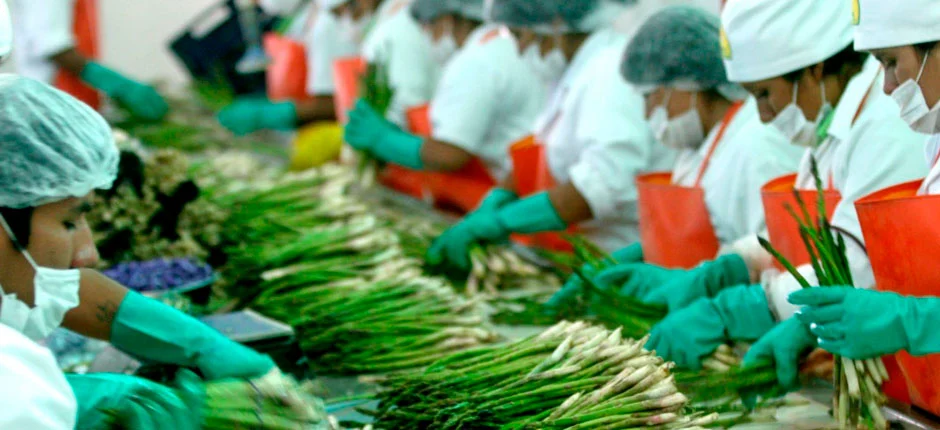
If one sector serves as a testament to what is possible under the right conditions, it is agro-exportation. Twenty years ago, the sector’s exports were a modest $500 million. Today, that figure has soared to $15 billion. This transformation of arid, barren deserts into fertile lands capable of yielding world-class produce is nothing short of a miracle.
How Was It Achieved?
The success of the agro-export sector was not an accident; it was the result of moving against the current of ideological dogmas. The architects of this success understood that in a global market where agriculture is often heavily subsidized by foreign governments, a high-risk sector requires strategic promotion. By fostering an environment where investment could flourish, the industry was able to:
- Compete globally in quality and price.
- Multiply employment opportunities in rural areas.
- Integrate small-scale farmers into global value chains.
- Significantly expand the national tax base.
Chronology of a Sector Under Siege
Despite its historic contribution to the economy, the agro-export sector has found itself increasingly under fire from policymakers who view its success with suspicion.
- 2000–2015: The Golden Era: Rapid expansion driven by favorable trade policies and the opening of international markets.
- 2020–2022: The Populist Shift: Legislative changes began to target the sector’s profitability. A 30% mandatory increase in labor costs was imposed, ignoring the specific economic realities of high-risk agricultural cycles.
- 2023–2025: The Tax Debate: Recent proposals to strip away long-standing tax benefits have gained traction in the legislature. These incentives were the bedrock of the sector’s competitiveness.
- 2026: The Climate Threat: As the sector faces the uncertainty of the El Niño phenomenon, the timing of these legislative attacks could not be worse. The industry faces potential crop failure and economic volatility at the very moment it needs stability to weather the climate storm.
Supporting Data: The Case for Stability
The "success is enough" narrative—which suggests that the sector has gained sufficient ground and can now afford to be heavily taxed—is not only shortsighted but factually incorrect. Economic development requires the continuous reinvestment of capital. When that capital is diverted through excessive taxation or punitive labor laws, the capacity for future growth is decimated.
The data shows that for every dollar invested in agricultural infrastructure, the return in socioeconomic development—measured by poverty reduction in rural areas and increased formal employment—is substantial. By imposing a "ceiling" on success, the state is effectively capping the country’s potential for prosperity.
Official Responses and Political Friction
The divide between the private sector and the legislative branch has never been wider. While industry leaders argue for the protection of competitive frameworks to ensure sustainability, proponents of the current regulatory shift argue that the sector must "contribute more" to the state.
Critics of the current legislative trend argue that the government is confusing "redistribution" with "growth." They contend that by weakening the agro-export sector, the state is effectively killing the goose that lays the golden egg. The response from the business community has been a call for a return to the fundamentals: clear, stable rules of the game that allow for long-term planning, particularly in infrastructure projects like large-scale irrigation systems that have been left unfinished or ignored for years.
Implications for the Future: A Path Forward
The path to national prosperity is clearly marked by the lessons of the last two decades. If the country truly aspires to elevate more sectors to a level where they can compete globally, the roadmap must involve:
- Deregulation: Systematically dismantling the barriers and redundant procedures that hinder investment.
- Infrastructure Investment: Prioritizing and completing major irrigation and transport projects that directly enhance national productivity.
- Policy Stability: Establishing a consistent legal framework that encourages long-term capital commitment rather than reactionary, populist policy shifts.
- Promoting Industrialization, Not Obstructing It: Recognizing that the economic model is a tool for welfare creation. To function, it must be respected in its essence: by fostering the initiative of those who take the risks to build the economy.
The Verdict on the Model
The prevailing economic model has proven to be an effective vehicle for delivering tangible welfare to millions of citizens. However, it requires a commitment to its underlying principles. The history of the agro-export sector proves that when the state acts as a partner in development—rather than an obstacle—the nation is capable of achieving world-class results.
The question for the next decade is not whether the model works, but whether the political class will allow it to function as intended. Without a pivot back toward fostering competitiveness and stripping away the bureaucratic weight of recent years, the dream of becoming an industrialized nation will remain just that—a dream deferred by the very hands that should be building the future.
As we look toward the summer of 2026 and the impending challenges of El Niño, the priority must be clear: protect the engines of growth, finish the infrastructure of the past, and clear the path for the innovators of the future. Failure to do so will not only stifle the agro-export sector but will effectively shut the door on the next generation of industrial breakthroughs.