By Economic Analysis Desk
Peru, a nation synonymous with mineral wealth, currently finds itself trapped in a bureaucratic labyrinth that threatens its position as a global leader in copper and precious metal production. Despite an international market environment characterized by high demand and record-breaking price cycles, the country’s pipeline of mining projects is stagnating. According to recent data from the Peruvian Institute of Economics (IPE), the average time required to bring a mining project to fruition in Peru has ballooned to 15 years, a figure that experts describe as an existential threat to the nation’s long-term economic development.
The Institutional Diagnosis: A Decadal Decline
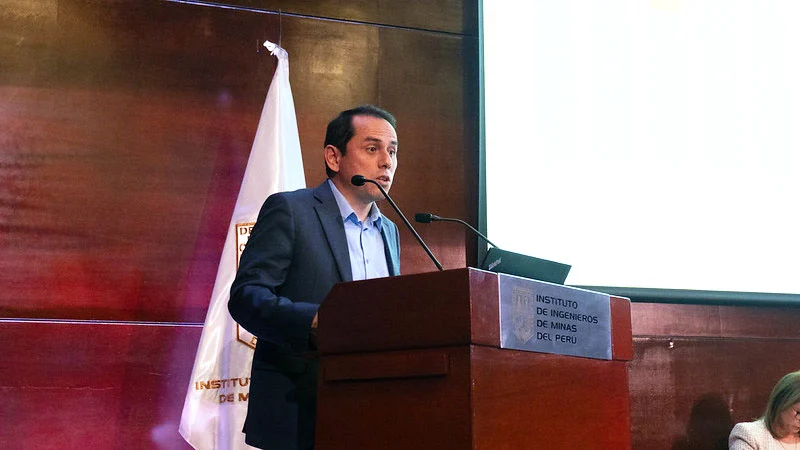
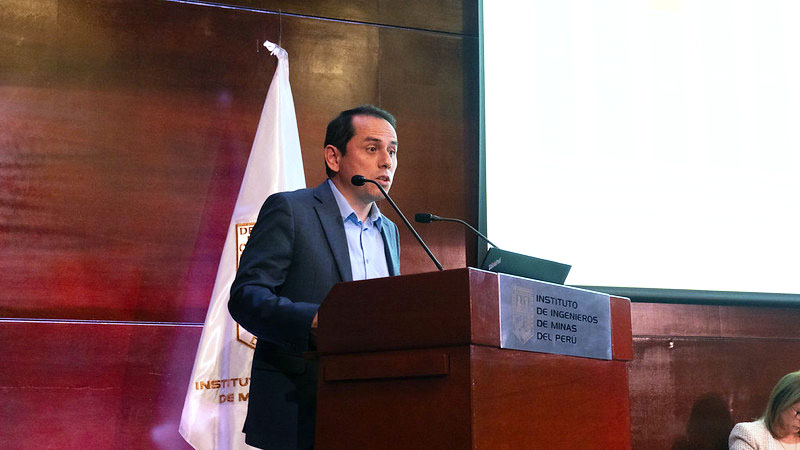
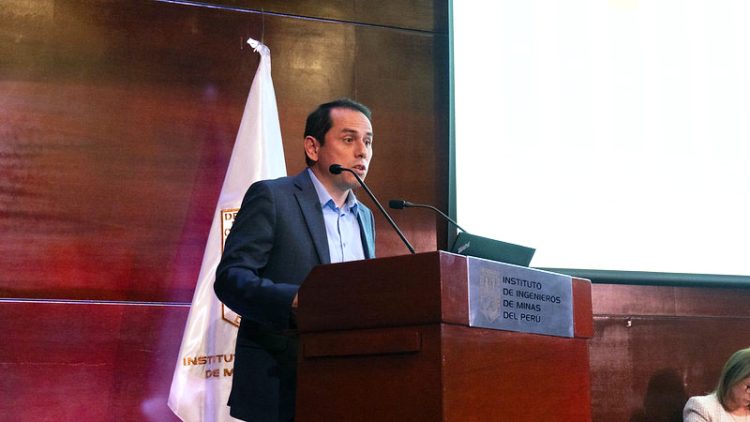
The alarm was sounded by Carlos Gallardo, General Manager of the IPE, during the "Jueves Minero" (Mining Thursday) conference. In his keynote presentation, titled "Contribution of Mining to Development: Advances and Challenges," Gallardo laid bare the structural inefficiencies hindering the sector.
Gallardo’s analysis is not merely anecdotal; it is a quantitative critique of administrative bloat. When examining the 42 major mining units currently either in operation or part of the official investment pipeline, the IPE found that the gestation period for new operations has surged over the last few decades. More distressingly, for projects slated to enter operation within the current decade, the development horizon—accounting for permitting, social negotiations, and construction—is estimated at an average of 49 years from inception to maturity. Even when looking at projects scheduled post-2029, the timelines remain prohibitively long.
This data, cross-referenced with the 2026 Mining Investment Portfolio provided by the Ministry of Energy and Mines (MINEM), suggests that Peru is not just experiencing a temporary slowdown; it is suffering from a systemic failure to convert mineral potential into tangible economic reality.
Chronology of a Bottleneck: From Potential to Paralysis
To understand the gravity of the situation, one must look at the historical trajectory of mining investments in Peru.
- 2000–2010: The Golden Era: This period was marked by rapid project approval, significant foreign direct investment (FDI), and the successful launch of massive operations. The regulatory framework, while rigorous, was seen as navigable.
- 2011–2015: The Peak and the Pivot: As global commodity prices soared, Peru enjoyed its most profitable mining cycle. However, this era also saw the beginning of "permisology"—the proliferation of redundant administrative procedures that began to slow down the project cycle.
- 2016–2023: The Stagnation Phase: Successive political crises and the hardening of social opposition in project areas led to a "wait-and-see" approach by major investors. During this time, the average duration for a mining project shifted from a manageable 5-8 year window to over a decade.
- 2024–2026: The Current Crisis: We are now in a period where project pipelines are effectively "frozen." Even with record prices, the lack of new greenfield investments suggests that the country is failing to capitalize on the energy transition-driven demand for copper.
Supporting Data: The Cost of Inaction
The contrast between market conditions and local investment is stark. According to the IPE, as of the first quarter of 2026, export prices for metals are approximately 88% higher than they were in 2011. Under normal market dynamics, this should trigger an explosion in capital expenditure (CAPEX) and the initiation of new extraction sites.
However, investment as a percentage of GDP remains significantly lower than it was during the previous commodity boom. This creates a "lost opportunity" gap. The IPE estimates that if the current backlog of mining projects were successfully unlocked, the cumulative economic impact—including indirect jobs, infrastructure development, and tax revenue—would be equivalent to more than double Peru’s 2023 GDP.
This is not just about mining; it is about the broader economy. Mining acts as a multiplier, fueling sectors such as logistics, construction, engineering, and manufacturing. When mining stalls, the entire Peruvian economic engine sputters.
International Benchmarking: Losing the Competitive Edge
Peru is not operating in a vacuum. As it struggles with administrative red tape, its primary competitors—Chile, Canada, and the United States—have recognized the urgency of the energy transition and are actively streamlining their regulatory environments.
Gallardo pointedly highlighted that these nations have moved toward:
- Ventanilla Única (Single Window Systems): Consolidating permit applications to prevent investors from having to navigate dozens of independent agencies.
- Automatic Approvals: Implementing "fast-track" mechanisms for low-risk, high-impact projects.
- De-bureaucratization: Identifying and removing redundant administrative requirements that offer no environmental or social value but serve only to delay progress.
In contrast, Peru’s current regulatory environment is characterized by overlapping jurisdictions, where different ministries and regional authorities can effectively veto projects based on technicalities rather than substantive impact assessments.
Implications for the Peruvian State and Society
The consequences of this 15-year delay extend far beyond balance sheets. They manifest in the country’s inability to address the persistent socio-economic gaps in the regions where these mines are located.
1. The Social Conflict Trap
The delay in projects often exacerbates social conflict. When a mining project is announced but remains in limbo for over a decade, the local population’s expectations are raised, only to be met with prolonged frustration. This "expectations gap" is a breeding ground for social unrest, as communities feel the promised benefits—infrastructure, clean water, and better schools—are perpetually out of reach.
2. Fiscal Health
The Peruvian state relies heavily on mining taxes and royalties to fund public infrastructure. A 15-year lag means that the fiscal revenues needed to bridge the national infrastructure gap are delayed or lost entirely. This forces the state to rely more on debt or cut back on essential social services.
3. Supply Chain Erosion
Small and medium-sized enterprises (SMEs) that depend on mining contracts cannot survive if they have to wait 15 years for a project to break ground. This prevents the development of a robust, local industrial base that could provide high-value services to the mining sector, keeping the country dependent on imported technology and expertise.
The Path Forward: A Call for Reform
The IPE has issued a clear set of recommendations for the government to reverse this trend. The prescription is grounded in pragmatism:
- Predictability is King: Investors require clear, non-negotiable timelines. If a permit process is slated for six months, it should not take three years.
- Conflict Prevention: The State must move from a reactive posture—managing conflicts once they explode—to a proactive one, where the government acts as a legitimate mediator and guarantor of social investment in the project’s early stages.
- Infrastructure as a Priority: Instead of viewing mining and infrastructure as separate agendas, the state should prioritize projects that serve both the mine and the surrounding community. This includes the development of roads, electricity grids, and water treatment plants that leave a lasting legacy beyond the life of the mine.
- Strengthening Local Capacities: Regional and local governments must be empowered to manage mining royalties effectively. Currently, there is a massive gap between the taxes collected and the quality of public services provided in mining corridors.
Conclusion: A Race Against Time
The diagnosis provided by Carlos Gallardo and the IPE is a sobering wake-up call. Peru possesses some of the most significant mineral reserves in the world, precisely at a time when the global economy is desperate for the copper, lithium, and other minerals essential for the green energy transition.
However, mineral wealth in the ground is not wealth in the pocket. Unless the Peruvian government can move beyond the "permisology" that currently stifles innovation and investment, the country risks being sidelined by more agile, business-friendly competitors. The 15-year wait is a heavy tax on the future of every Peruvian. Whether the administration chooses to act on these recommendations will determine if the next decade becomes a period of renewed national prosperity or another era of lost opportunity.