Executive Summary: A Delicate Balancing Act
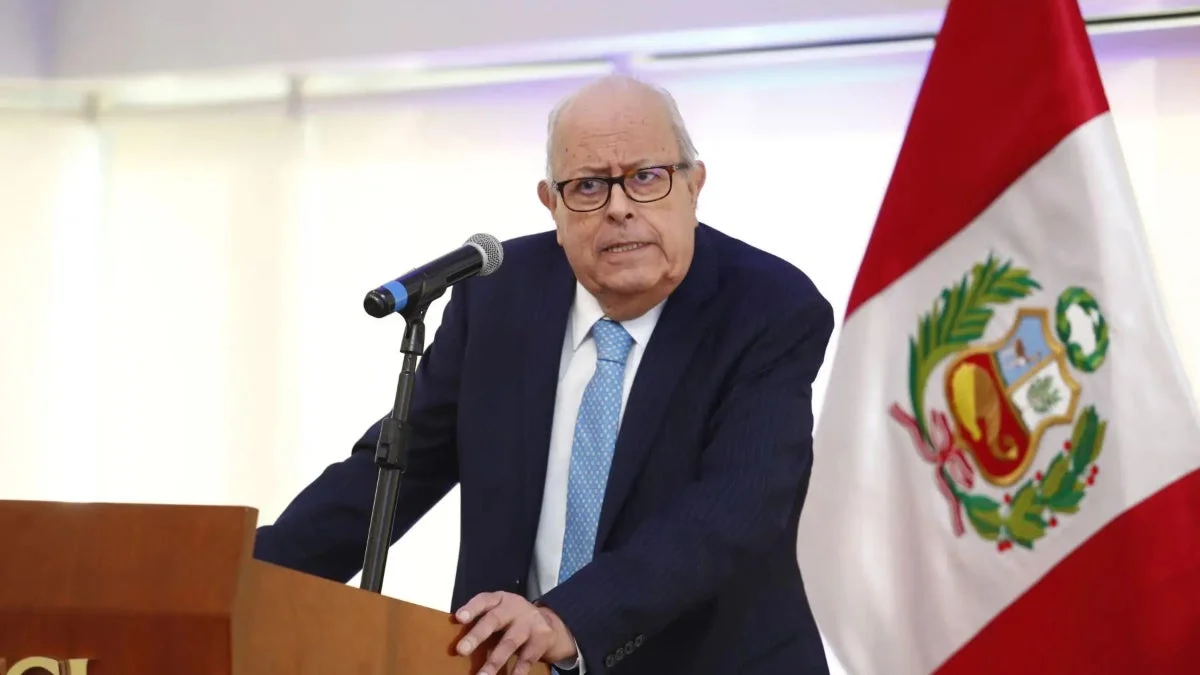
In a high-stakes assessment of Peru’s macroeconomic trajectory, the President of the Central Reserve Bank of Peru (BCRP), Julio Velarde, has issued a cautionary outlook for the remainder of 2026. During the presentation of the September 2026 Inflation Report, Velarde projected that inflation would conclude the year at 4.2%. While this figure remains above the central bank’s target range, the BCRP’s leadership emphasized that the primary drivers of this volatility are external supply shocks—specifically the rising costs of fuel and the looming shadow of the El Niño climate phenomenon.
The central bank finds itself at a critical juncture. While the bank’s benchmark interest rate is currently held at 4.25%, Velarde has explicitly left the door open for potential increases in the coming months. The decision, he noted, will not be mechanical; it will be data-dependent, contingent upon the actual intensity of climatic disruptions and their subsequent impact on domestic food prices and inflationary expectations.
Chronology: The Evolution of Peru’s Inflationary Landscape
To understand the current policy stance, one must look at the recent evolution of Peru’s economic indicators.
- Early 2026: Peru experienced a period of relative stabilization, with early projections suggesting a steady decline in inflation toward the 2% target by 2027.
- Mid-2026: Global energy market volatility began to exert pressure on domestic fuel prices. Simultaneously, meteorological models began to sound alarms regarding the potential severity of El Niño, which traditionally disrupts agricultural cycles in the Andean and coastal regions of Peru.
- September 2026 (The Current Moment): The BCRP released its updated inflation report, revising the year-end forecast to 4.2%. In the subsequent monetary policy meeting, the bank maintained its rate at 4.25% but signaled a hawkish shift, explicitly mentioning that inflation risks are being monitored closely.
- Future Outlook: The BCRP expects that the "statistical noise" caused by high price registers in March of this year will begin to fade in 2027, potentially allowing inflation to align more closely with historical target ranges.
Supporting Data: Why the BCRP is Concerned
The central bank’s concern is rooted in a fundamental economic principle: the persistence of inflation. Under normal circumstances, supply-side shocks—such as a sudden rise in oil prices or a crop-damaging storm—are considered temporary. However, the BCRP is currently observing a domestic environment that could transform these temporary shocks into a long-term inflationary trend.
1. The Strength of Domestic Demand
Contrary to expectations of a slowdown, Peru’s internal demand remains robust. Key indicators support this:
- Credit Growth: Access to financing has remained healthy, fueling consumption.
- Labor Market Dynamics: Employment rates and household incomes have shown significant resilience.
- The Risk of Persistence: Velarde highlighted a critical economic paradox: in an economy with strong demand, businesses find it easier to pass on the increased costs of inputs (like food and fuel) to the final consumer. When consumers have the liquidity to absorb these price hikes, inflation becomes "sticky," or persistent, which is exactly what the BCRP aims to prevent.
2. The El Niño Factor
El Niño is not merely a weather event in Peru; it is a macroeconomic force. Historically, the phenomenon triggers heavy rains and temperature shifts that devastate harvests, leading to supply shortages in essential food staples. Because food accounts for a significant weight in the Peruvian consumer basket, these supply-side disruptions have an outsized impact on the Consumer Price Index (CPI).
Official Responses and Monetary Policy Strategy
Julio Velarde’s leadership style at the BCRP is characterized by a mix of pragmatism and caution. When asked about the possibility of an imminent rate hike, his response was measured: "We have to raise the rate at the opportune moment, and we have to see if it is indeed necessary to raise it. Probably yes, if the phenomenon arrives as we are projecting, but we must wait. It is not a mechanical process."
The Communicative Strategy
The BCRP has deliberately used its policy communiqués to signal that it is "data-dependent." By stating that the recent monetary policy meetings have not ruled out increases, the Bank is attempting to anchor inflation expectations. This is a classic tool of modern central banking: if the public and financial markets believe the central bank will act to curb inflation, they are less likely to bake high inflation expectations into future wage contracts and pricing strategies.
Addressing the 2022 Comparison
Velarde was quick to distinguish the current economic climate from the inflationary crisis of 2022. He emphasized that the current price increases are fundamentally different in origin. Whereas 2022 was characterized by a broader, more structural inflationary surge, the current pressures are primarily "temporary supply shocks." The bank remains optimistic that, barring extreme climatic developments, the inflationary pressure will be largely corrected by 2027.
Implications: What This Means for Businesses and Consumers
The potential for a rate hike has far-reaching implications for the Peruvian economy.
For the Consumer
If the BCRP decides to raise the reference rate, the cost of borrowing will likely increase. This translates to higher interest rates on credit cards, mortgage loans, and personal loans. While this serves to cool down demand and lower inflation, it reduces the disposable income of the average household in the short term.
For the Private Sector
Businesses must navigate a environment of uncertainty. A higher interest rate environment increases the cost of capital, which can lead to a cooling of investment projects. Furthermore, firms operating in the food and energy sectors face the dual challenge of managing supply chain disruptions caused by climate change while dealing with the potential for reduced consumer spending power.
For the Macroeconomic Outlook
The BCRP’s primary goal remains the protection of the sol and the maintenance of price stability. By choosing not to be "mechanical," the bank is preserving its policy flexibility. If the expected El Niño is mild, the bank may avoid unnecessary rate hikes that could stifle economic growth. Conversely, if the climate shock proves catastrophic, the bank is prepared to intervene to prevent inflation from spiraling out of control.
Conclusion: A Prudent Path Forward
The outlook for Peru in late 2026 is one of guarded optimism tempered by climate-induced risk. The BCRP, under the steady hand of Julio Velarde, has clearly articulated that while the 4.2% inflation projection is concerning, it is manageable through targeted, data-driven monetary policy.
The key to the next six months will be the intersection of meteorology and economics. As the country prepares for the potential impacts of El Niño, the central bank is positioning itself to act as a buffer. By balancing the need to curb persistent inflation against the necessity of supporting a strong domestic demand, the BCRP is attempting to navigate a narrow path. Whether that path leads to an interest rate hike remains a question that only the incoming data—and the weather—will answer. For now, the message from the central bank is clear: we are watching, we are ready, and we will not act until the evidence demands it.