In a high-stakes diplomatic effort to streamline governance and address pressing national crises, the Peruvian Executive branch has concluded an intensive, week-long series of high-level negotiations with the various political factions represented in the Chamber of Deputies. Spearheaded by the President of the Council of Ministers and First Vice President, Luis Galarreta, these meetings were designed to secure support for a sweeping request for legislative faculties—a constitutional mechanism that would grant the government the authority to bypass the traditional legislative process for specific, time-bound policy implementations.
As the country faces a convergence of security challenges and the looming environmental threat of the El Niño phenomenon, the administration’s ability to secure these powers is viewed by political analysts as a litmus test for the current government’s legislative influence and its ability to build bridges across an increasingly fragmented political spectrum.
The Core Objective: 66 Measures for a Changing Peru
The Executive’s request is not merely a procedural demand; it represents a comprehensive policy package consisting of 66 distinct measures. During his recent round of briefings, Minister Galarreta emphasized that the primary focus of these legislative powers is three-fold: the fortification of citizen security, the mitigation of risks associated with the El Niño phenomenon, and the wholesale modernization of the Peruvian state through the simplification of bureaucratic administrative processes.
Strengthening Citizen Security
In the face of rising public concern regarding crime and internal stability, the Executive is seeking the power to enact immediate reforms to the national security apparatus. These measures involve restructuring internal policing protocols, enhancing the coordination between the Ministry of the Interior and local authorities, and potentially adjusting the legal frameworks that govern law enforcement intervention in high-risk zones.
Confronting the El Niño Phenomenon
Meteorological data suggests that Peru remains highly vulnerable to the climatic shifts triggered by El Niño. The government argues that current administrative procedures are too cumbersome to allow for the rapid deployment of resources required to build defenses, dredge rivers, and secure infrastructure. By obtaining legislative faculties, the administration aims to bypass the "red tape" that typically delays the procurement of disaster prevention materials and the initiation of civil engineering projects.
Modernizing the State
The final pillar of the proposal centers on administrative simplification. The Executive contends that the Peruvian state has become bogged down by legacy bureaucratic structures that impede economic efficiency and citizen satisfaction. The proposed reforms would digitize and streamline public services, reducing the time and cost associated with business registrations, property rights, and social service applications.
A Chronology of Diplomatic Engagement
The government’s strategy for securing these powers was defined by a structured, transparent, and multi-partisan dialogue. Starting on September 8, the Executive launched a marathon of meetings at the seat of the legislature to ensure that every major political force had a seat at the table.
Phase 1: Initiating the Dialogue
The process commenced with a meeting with the Renovación Popular faction. This initial engagement set the tone for the week, focusing on ideological alignment and the urgency of the proposed measures. Observers noted that the government’s approach was notably more consultative than in previous sessions, signaling a shift toward a more collaborative style of governance.
Phase 2: Expanding the Scope
On September 11, the Executive met with the Buen Gobierno (Good Governance) bloc. This discussion was primarily technical, involving cabinet members who detailed the economic implications of the 66 measures. By September 14, the team met with representatives from the Obras faction, where the conversation shifted toward infrastructure investment and the potential for immediate economic stimulus through the proposed legislative changes.
Phase 3: The Conclusion
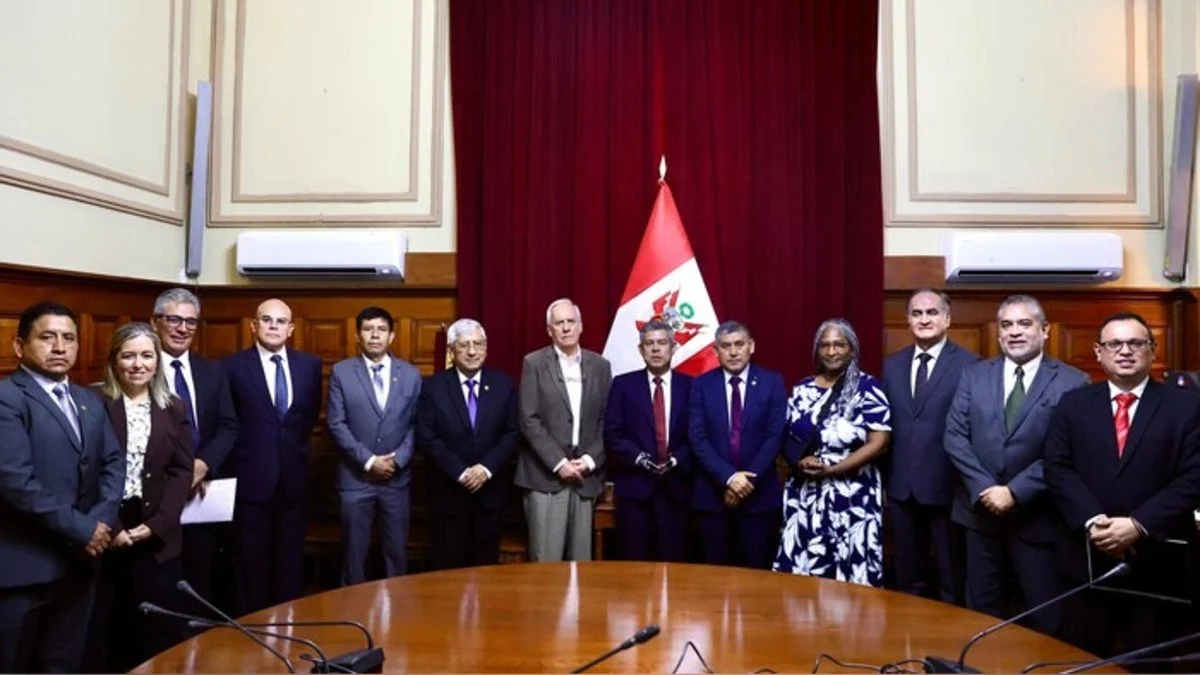
The first round of consultations officially concluded this past Thursday with a final meeting with Juntos por el Perú, held in the historic Mariano Santos room of the Congress. This final meeting was described by participants as "productive and pragmatic," marking the end of a rigorous outreach effort aimed at clearing the path for a floor vote.
A Multidisciplinary Cabinet Effort
The success of these negotiations relied heavily on the collective expertise of the ministerial cabinet. Rather than relying solely on the Prime Minister, the Executive deployed a specialized team of ministers to address the granular concerns of the deputies.
The key cabinet members involved in the meetings included:
- César Astudillo (Interior): Focused on the logistics of security reform.
- Rafael Belaúnde (Defense): Provided insights into the logistical capacity of the military to assist in El Niño mitigation efforts.
- Ernesto Álvarez (Justice and Human Rights): Addressed the legal feasibility of the proposed decrees to ensure they remain within the bounds of the constitution.
- Marco Vinelli (Development and Irrigation): Stressed the critical nature of agricultural protection against climate-induced drought or flooding.
- Elmer Cuba (Economy and Finance): Provided the fiscal backing for the proposed measures, explaining how the state would fund these changes without compromising macroeconomic stability.
- Mauricio Arnillas (Housing, Construction, and Sanitation): Outlined the requirements for new infrastructure to mitigate disaster risks.
- Juan Carlos Requejo (Production): Focused on the impact of administrative simplification on the private sector and industrial growth.
Official Responses and Political Implications
Prime Minister Galarreta has been consistent in his messaging regarding the progress of these talks. In several press conferences held following the meetings, he noted the willingness of the opposition to engage in honest debate.
"As a Government, we will continue to promote dialogue to reach a consensus for the benefit of all Peruvians," Galarreta stated. "I salute the factions that, beyond their differences, are identifying points of convergence."
Building Consensus Amidst Polarization
The political environment in Peru is notoriously volatile, with frequent friction between the Legislative and Executive branches. However, the current strategy of "open-door" negotiations appears to be yielding results. By bringing the legislative process into the light through formal meetings in the Congress building itself, the Executive has effectively neutralized accusations of backroom dealing or executive overreach.
The Opposition’s Perspective
While the government remains optimistic, the path to approval is not without obstacles. Certain factions remain skeptical, questioning whether the 66 measures provide the government with too much unchecked power. The Cámara de Diputados (Chamber of Deputies) has faced internal pressure to move quickly, though some members continue to demand more time to review the specific legal texts of the proposed decrees.
Future Outlook: The Path to Approval
The immediate future of the legislative package now rests on the ability of the Executive to translate the "points of convergence" identified during the meetings into actual votes.
Legislative Hurdles
Even with successful negotiations, the formal legislative process requires a series of committee reviews and a final plenary vote. If the Executive fails to maintain the current momentum, the risk of "legislative fatigue"—whereby the urgency of the proposals is lost to long-term bureaucratic stalling—becomes a real possibility.
Expected Impact
If approved, the legislative faculties will grant the government a window of several months to implement the reforms. The impact would be immediate: the Ministry of the Interior would gain new powers to combat organized crime, the Ministry of Economy would initiate a massive overhaul of business regulations, and the civil defense agencies would be empowered to act decisively against the threats of the upcoming climate season.
Conclusion
The current administration’s push for legislative faculties is a definitive test of its political capital. By prioritizing transparency and direct dialogue with the Chamber of Deputies, Prime Minister Galarreta has attempted to redefine the relationship between the Executive and the Legislature. Whether this effort results in the passage of the 66 measures or encounters a wall of partisan obstruction will determine the trajectory of the government’s agenda for the remainder of the term. For now, the Executive remains focused on the message that the country’s stability—be it in the face of criminal threats or the fury of nature—demands a unified, efficient, and empowered response from the state.