
Executive Summary: A Pivot Toward Proactive Security
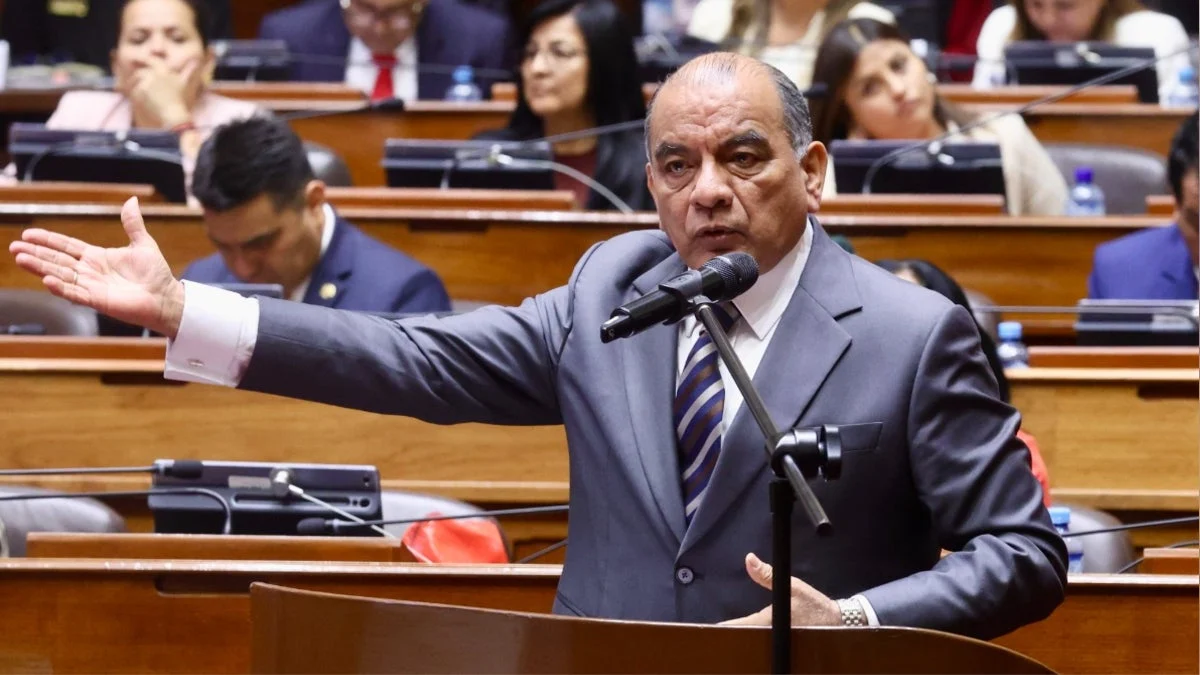
In a high-stakes appearance before the Chamber of Deputies, Peru’s Minister of the Interior, César Astudillo, laid out an ambitious and multifaceted strategy designed to pivot the nation’s security apparatus from a reactive posture to a proactive, intelligence-led offensive. Facing mounting pressure from the legislative branch regarding the nation’s persistent insecurity, Minister Astudillo outlined a comprehensive plan to reclaim territorial control, neutralize criminal organizations, and provide the Peruvian National Police (PNP) with the resources necessary to confront both domestic and transnational criminal threats.
At the heart of the government’s proposal is a five-pillar strategy that emphasizes technological modernization, logistical strengthening, and a total integration of the nation’s justice and security systems. The Minister underscored that the era of sporadic interventions is over, proposing instead a structural shift that aims to dismantle the infrastructure of organized crime through superior intelligence and operational agility.
Chronology: The Road to the Interpellation
The legislative interpellation did not occur in a vacuum. It was the culmination of months of public outcry, rising crime statistics, and a growing disconnect between the executive’s security policies and the lived reality of citizens.
- Q1-Q2 2024: Following a surge in extortion and kidnapping cases, opposition factions in the Chamber of Deputies intensified calls for the Minister of the Interior to appear before the plenary to explain the government’s lack of tangible results.
- Late Q2 2024: The executive branch began a series of high-level dialogues with various political parties to seek legislative powers, aiming to clear a path for the security reforms that were later presented by Minister Astudillo.
- The Interpellation Session: During this week’s session, the Minister faced a grueling two-hour debate, where he defended the current administration’s trajectory and introduced the new "Five-Axis Strategy."
- The Announcement: Following his defense, the Minister unveiled specific budgetary commitments, including a massive S/ 1.175 billion allocation aimed at modernizing police infrastructure.
The Five-Axis Strategy: A New Security Paradigm
Minister Astudillo’s proposal represents a significant evolution in Peruvian public safety policy. By focusing on systemic change rather than superficial tactical adjustments, the Ministry of the Interior seeks to redefine the relationship between the state and the criminal underworld.
1. Anticipatory Intelligence
The Ministry argues that the state has historically been "one step behind" criminal syndicates. The new strategy prioritizes predictive analytics and deep-cover intelligence to intercept criminal operations before they manifest in violence.
2. Territorial Re-occupation
A key admission from the Minister was that certain urban and rural zones have effectively become "no-go" areas for law enforcement. The strategy aims to re-establish a permanent police presence in these flashpoints, forcing criminal groups out of their traditional strongholds.
3. Stripping Criminal Assets
Criminal organizations rely on the tools of their trade—illicitly acquired weaponry, vehicles, and communication arrays. The Ministry plans to implement aggressive interdiction operations to seize these assets, effectively "starving" criminal groups of their operational capabilities.
4. Border Control and Transnational Cooperation
Recognizing that much of the organized crime in Peru is linked to regional networks, the government plans to harden the nation’s frontiers. This includes increased coordination with neighboring countries to stem the flow of illicit arms and human trafficking.
5. Unified Systemic Functionality
Perhaps the most ambitious goal is to force the PNP, the judiciary, and the public prosecutor’s office to operate as a single, cohesive unit. Astudillo emphasized that if one link in the justice chain fails, the entire strategy collapses.
Supporting Data: Investment in Operational Readiness
The government’s plan is backed by a substantial budgetary commitment. The announced S/ 1.175 billion (approximately USD $310 million) is earmarked for a complete overhaul of the PNP’s logistics.
Procurement Priorities
- Technological Modernization: Investment in biometric scanners, surveillance drone networks, and AI-driven data processing centers for criminal identification.
- Tactical Equipment: A complete replenishment of police weaponry and specialized ammunition to ensure that the PNP holds a distinct firepower advantage over organized crime units.
- Mobility: Procurement of thousands of new patrol vehicles designed for both urban tactical response and rough-terrain border patrolling.
- Protection: High-grade ballistic vests and uniform modernization to improve officer safety and morale.
Official Responses and Political Implications
The Minister’s presentation drew a polarized response from the Chamber of Deputies. While members of the ruling coalition praised the clarity of the plan, opposition lawmakers expressed skepticism, questioning whether the proposed budget would reach the front lines or be lost to bureaucratic inefficiency and historical corruption.
The Military-Police Integration Proposal
One of the most contentious, yet potentially impactful, elements of the Minister’s address was the proposal to incorporate retired or honorably discharged personnel from the Armed Forces into the ranks of the PNP.
"We have a concrete project to integrate military retirees into the National Police," Minister Astudillo explained. "These individuals bring with them a disciplined background, physical resilience, and familiarity with weaponry. After a focused period of specialized police training, they will become the force multipliers we desperately need to restore order on our streets."
Critics have pointed to the risk of "militarizing" domestic policing, a concern the Minister countered by emphasizing that these recruits would be subject to strict police training protocols, ensuring their actions remain aligned with civilian law enforcement standards rather than military combat doctrine.
Implications: A High-Stakes Bet on Stability
The strategy presented by Minister Astudillo is a high-stakes gamble. If successful, it could mark a turning point in Peru’s struggle against insecurity, offering a model for other Latin American nations dealing with similar levels of urban violence. However, the path to implementation is fraught with challenges.
Challenges to Success
- Bureaucratic Resistance: The institutional inertia within the security apparatus may hinder the rapid rollout of the proposed technological upgrades.
- Public Trust: The success of the strategy depends heavily on the public’s willingness to cooperate with the police. Rebuilding this trust, which has been eroded by reports of corruption, will be as critical as the procurement of new hardware.
- Judicial Bottlenecks: Even if the police become more effective at making arrests, the strategy remains vulnerable to a judicial system that is often criticized for releasing suspects on technicalities.
The Path Forward
The government has signaled that this is not merely a "wish list" but a binding policy directive. The Commander General of the PNP has reportedly already begun integrating these five axes into the operational doctrine of the police force.
As the Chamber of Deputies continues to monitor the progress of these reforms, the pressure remains on the Ministry of the Interior to deliver measurable results within the coming months. The integration of Armed Forces personnel, the massive investment in new logistics, and the focus on predictive intelligence suggest that the Peruvian government is preparing for a sustained, long-term conflict against the criminal entities that have long held the nation in a state of apprehension.
In conclusion, Minister Astudillo’s appearance was more than a defense of his tenure; it was a manifesto for a transformed security architecture. Whether this plan serves as the foundation for a safer Peru or as another chapter in a history of unrealized security reforms will depend on the speed of implementation and the transparency with which these substantial funds are utilized. The nation watches with a mix of cautious hope and deep skepticism, waiting for the first signs that the tide against insecurity is finally beginning to turn.