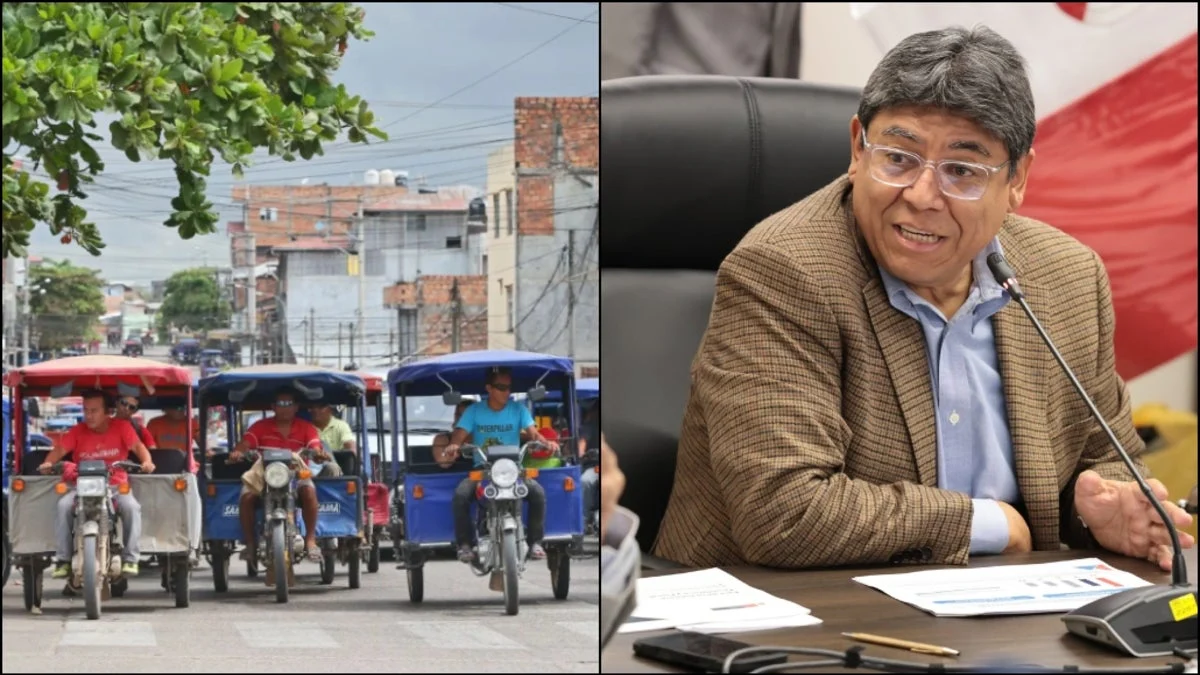
In a decisive move to cushion the economic impact of global energy volatility on vulnerable sectors, the Peruvian government has announced a new, highly targeted subsidy program aimed specifically at mototaxi operators in the nation’s jungle regions. Finance Minister Elmer Cuba confirmed that the measure, slated for approval during this Friday’s Council of Ministers meeting, will provide direct financial relief to drivers who rely on regular gasoline—a primary mode of transport in regions like Ucayali.
The policy marks a strategic pivot in the administration’s handling of energy costs, moving away from broad-based, inefficient price stabilization funds toward a model of surgical, temporary support for those most affected by the fluctuating international oil market.
Main Facts: A Lifeline for Jungle Transit
The core of the initiative involves a direct subsidy of approximately S/2 per gallon of gasoline for mototaxi drivers, capped at a maximum of S/100 per month per operator. This program is designed to be both "focalized" and "temporal," ensuring that public funds are directed only to those whose livelihoods depend heavily on small-scale passenger transport in remote areas where alternative transit infrastructure is lacking.
Minister Cuba explained that the mechanism is modeled after the existing diesel subsidies currently benefiting freight and passenger transport companies nationwide. By focusing on the mototaxi sector—the backbone of mobility in the Amazon basin—the government aims to stabilize local service fares and prevent the cost of living from spiking in regions already struggling with logistics and supply chain disruptions.
Chronology of the Fuel Subsidy Strategy
The path toward this specific subsidy for mototaxis did not happen in a vacuum. It is the latest chapter in a broader government effort to manage the fallout from global inflationary pressures.
- Mid-2023: As global oil prices began their climb, the Ministry of Economy and Finance (MEF) began reviewing the effectiveness of the Fuel Price Stabilization Fund (FEPC), noting its high cost to the public treasury and its lack of precision.
- August 15, 2023: The government launched the first phase of its current strategy, implementing a 15% to 20% subsidy on diesel purchases for passenger and cargo transport across the entire national territory.
- September 2023: Following the success of the diesel program, the government identified the jungle regions as a "hot spot" for economic vulnerability. The Ministry of Energy and Mines (Minem) declared a state of emergency regarding hydrocarbon activities in Ucayali, citing severe storage limitations and supply bottlenecks.
- Current Week: The MEF has finalized the technical details of the gasoline subsidy, with a formal decree expected to be enacted this Friday. This step represents the government’s recognition that diesel-based support is insufficient for the specific vehicle fleet utilized in Amazonian cities.
Supporting Data: Why the Jungle Needs Support
The decision to prioritize the Amazonian regions is backed by compelling data regarding both geography and economic necessity. In the jungle, the mototaxi is not merely a convenience; it is an essential public utility.
The Ucayali Case Study
Ucayali has been hit particularly hard by the confluence of high global prices and local logistical failures. With the Minem declaring an emergency due to limited storage capacity, the region has faced sporadic fuel shortages and price spikes that far exceed the national average.
The economic profile of the average mototaxi driver in these areas suggests that fuel costs constitute a massive percentage of their daily gross income. By subsidizing S/2 per gallon, the government estimates it can reduce the operational cost burden by nearly 15-20%, which, if passed on to the consumer, helps prevent a broader inflationary spiral in the prices of basic goods that are transported via these mototaxis.
The Failure of the Old Model
The government’s decision to abandon the Fuel Price Stabilization Fund (FEPC) is rooted in fiscal prudence. Historical data showed that the FEPC acted as a "blunt instrument." Because it subsidized the commodity price regardless of the end-user’s income or necessity, it ended up benefiting high-income consumers and large corporate fleets as much as the low-income transport workers. The current shift toward "targeted support" is designed to achieve the same social protection goals at a fraction of the cost to the state budget.
Official Responses and Economic Strategy
Minister Elmer Cuba has been vocal in the Senate’s Economy Commission regarding the philosophical shift in the government’s approach. He emphasized that the state is not in the business of insulating the entire economy from market realities, which is impossible in a globalized system. Instead, the objective is to protect the "most fragile nodes" of the national economy.
"We have created a temporary subsidy that mirrors the mechanics of the diesel support program," Cuba stated. "It is essential to understand that we are not going back to the old stabilization funds. Those funds failed to recover resources adequately and created a permanent drain on the Treasury. Our new approach is to provide relief where it is most needed, for as long as it is necessary, without distorting the market long-term."
Risks and Projections
The MEF is closely monitoring the behavior of international crude prices. Minister Cuba warned that if the global price of oil continues its upward trajectory, the government will face renewed pressure on the fiscal deficit. However, he remains adamant that the solution lies in direct, temporary aid to transport workers rather than universal price freezes.
The ministry is also evaluating the "ripple effect" of these fuel costs. Beyond transport, energy costs directly influence the cost of food, materials, and services. By stabilizing the transport sector, the government is essentially attempting to put a "floor" under the inflationary pressure affecting the most isolated provinces.
Implications: A New Era for Energy Policy
The move to subsidize mototaxis has significant implications for both domestic politics and economic policy.
1. Social Stability
By proactively addressing the grievances of transport workers in the jungle, the government is mitigating the risk of widespread protests and strikes. Historically, transport unions in Peru have been powerful political actors; by providing a concrete, measurable benefit, the government secures a degree of social peace in regions where the central government’s presence is often viewed with skepticism.
2. Fiscal Discipline
The decision to reject the reactivation of the FEPC sends a strong signal to international markets and credit rating agencies. It demonstrates that the current administration is committed to fiscal rules and is avoiding the "populist traps" of the past. The focus on "temporary and focalized" support allows for easier withdrawal of the subsidy once global prices stabilize, preventing the program from becoming an entrenched, unsustainable entitlement.
3. The Need for Infrastructure
While the subsidy provides immediate relief, experts point out that it is not a long-term solution to the structural issues in the Peruvian energy sector. The crisis in Ucayali highlighted a critical need for better storage infrastructure, more diversified supply routes, and perhaps a transition toward cleaner energy sources in the long term. The subsidy buys time, but the government will eventually need to address why the Amazonian regions are so uniquely susceptible to global price shocks.
Conclusion
As the Council of Ministers prepares to sign off on the decree this Friday, the eyes of the transport sector remain fixed on the fine print. For the thousands of mototaxistas in the Peruvian jungle, the S/100 monthly support is more than just a figure—it is the difference between maintaining a functioning household and falling into economic precarity.
By balancing fiscal responsibility with targeted social intervention, the Ministry of Economy is attempting to navigate a narrow path. Whether this model of "surgical subsidies" can withstand the volatility of global markets remains to be seen, but for now, the government has set a clear precedent: in the face of economic turbulence, support will be provided, but it will be provided with precision, transparency, and a firm expiration date.