By Editorial Staff, PeruConstruye
In a landmark announcement that signals a decisive shift in national policy, President Keiko Fujimori has unveiled the "National Education Plan 2026-2031." This ambitious, multi-year strategy aims to dismantle the structural barriers that have long stifled the potential of Peru’s youth, focusing on a comprehensive overhaul of infrastructure, digital integration, and pedagogical quality. With an eye toward the next five years, the administration seeks to transform the educational landscape from one of neglect and deficit into a modern, globally competitive system.
Main Facts: The Pillars of the 2026-2031 Agenda
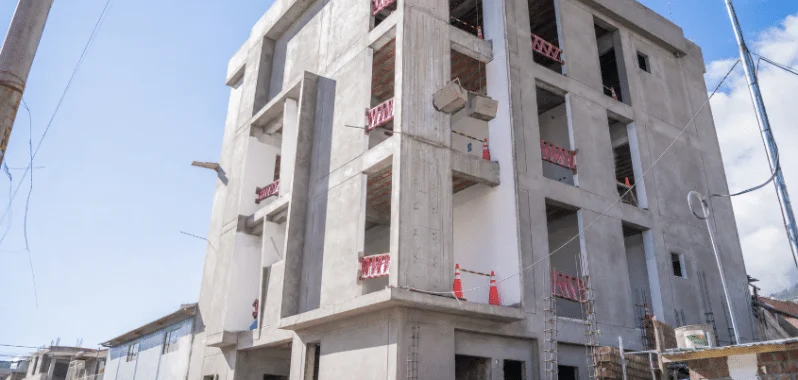
The core of the President’s proposal lies in the dual promise of physical expansion and technological modernization. Recognizing that learning cannot thrive in dilapidated environments, the government has set a rigorous timeline for the construction and rehabilitation of public schools.
The administration’s commitment includes:
- Infrastructure Expansion: The construction of 2,000 entirely new, state-of-the-art educational facilities.
- Modernization Initiative: The comprehensive renovation and structural remodeling of 3,000 existing institutions.
- Universal Connectivity: A definitive commitment to reach 100% internet coverage in all public schools by the end of 2027.
- Curricular Evolution: A complete update of the national curriculum, emphasizing daily reading habits and the integration of technical vocational training within the secondary education cycle.
Chronology of Crisis: Why Now?
To understand the urgency behind this initiative, one must look at the state of Peruvian schools today. The current administration has inherited a system plagued by decades of underinvestment.
- Pre-2026: The educational sector has been characterized by high rates of infrastructure failure. Official statistics indicate that more than 26,000 school locations are currently classified as being in "conditions of risk," posing significant threats to student safety.
- The Baseline Reality: Research conducted by the Ministry of Education revealed that, currently, only three out of every ten public schools possess the "trifecta" of basic services: potable water, sewage systems, and stable electricity.
- September 2026: President Fujimori formally presents the 2026-2031 National Plan, marking the start of a legislative push to streamline the sanitation of physical-legal titles for school lands, a bureaucratic hurdle that has historically stalled investment projects.
- 2027 Milestone: The administration has set a hard deadline for the universalization of satellite-based internet connectivity across the country, aiming to bridge the digital divide between urban centers and rural, isolated regions.
Supporting Data: Mapping the Infrastructure Deficit
The sheer scale of the infrastructure challenge cannot be overstated. According to the data presented during the launch of the plan, the current deficit is not merely a matter of comfort but of equity.
The Access Gap
The disparity in basic services creates a "geographic lottery" for students. In regions such as the Amazon or the high Andes, the lack of connectivity and basic sanitation has meant that students are often excluded from the digital economy before they even graduate. By focusing on the 26,000 at-risk facilities, the government is attempting to stabilize the foundation of the education system.

Financial and Legal Obstacles
Historically, the primary obstacle to building or renovating schools has been the lack of clear legal titles for the lands upon which these schools sit. The 2026-2031 plan introduces a new inter-ministerial task force dedicated to the "saneamiento físico-legal." By accelerating the formalization of property ownership, the government aims to unlock thousands of millions of soles in dormant infrastructure budgets, effectively cutting the "red tape" that has kept construction stalled for years.
Official Responses and Strategic Vision
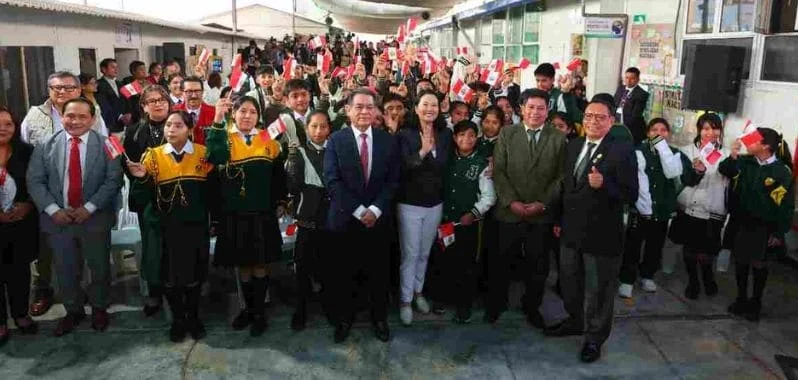
During the presentation, President Fujimori emphasized that this is not merely a construction project, but a "national crusade" for human capital.
"Education is the bedrock of our sovereignty," the President stated. "We cannot expect our youth to compete in the 21st century when they study in 20th-century conditions. This plan is designed to provide the physical safety, the technological tools, and the pedagogical rigor required for a modern Peru."
Key figures in the education sector have welcomed the focus on vocational training. By prioritizing technical skills during the secondary years, the government hopes to create a direct pipeline from the classroom to the workforce, particularly in sectors such as agriculture, renewable energy, and construction—the latter being a vital driver of the national economy.
Furthermore, the emphasis on a "daily hour of reading" reflects a broader strategy to combat falling literacy rates and improve critical thinking skills. Educators have noted that while infrastructure is the "hardware" of education, the curriculum is the "software," and both must be updated simultaneously for the plan to succeed.
Implications: The Long-Term Impact on Peru
The implementation of the 2026-2031 Plan carries profound implications for the socio-economic trajectory of the nation.
1. Reducing Inequality
By targeting the most vulnerable regions with satellite-based internet, the government is effectively democratizing information. When a student in a remote village has the same access to digital libraries and virtual classrooms as a student in Lima, the long-term impact on social mobility will be seismic.

2. Economic Stimulation
The construction of 2,000 new schools and the renovation of 3,000 others will act as a major stimulus for the national construction industry. This creates a multiplier effect: jobs in engineering, architecture, and manual labor will be generated in every province of the country, providing a boost to local economies.
3. Strengthening the Teaching Profession
The plan’s focus on teacher evaluation and professional development is a necessary component of the reform. By tying infrastructure investment to pedagogical standards, the government is signaling that the quality of education depends as much on the teacher as it does on the classroom walls. The goal is to move toward a merit-based system that rewards high-performing educators and provides support to those who need it.
4. Future-Proofing the Workforce
The shift toward technical education in high schools is an acknowledgment of the changing labor market. As automation and AI begin to reshape global industries, the Peruvian government is betting that a workforce equipped with specialized technical training will be more resilient and better prepared for the demands of the global market.
Conclusion: A Turning Point?
The 2026-2031 National Education Plan represents one of the most comprehensive reform packages in recent Peruvian history. While the goals are ambitious—particularly the rapid rollout of internet connectivity by 2027 and the massive infrastructure undertaking—the administration has presented a clear roadmap for execution.
The success of this plan will ultimately depend on the government’s ability to maintain the momentum, navigate the complex legal landscape of property rights, and ensure that the funding is executed with transparency and efficiency. If successful, this initiative will not only renovate the nation’s school buildings but will also reconstruct the foundations of opportunity for the next generation of Peruvians. As the country looks toward 2031, the legacy of this administration will be judged by its ability to turn these blueprints into reality, ensuring that every child, regardless of their location, has the tools to succeed in an increasingly complex world.