The administration of President Keiko Fujimori has officially set its sights on the 2027 fiscal year, presenting a public budget proposal that reflects both ambitious development goals and complex economic trade-offs. As the bicameral Congress begins its deliberations, the proposed Law of Public Budget 2027—alongside associated laws on debt and financial equilibrium—lays out a roadmap for the deployment of S/266.506 billion. While the government frames this as a clear investment in the nation’s future, a closer inspection of the data reveals significant discrepancies between the administration’s rhetoric and the actual allocation of resources for critical sectors.
The Core Proposal: A 3.5% Expansion
The proposed budget of S/266.506 billion represents a 3.5% increase over the 2026 Initial Institutional Budget (PIA). This growth is intended to cover the government’s four primary pillars of governance: security, education, health, and transport. However, the legislative process, which will be spearheaded by the newly formed Bicameral Budget and General Account Commission—chaired by former Minister of Economy José Arista—faces the immediate challenge of reconciling these strategic goals with the reality of decreased funding in sensitive areas.
Chronology: The Road to the 2027 Budget
The presentation of the 2027 budget marks a critical milestone in the Fujimori administration’s first year.
- Early Policy Formulation: Following the inauguration, the executive branch signaled a shift toward infrastructure and social safety nets.
- The Presidential Mandate: President Fujimori’s initial address to the nation established the doubling of the "Pensión 65" program as a cornerstone of her social policy.
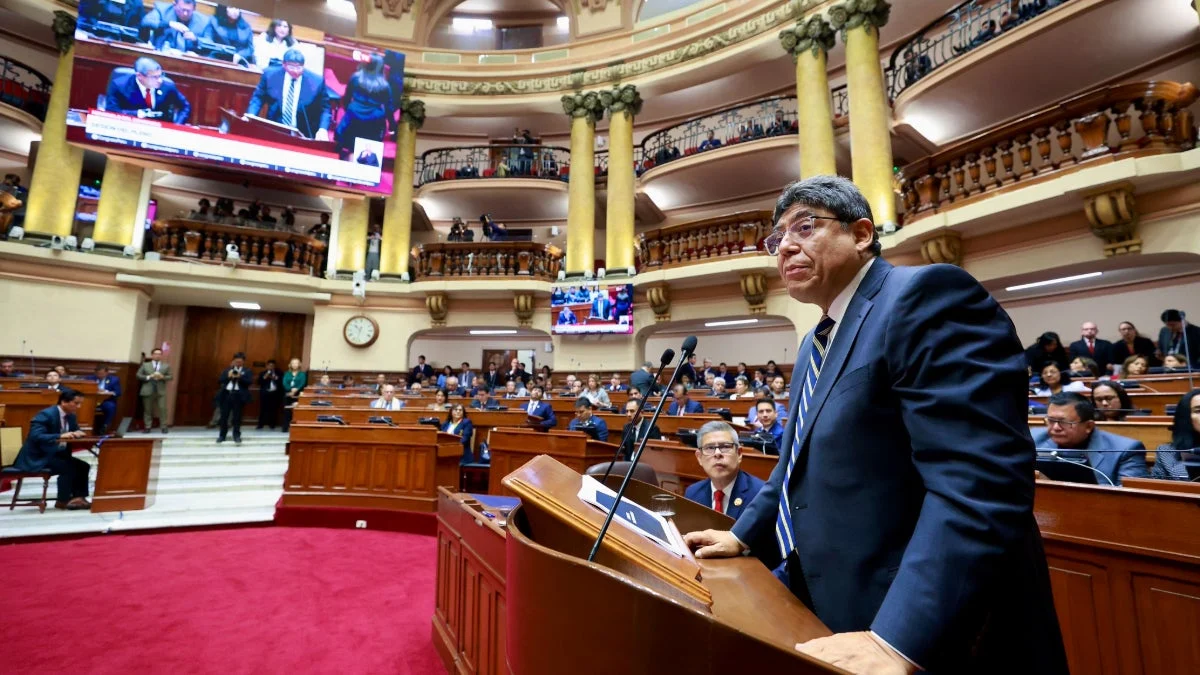
- The Ministerial Presentation: Prime Minister Luis Galarreta and Economy Minister Elmer Cuba formally submitted the budget proposal to the Pleno, emphasizing a "prioritization" strategy.
- The Disclosure Gap: Following the presentation, independent analysts and the media identified a gap between the government’s claims of increased funding for health and security and the actual figures contained in the budget documentation.
- Current Phase: The proposal is now under review by the Bicameral Commission, where lawmakers are expected to scrutinize the inconsistencies regarding sector-specific budget cuts.
The Discrepancy: Rhetoric vs. Reality in Health and Security
One of the most contentious aspects of the 2027 budget proposal is the divergence between the Minister of Economy’s public statements and the itemized budget figures. Minister Elmer Cuba claimed that Health and Public Order would receive significant budget increases—specifically mentioning S/848 million more for Health and S/368 million more for Public Order.
However, a deeper analysis reveals that these figures refer exclusively to "current expenditure," which covers operational costs such as payroll and basic services. When the total budget—which includes crucial infrastructure and capital investment—is taken into account, the narrative shifts:
- Health: Despite being labeled a pillar for social development, the total budget for Health is slated at S/32.208 billion, a reduction of S/679 million compared to 2026.
- Public Order and Security: Despite the government’s pledge to prioritize safety, the budget for this sector stands at S/15.400 billion, representing a cut of S/519 million compared to the previous year.
This "statistical omission" has raised concerns among fiscal experts who argue that focusing solely on current expenditure masks a broader stagnation or decline in the state’s ability to provide high-quality services and long-term public infrastructure.
Supporting Data: Where the Money Is Moving
While Health and Security face reductions in their total allocations, other sectors have seen significant infusions of capital. The government has prioritized specific projects that it believes will drive economic resilience and social stability.
The El Niño Fund
Climate change preparedness remains a top priority. The administration has allocated S/2.489 billion specifically to combat the effects of the El Niño phenomenon, building upon the S/2.500 billion set aside for 2026. This funding is distributed as follows:
- National Infrastructure Authority: S/1.047 billion.
- INDECI (Civil Defense): S/413 million.
- Ministry of Housing, Construction, and Sanitation: S/273 million.
- Remaining funds: Distributed across 11 other public institutions and regional/local governments.
Education and Social Protection
Education remains the largest single expenditure in the national budget, with S/52.198 billion allocated. It is important to note that 60% of this figure is committed to personnel payroll. New initiatives include:
- Pronabec: An expansion intended to provide 11,000 new scholarships.
- Social Safety Net: The "Protection Social" category will see an increase of S/1.804 billion, largely driven by the executive’s promise to double the "Pensión 65" bimonthly stipend from S/350 to S/700.
Infrastructure and Defense
Transport projects have received the largest boost in absolute terms, with S/3.689 billion in additional funding. This will support the construction of the Santa Rosa Expressway, the Peripheral Ring Road for Lima and Callao, and the development of the Chinchero Airport in Cusco, alongside the ongoing maintenance of Metro lines 1 and 2.
Concurrently, the Ministry of Defense will receive an additional S/1.812 billion. Much of this funding is earmarked for capital investment, specifically for the repair, modernization, and technological upgrade of the Armed Forces’ equipment—a sector where investments are set to quadruple in a single year.
Official Responses and Justifications
During the defense of the budget, Prime Minister Galarreta argued that the government is focusing on efficiency. He maintained that even with the nominal cuts in total sector spending, the focus on "current expenditure" ensures that public services—such as doctor salaries and police presence—remain covered.
Minister Cuba echoed this sentiment, arguing that the reallocation of funds toward infrastructure (such as the Metro and the El Niño mitigation efforts) represents a more strategic use of capital than simply increasing the total institutional budget for sectors that may have previously suffered from execution bottlenecks.
Implications for the Future
The 2027 budget debate is not merely a technical exercise in accounting; it is a political statement on the priorities of the Fujimori administration. Several key implications emerge:
- Execution Risk: By reducing the total budget for Health and Security while shifting funds toward large-scale infrastructure, the government assumes that it can improve public outcomes through better management rather than higher spending. If this assumption fails, the administration risks facing public backlash in sectors that touch the daily lives of citizens.
- Social Contract: The doubling of the "Pensión 65" stipend is a clear attempt to consolidate political support among the most vulnerable. However, funding such a massive increase while cutting other social services could lead to a "hollowed-out" welfare state, where cash transfers are available, but institutional services are underfunded.
- Bicameral Scrutiny: With the budget now in the hands of the new Bicameral Commission, the executive branch will face intense pressure to explain the "discrepancies" identified by the media. Former Minister José Arista’s role will be pivotal in determining whether the government’s fiscal policy receives a "green light" or is sent back for significant revisions.
- Fiscal Sustainability: The 3.5% increase is modest, reflecting a cautious approach to debt. However, the reliance on high-cost infrastructure projects—such as the Chinchero Airport and major road networks—requires consistent and high-quality execution to ensure that these investments generate the projected economic growth necessary to sustain the debt levels for 2027 and beyond.
As the debate moves forward in the halls of Congress, the Peruvian public will be watching closely to see if the government can bridge the gap between its ambitious narrative and the sobering reality of the numbers presented in the 2027 fiscal proposal. The ultimate test will be whether these budget allocations translate into tangible improvements in the lives of the citizenry or whether they become another example of fiscal trade-offs that fail to deliver on promised reform.