Executive Summary: The Cooling of Sentiment
After a period of intense optimism following the transition of power in Peru, the business sector is recalibrating its outlook. Data from the most recent Central Reserve Bank of Peru (BCRP) survey reveals that while the immediate "honeymoon phase" of the new administration—marked by a surge in confidence scores exceeding 70 points—has subsided, the overall sentiment remains within positive territory. However, a cooling effect is evident in medium-term expectations, driven by structural concerns such as the looming threat of the "El Niño" climate phenomenon, persistent insecurity, and global inflationary pressures.
While companies report robust current performance, including increased production and higher purchase orders, the forward-looking indicators have moderated. Businesses are transitioning from a state of post-electoral euphoria to a period of "cautious optimism," where strategic decisions are being tempered by the realities of the country’s logistical and political challenges.
Chronology of Confidence: From Peaks to Plateaus
The trajectory of Peruvian business sentiment in recent months has been characterized by a sharp, volatility-prone ascent followed by a necessary stabilization.
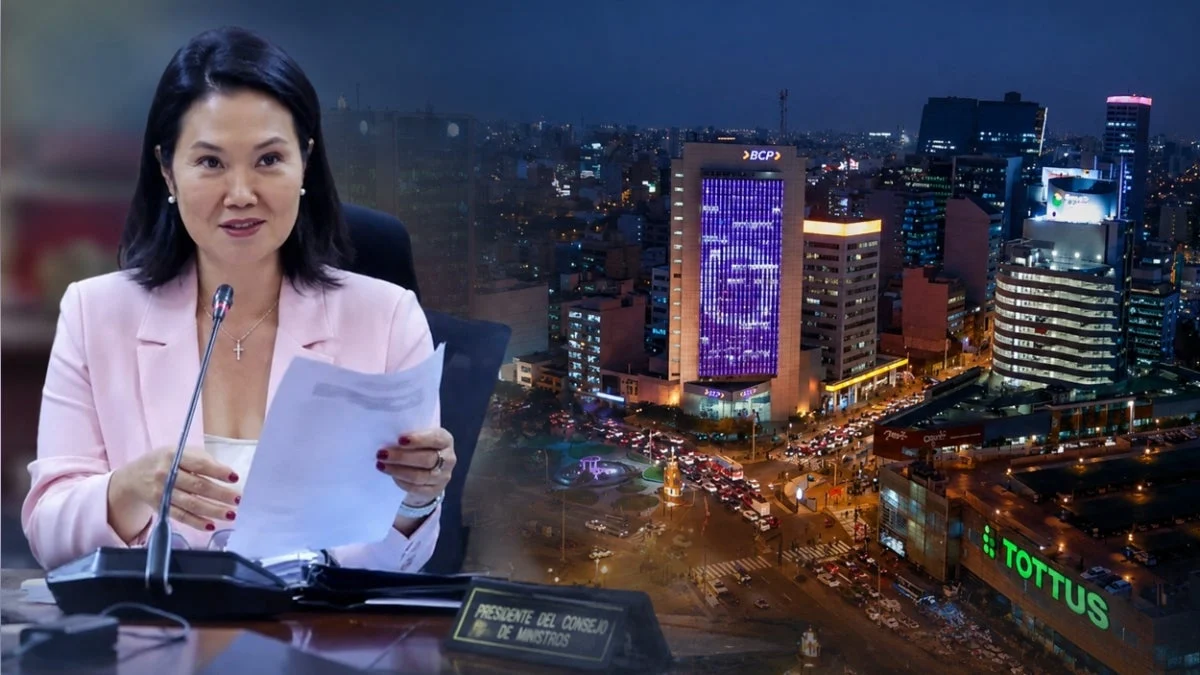
- June/July: The election of Keiko Fujimori as President triggered a record-breaking surge in confidence. The business community, anticipating a market-friendly approach, pushed expectation indices past the 70-point threshold, reflecting high levels of capital inflow confidence and administrative stability.
- August: As the administration settled into its first full month of governance, the "honeymoon" effect began to fade. The BCRP survey for August showed a measurable decline in confidence across several categories. While the indices remain above the 50-point "neutral" mark—effectively separating optimism from pessimism—the downward trend suggests that the initial exuberance is giving way to a more sober assessment of the government’s ability to execute policy.
- Present Day: The focus has shifted toward the "implementation phase." The business sector is no longer reacting to political change, but rather to the tangible outcomes of government policies, infrastructure readiness, and macroeconomic stability.
Supporting Data: The Disconnect Between Current Performance and Future Outlook
The BCRP data highlights a fascinating dichotomy: companies feel good about today, but are nervous about tomorrow.
Current Situation vs. Future Expectations
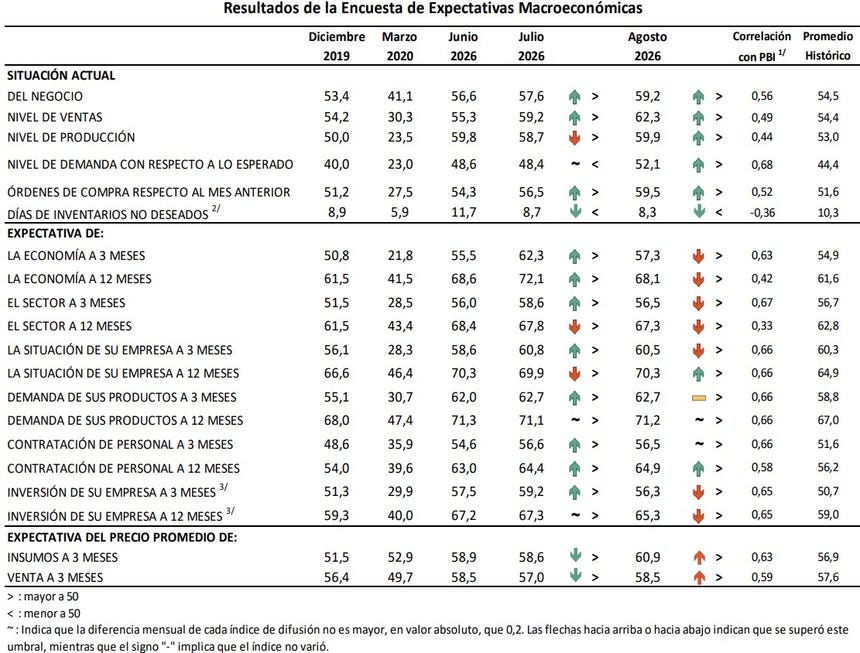
- Current Business Situation: The indicator for the current status of businesses rose by two points, with sales levels increasing from 59.2 to 62.3 points. This suggests that the real economy—the day-to-day operations of firms—remains active and productive.
- Future Outlook (3 Months): Conversely, the expectation for the national economy at the three-month horizon fell from 62.3 points in July to 57.3 in August. This five-point drop is the clearest signal of a changing sentiment.
- Investment Intentions: Expectations for private investment followed a similar trend. At the three-month horizon, the indicator dropped from 59.2 to 56.3 points, while the 12-month outlook declined from 67.3 to 65.3 points.
The Inflationary Pressure
Cost management is becoming a significant pain point. Expectations for the price of inputs at the three-month horizon rose from 58.6 in July to 60.9 in August. Because inputs—ranging from raw materials and fuel to logistics and packaging—are becoming more expensive, businesses are being forced to adjust their own sales prices. The indicator for average sales prices at three months rose from 57 to 58.5 points, signaling that inflation may remain a persistent burden for the Peruvian consumer.
Expert Analysis: The Voices of the Market
To understand these figures, it is essential to look at the interpretation provided by leading economic analysts.
Juan José Marthans: The Weight of Structural Challenges
Economist Juan José Marthans notes that while the drop in confidence is noteworthy, it does not yet signify a crisis. "We are still in an optimistic zone, nearly ten points above the 50-point mark," Marthans explained. "However, the concern is moving toward the ‘how.’ How will the government face the scourges of the potential El Niño impact and the rising insecurity? These are the two primary factors calibrating current business caution."
Marthans emphasizes that the government has inherited significant liabilities from the previous five-year cycle, making the current administration’s task of establishing a productive, stable environment significantly harder. He argues that executive-legislative coordination is paramount; without a consensus on key reforms and the delegation of legislative faculties, the private sector will continue to hold back on aggressive, long-term capital investments.
Juan Carlos Odar: Sectoral Vulnerabilities
Juan Carlos Odar provides a more granular view, noting that the decline in expectations is not uniform across all sectors. "We are seeing a clear improvement in the current situation, but a regression at the three-month horizon," says Odar. "This is linked to the primary sectors, specifically fishing and agriculture, which are highly sensitive to climate volatility. These sectors drive employment in urban areas and have a cascading effect on other industries."
Odar remains slightly more optimistic regarding the "Private Investment" component, noting that while sentiment is cooling, the actual import of capital goods continues to reflect a phase of expansion. He expects the second half of the year to show increased dynamism, particularly as public investment finally kicks in to address the preventative measures required to mitigate El Niño.
Implications: A Roadmap for the Coming Months
The current environment is characterized by a "wait-and-see" approach. The implications for the Peruvian economy are three-fold:
1. The "El Niño" Variable
The potential for a severe weather event is no longer a peripheral concern; it is a central economic variable. Infrastructure bottlenecks—such as the potential blockage of the Pan-American Highway—could paralyze supply chains, leading to lost harvests, production deficits, and significant wealth destruction. As Marthans notes, "The next few months will be decisive. If the government’s mitigation efforts are efficient, confidence will rebound."

2. The Inflationary Outlook
With input prices rising, the inflationary environment remains fragile. Added to this is the global uncertainty regarding oil prices due to geopolitical tensions in the Middle East. Experts suggest that the inflation rate by year-end could hover closer to 5%, further squeezing the purchasing power of the average Peruvian household.
3. Policy and Governance
The business community is looking for signs of a cohesive government strategy. The focus is currently on the "delegation of faculties"—the legal power for the executive to enact laws without constant congressional interference. If the government can secure this delegation and prove that it can manage the dual threats of natural disasters and rising crime, the "cautious optimism" observed in August could transform into a sustainable, long-term recovery.
Conclusion
Peru stands at a critical juncture. The post-election honeymoon is over, and the realities of governance have set in. While the private sector remains fundamentally optimistic, that optimism is being tested by the structural realities of the Peruvian economy. The next quarter will prove whether the current cooling is a mere hiccup or the beginning of a more cautious, long-term trend. For now, the message from the boardroom is clear: growth is possible, but it requires a stable, proactive, and unified government to clear the path of the looming environmental and social obstacles.