In a move that has sparked intense debate across the Peruvian political and economic landscape, the administration of President Keiko Fujimori has officially submitted a proposal to Congress aimed at reorganizing the national public payroll. At the heart of this initiative is a strategic plan to streamline the state apparatus through a system of voluntary resignation incentives.
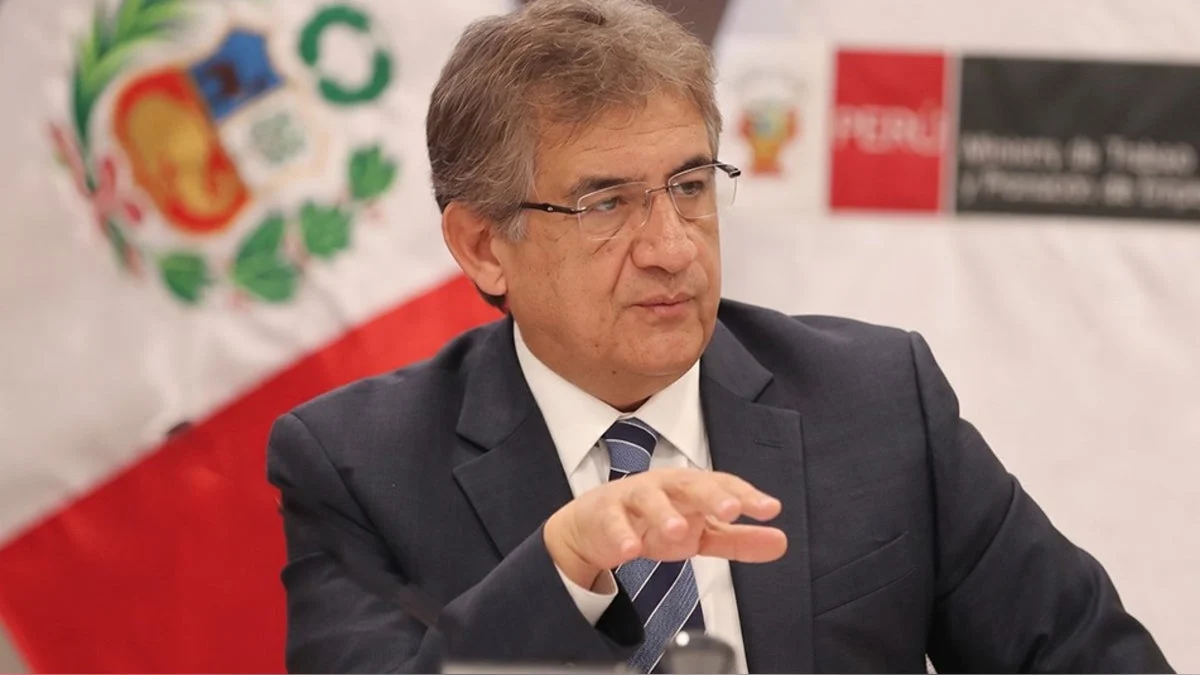
Championing the narrative for this shift is the Minister of Labor, Juan Sheput, who has launched a scathing critique of the current public sector structure, labeling it "perverse." As the administration seeks to address the fiscal burden of the state, the proposal has reignited discussions about the efficiency of public service, the complexity of labor regimes, and the long-term sustainability of the national budget.
Main Facts: The Core of the Proposal
The Fujimori administration’s proposal, presented to the legislative branch last week, does not aim for mass layoffs or the arbitrary dismissal of civil servants. Instead, it focuses on "right-sizing" the state by offering financial incentives to those who choose to exit their positions voluntarily.
The government’s primary objective is to "sincerar" (make transparent and realistic) the staffing needs of various state entities. By incentivizing voluntary exits, the government hopes to reduce the "monstrous" weight of current expenditures—specifically, the high proportion of the national budget consumed by current operating costs and payroll obligations.
Key pillars of the proposal include:
- Voluntary Participation: The policy explicitly excludes any mechanism for forced termination or the stripping of rights from those who hold stable, permanent positions.
- Calculated Incentives: The compensation for those choosing to depart is benchmarked against the protections afforded by the private labor regime under Legislative Decree 728.
- The Incentive Formula: The proposed compensation is set at 1.5 monthly salaries for every full year of service, capped at a maximum of 12 monthly salaries. For instance, a worker earning S/4,000 with five years of service would receive a departure package of S/30,000, while someone with ten or more years would be capped at 12 months, or S/48,000.
Chronology of the Reform Push
The discourse surrounding the reform of the Peruvian state did not emerge in a vacuum; it is the culmination of months of rising concern regarding fiscal health and administrative efficiency.
- Early Months of the Administration: Following the inauguration of President Keiko Fujimori, economic indicators began to show signs of volatility. Investor confidence, as monitored by various financial institutions, suffered a slight cooling effect, prompting the government to look for ways to optimize public spending.
- Last Week: The executive branch officially submitted the legislative proposal to Congress, setting the stage for a national debate on the future of the civil service.
- The "Ampliación de Noticias" Interview: Minister Juan Sheput appeared on the media program Ampliación de Noticias to articulate the government’s stance, where he famously declared that the state has become "elephantine" and requires urgent, total reorganization.
- Present Day: The proposal remains under review by Congress, with the government lobbying for its passage as a cornerstone of its broader economic modernization agenda.
The "Elephantine State": Supporting Data and Economic Realities
Minister Sheput’s critique centers on the observation that the state has grown bloated, not necessarily just in terms of the raw number of employees, but in the efficiency and cost-to-service ratio. He highlighted two major institutions—EsSalud (the social health insurance system) and Sunafil (the National Superintendency of Labor Inspection)—as prime examples of entities where payroll costs have become unsustainable.
"In the case of EsSalud, one-third of the monthly expenditure is dedicated solely to payroll," Sheput noted. "We must conduct a total reorganization. The same applies to Sunafil."
The current reality of the Peruvian public sector is a fragmented landscape of competing labor regimes. Employees are scattered across different legislative frameworks, including:
- Legislative Decree 276: The traditional public career regime.
- Legislative Decree 728: A regime adapted from the private sector.
- The CAS Regime: The Contrato Administrativo de Servicios, a temporary contract model that has become a permanent fixture for many.
- The Civil Service Law (Servir): An ongoing attempt to centralize and modernize public human resources.
This patchwork system creates administrative bottlenecks that prevent the government from attracting top-tier talent. As Sheput pointed out, the current structure is so rigid and convoluted that it is often "impossible to attract and convene talent" into the public sphere.
Official Responses and Political Maneuvering
The proposal has drawn a variety of responses from political stakeholders. While the executive branch views this as a necessary step toward fiscal discipline, critics in the opposition have raised concerns about the potential loss of institutional memory and the impact on essential services.
Minister Sheput has been clear in his positioning: although the reform of the public administration does not fall directly under the jurisdiction of the Ministry of Labor, he has requested to be a primary stakeholder in the process.
"The public sector does not correspond to the Minister of Labor," Sheput acknowledged during his interview. "However, I would like to enter the terrain of state reform. I have asked the Prime Minister to allow me to participate in this process."
His insistence suggests that the Ministry of Labor views the reform not just as a fiscal exercise, but as a labor policy imperative. By streamlining the state, Sheput believes the government can improve working conditions for those who remain, fostering a culture of meritocracy rather than one defined by the "perverse" incentives of the current system.
Implications: The Road Ahead
The potential implications of this reform are profound, touching upon the social contract between the state and its workers, as well as the long-term trajectory of the national budget.
1. Fiscal Sustainability
If successfully implemented, the program could significantly reduce the "monstrous" expenditure on current costs, potentially freeing up funds for capital investments and infrastructure projects that have been stalled due to budgetary constraints.
2. Modernization of the Bureaucracy
By offering an exit strategy, the government aims to clean the slate of "zombie" positions and outdated roles. This could pave the way for a more agile, digital-forward, and service-oriented public administration. However, the success of this depends on the government’s ability to retain high-quality talent during the transition.
3. The Political Challenge
The biggest hurdle remains the legislative process. Any reform involving the state apparatus is inherently political. Unions representing public workers have historically been powerful forces in Peru. The government will need to navigate these relationships carefully to ensure that "voluntary" means truly voluntary and that the incentives are perceived as fair.
4. Impact on Public Services
The concern for many citizens is the impact on services like healthcare and education. If the voluntary resignation program leads to a "brain drain" where the most experienced workers leave, the quality of services could temporarily suffer. The government must demonstrate that its reorganization plan includes provisions for the replacement and training of essential staff.
Conclusion: A Turning Point for Peru
The debate over the "elephantine" state is a reflection of a larger, global challenge: how to balance the need for a lean, efficient government with the social responsibility of maintaining a stable workforce.
Minister Sheput’s push for a "total reorganization" represents a bold attempt by the Keiko Fujimori administration to signal that it is serious about structural change. Whether this proposal will be viewed as a necessary modernization or a disruptive policy shift remains to be seen. As the bill works its way through the halls of Congress, the eyes of the Peruvian public—and the international business community—will be fixed on how the government manages the delicate balance of fiscal austerity and public sector morale.
Ultimately, the success of this initiative will be judged by its outcome: does it create a more functional state that better serves the citizen, or does it simply trade one set of administrative problems for another? For now, the administration remains committed to its course, arguing that the status quo is simply no longer an option for a nation striving for economic growth and stability.