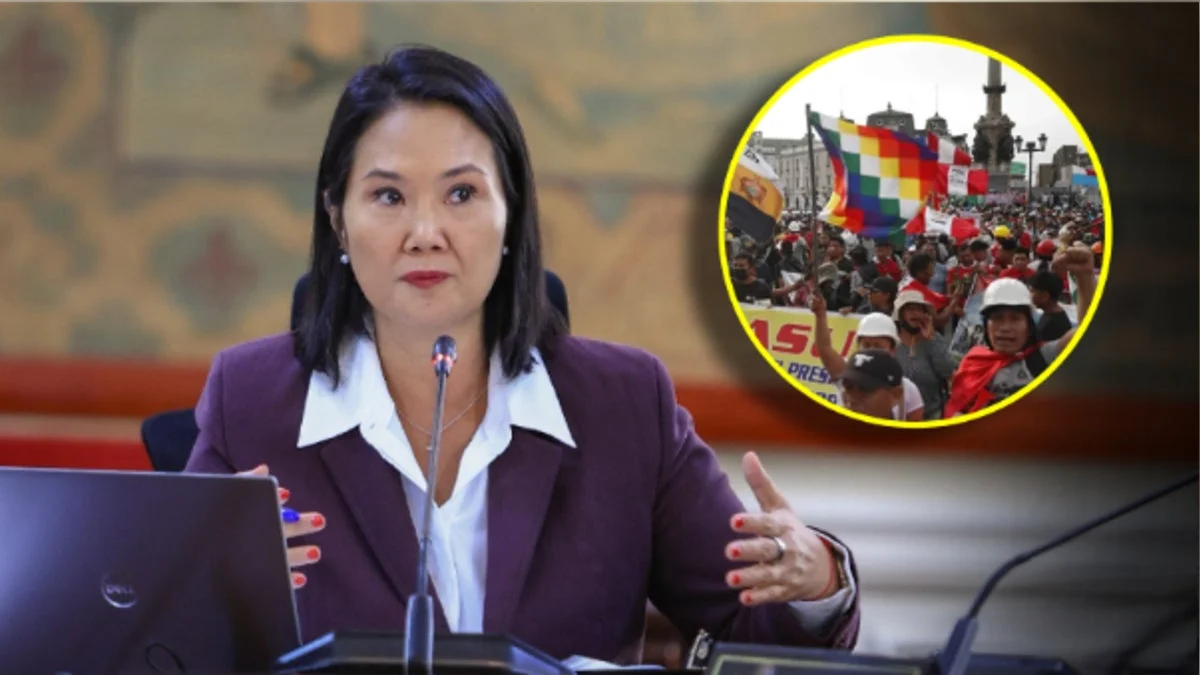
In a wide-ranging interview with RPP, President Keiko Fujimori has articulated a new phase of her administration, characterized by a concerted effort to reconcile with regions that opposed her candidacy and a decisive expansion of the role of the Armed Forces in national security. As her administration navigates the complexities of a polarized political landscape, the President emphasized a "proactive" approach to governance, marked by constant regional travel and a willingness to engage with the families of victims from the social protests that gripped the country between late 2022 and early 2023.
The Quest for National Reconciliation: Acknowledging Distrust
President Fujimori candidly acknowledged the electoral geography that defined her rise to power, admitting that her administration faces significant skepticism in several provinces where she did not secure a majority. Addressing this reality, she pledged to focus her efforts on those areas where, in her own words, the population still views her government with "eyes of distance."
"I am absolutely aware that our government and I personally have received more votes in one part of Peru, while there is more distrust in another," the President stated. "With greater reason, we must place more emphasis on those who still look at us from a distance."
A Commitment to Dialogue
Perhaps the most significant development in her policy of outreach is her stated willingness to meet with the families of the victims of the civil unrest that occurred during the transition period between late 2022 and early 2023. When asked directly if she would engage with these groups, Fujimori was unequivocal: "Yes, of course. We will always be open to dialogue."
This shift represents a pivotal attempt to address the grievances that have fueled national tension, signaling a departure from previous administrative stances that often avoided direct confrontation with the painful legacy of the protests. By positioning herself as a leader willing to listen to the most critical voices, Fujimori aims to rebuild the tattered fabric of public trust in the state.
Chronology of Action: The "Government on the Field"
Since assuming office, the Fujimori administration has adopted a high-intensity travel schedule, which the President describes as a "government in the field." In just 45 days, the President has conducted 13 official regional visits, covering a wide swath of the national territory.
- Initial Phase (Days 1-30): Immediate deployment of cabinet ministers across all 24 departments to assess local needs and address regional crises, including climate-related infrastructure failures.
- The Southern Focus: Strategic visits to Puno, Carabaya, and Macusani—areas that were strongholds for political opposition—to demonstrate that the central government is prioritizing their needs over political affiliation.
- The Arequipa Response: Direct intervention during the DANA weather event, where the government coordinated the clearance of blocked roads between Atico and Ocoña, serving as a template for future rapid-response efforts.
- The Ucayali Mission: The most recent expedition to the remote province of Purús, where the President oversaw the delivery of 3.83 tons of essential humanitarian supplies, including staples like rice, sugar, and oil.
The President maintains that these visits are not merely symbolic. By delivering tangible results—roads, food, and infrastructure—she hopes to shift the narrative from political ideology to practical governance. "The goal is not necessarily that they trust me, but that they return to trusting the authorities and the Peruvian state," she explained.
Expanding the Role of the Armed Forces
Beyond domestic outreach, the administration is signaling a more robust security posture. President Fujimori confirmed that the Armed Forces are poised to take on expanded responsibilities, particularly regarding the control of national borders.
"Cooperating as Far as Necessary"
The President’s comments regarding the military have sparked debate, but she remains firm in her assessment that current threats—ranging from illegal migration to transnational criminal networks—require an integrated security approach.
"The Armed Forces will cooperate as far as necessary. If they are needed for more responsibilities, they will be called upon," she noted. While the military is already involved in "rastrillajes" (sweeps) and patrols, the administration is looking to formalize their role in border control.
Fujimori was careful to distinguish between the militarization of the border and the facilitation of trade. She clarified that the administration aims to curb illegal entry without stifling the flow of commerce with neighboring nations. By delegating specific, targeted functions to the military, the government hopes to free up police resources for urban security—a move that aligns with the growing public demand for a more stringent law-and-order policy.
Supporting Data and Ministerial Coordination
The effectiveness of this "proactive" governance model relies heavily on the synergy between the President and her cabinet. During her trip to Purús, the President was accompanied by the Minister of Agrarian Development and Irrigation, Marco Antonio Vinelli Ruiz, and local authorities.
This collaborative approach is designed to circumvent bureaucratic bottlenecks. By bringing high-level ministers directly to the points of crisis, the administration claims it can authorize expenditures and resource allocations on-site, rather than waiting for lengthy approvals from Lima.
Security and Climate Priorities
The administration is also facing pressure from the legislature to prioritize specific initiatives. Three congressional blocks have recently requested that the Executive branch submit a new petition for legislative powers, with a laser focus on two critical issues: internal security and the mitigation of the "El Niño" phenomenon.
The President’s recent rhetoric suggests she is aligned with these priorities. By integrating military support into border security and deploying humanitarian aid to vulnerable regions, the administration is attempting to create a unified policy front that addresses both immediate climatic threats and long-term security instability.
Implications for the Future of the Administration
The path ahead for the Fujimori administration is fraught with political peril. The "eyes of distance" she describes are not merely a product of geographical location, but of deeply ingrained structural inequalities and historical political polarization.
The Challenges of Reconciliation
For the policy of outreach to succeed, the President must move beyond the rhetoric of dialogue and demonstrate that her administration can deliver sustainable development to neglected regions. If these visits are perceived as purely performative, they may deepen the cynicism of the local populations.
The Security Dilemma
Similarly, the decision to lean on the Armed Forces carries significant weight. While increased border security is popular among certain segments of the electorate, it remains a sensitive topic in a country that has historically been wary of military involvement in civil affairs. The challenge for the administration will be to maintain this involvement within a strict legal framework that respects human rights and prevents the perception of an authoritarian drift.
Legislative Hurdles
Finally, the administration’s ability to implement its agenda will depend on its relationship with Congress. The demand from various political blocs for specific legislative powers indicates that the honeymoon period for the government is over. The coming months will test whether President Fujimori can successfully negotiate with a fragmented legislature while simultaneously maintaining the support of the public through her regional outreach efforts.
In conclusion, the administration of Keiko Fujimori is attempting a delicate balancing act. By acknowledging the distrust of the electorate, committing to an unprecedented level of regional engagement, and recalibrating the role of the military, the President is betting that a focus on results and presence can overcome the political baggage of the past. Whether this "government in the field" can evolve into a lasting model for national stability remains the central question of her tenure.