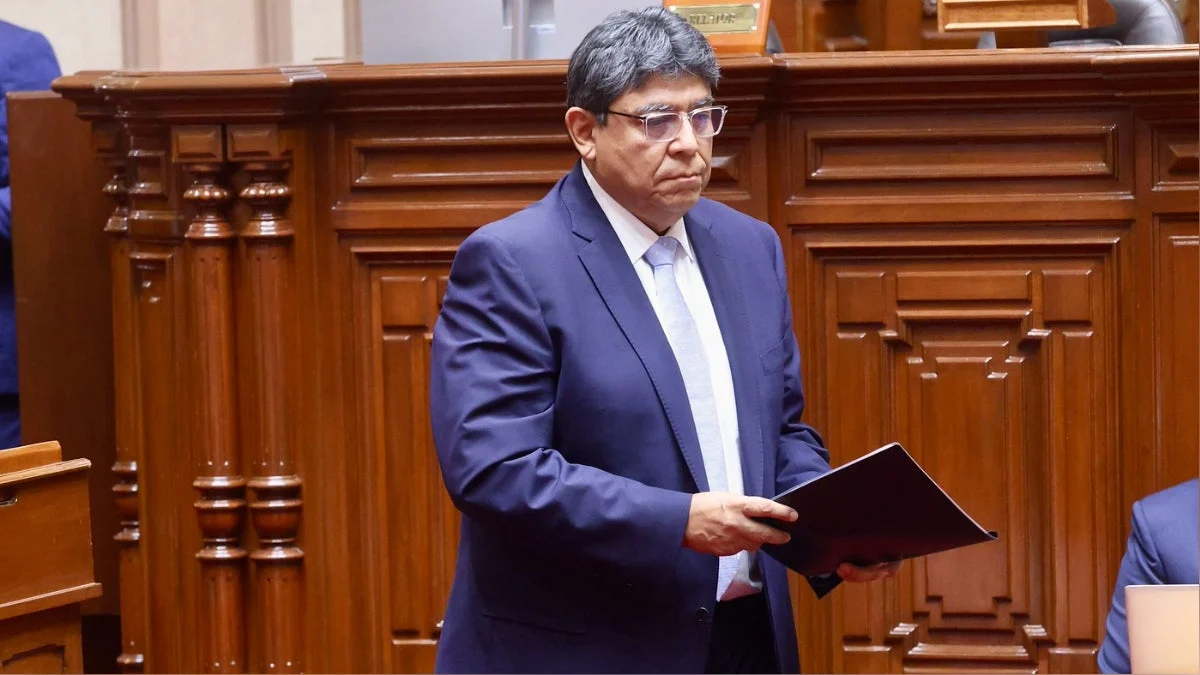
In a candid and stark assessment of Peru’s economic landscape, Minister of Economy and Finance, Elmer Cuba, has officially signaled that the government intends to overhaul the nation’s regulatory framework for micro and small enterprises (Mypes). Speaking before the Bicameral Commission on Budget and the General Account of the Republic, Minister Cuba did not mince words, labeling the current "Mype Law" a failure. With 70% of the Peruvian workforce currently operating within the informal sector, the Minister emphasized that the status quo is not only unsustainable but is the primary obstacle to national development and social equity.
Main Facts: A System in Crisis
The core of the issue, according to the Ministry of Economy and Finance (MEF), lies in the disconnect between existing labor laws and the reality of the business environment. Minister Cuba’s diagnosis is clear: the current legislation, designed to encourage formalization, has failed to create the necessary incentives for businesses to bring employees into the formal tax and labor net.
The statistics are sobering. While the informal economy contributes less than 20% to the national GDP, the informal labor force—workers without contracts, health benefits, or pension contributions—remains stagnant at 70%. This creates a paradox where a business may be legally constituted and pay corporate taxes, yet maintain a "shadow" workforce, keeping the majority of its staff off the official payroll. For the Minister, this "dual personality" of businesses—being formal in registration but informal in labor practices—is a major structural drag on the economy.
Chronology of the Regulatory Impasse
The debate over Mype legislation is not new, yet it has reached a boiling point under the current administration of President Keiko Fujimori.
- Pre-2024 Context: For over two decades, successive administrations attempted to incentivize formalization through tax breaks and simplified administrative processes. Despite these efforts, the 70% informal labor rate has remained stubbornly high.
- Early 2024: Upon taking office, the new economic team identified labor flexibility and productivity as the two pillars required to move the Peruvian economy into a higher growth bracket.
- Mid-2024 (Budget Presentations): Minister Cuba intensified his rhetoric during congressional appearances, asserting that the failure to fix the labor market is a failure of the state to protect its citizens.
- Current Outlook: The MEF has now prioritized a comprehensive "recalibration" of the labor law, aiming to present a revamped framework that makes formalization not just a legal requirement, but a commercially viable strategy for small businesses.
Supporting Data: The Cost of Informal Employment
Minister Cuba highlighted the human cost of the current system, noting that informality is not merely an economic statistic but a deprivation of fundamental rights. A staggering 70% of the workforce lacks access to:
- Social Security: No health insurance coverage.
- Retirement: No contributions to pension funds.
- Statutory Benefits: No access to CTS (Severance Indemnity), paid vacations, or traditional "aguinaldos" (bonuses).
- Legal Protections: An absence of regulated working hours or written employment contracts.
The Minister argued that for the remaining 30% of formal workers, the system provides a safety net that the vast majority of the population is currently denied. By bringing more workers into the formal sector, the government aims to bridge the deep-seated social gaps that continue to fragment Peruvian society.
The "Formal-Informal" Hybrid Problem
One of the most revealing aspects of Minister Cuba’s presentation was his critique of businesses that exist in a "gray zone." He described a scenario where companies are registered with the national tax authority (SUNAT) and fulfill their tax obligations but deliberately keep the majority of their staff off the books.
"There are companies that are formal, but have informals inside the company," Cuba stated. This practice allows firms to circumvent labor costs while maintaining a veneer of legality. By hiding the true size of their workforce, these entities suppress wages and avoid the overhead associated with mandatory benefits. The Minister’s strategy involves tightening oversight while simultaneously making the cost of formalizing these workers less burdensome for the employer, thereby eliminating the motive for maintaining an "under-the-table" workforce.
Official Responses and Strategic Vision
The Ministry’s proposed reforms are part of a broader, four-pronged agenda that includes:
- Labor Market Reform: Rewriting the Mype Law to balance employer costs with worker protections.
- Financial System Modernization: Increasing access to credit for small businesses to incentivize growth.
- Public Investment Efficiency: Improving the state’s ability to execute infrastructure projects.
- Tax Compliance: Strengthening the capacity of the tax authority to capture revenue from previously unreachable sectors.
The MEF has recently upwardly adjusted its economic growth projection to 3.4% for the current year, with expectations that this will remain steady through 2027. Minister Cuba contends that growth exceeding 4% to 5% is the threshold where the labor market naturally begins to favor workers, creating upward pressure on wages. However, he warns that without institutional reforms, this growth will fail to translate into improved living standards for the bottom 70% of the population.
Implications for the Peruvian Economy
The implications of this proposed overhaul are significant. If successful, a new labor law could catalyze a shift toward higher productivity. Minister Cuba remains "obsessed" with productivity, arguing that the nation cannot reach its potential as long as its labor force remains largely disconnected from the formal financial and legal systems.
A Path Toward Increased Productivity
By simplifying the regulatory burden, the Ministry hopes to turn small, informal workshops into productive, tax-paying, and rights-respecting enterprises. This is not just about expanding the tax base; it is about human capital development. When workers are formalized, they gain access to banking, credit, and vocational training, which in turn makes them more productive.
Challenges Ahead
The political landscape, however, remains a hurdle. The Minister’s call for a "recalibration" of the labor law will likely face resistance from both traditional labor unions—who may fear a reduction in existing worker protections—and businesses that have grown accustomed to the current informal environment. The government must navigate these competing interests to forge a consensus that prioritizes the long-term health of the Peruvian economy over short-term political gains.
Conclusion: The Road to 2027 and Beyond
Minister Elmer Cuba’s message is clear: the current trajectory of the Peruvian labor market is a dead end. By acknowledging the failure of the past 25 years of legislative attempts, the MEF is signaling a departure from old, ineffective policies. The goal is to move from a culture of evasion to one of inclusion.
"While I am at the Ministry of Economy and Finance, we are going to be obsessed with productivity and with equalizing opportunities," the Minister concluded. Whether this "obsession" will yield a new social contract that successfully integrates the millions of informal workers into the formal economy remains the defining challenge of the current administration. As the country looks toward the 2027 horizon, the success of these labor reforms may well be the litmus test for whether Peru can finally break free from its history of structural inequality and transition into a more developed, formal, and prosperous nation.