In the evolving landscape of Latin American retail, few experiments have captured the attention of industry analysts as quickly as "Don Salva." What began as a cautious, low-profile pilot program has rapidly transitioned into the centerpiece of Cencosud’s aggressive expansion strategy for 2026. By pivoting toward the "hard discount" model—a segment traditionally dominated by specialized players—the retail giant is betting that it can capture a new generation of digital-native consumers who demand efficiency, speed, and affordability in equal measure.
As of August, Cencosud confirmed that the pilot phase has successfully yielded to a full-scale rollout, with five stores already operational and a stated goal of reaching approximately 40 locations before the year concludes. However, the rapid acceleration of Don Salva raises a critical question for the industry: Can a retail heavyweight successfully scale a compact, low-cost format without diluting the very promise of convenience and value that defines the hard discount model?
The Evolution of the Format: From Pilot to Pillar
The timeline of Don Salva’s development reflects Cencosud’s strategic agility. During the second quarter of the year, the company opened its first three stores. The rapid jump to five locations by early August signifies that the initial performance metrics—likely related to foot traffic, average basket size, and operational margin—met or exceeded the company’s internal benchmarks.
This shift is not merely about adding square footage; it represents a fundamental change in how Cencosud approaches the consumer. The Don Salva customer is increasingly identified as the "digital omnivore"—a user who manages their household shopping, financial payments, and entertainment through a single device. In this ecosystem, the physical store is no longer the primary destination for a weekly "stock-up" mission; it is a tactical node in a broader lifestyle. Whether a customer is managing supermarket apps or engaging with digital entertainment platforms, the expectation for immediate gratification remains the same.
Structural Strategy: Less Space, More Precision
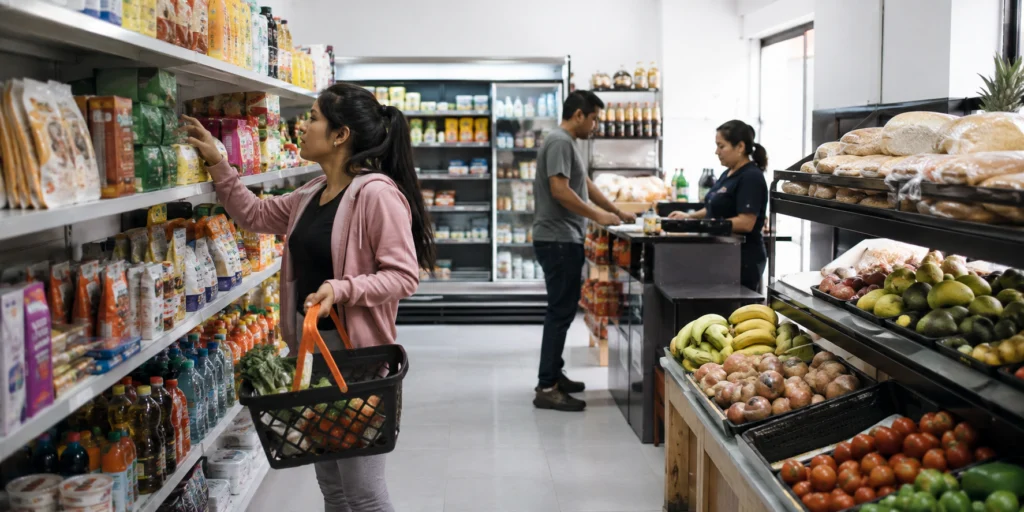
At the heart of the Don Salva value proposition is a radical simplification of the retail experience. Each store is designed around a footprint of approximately 180 square meters. This size is deliberate, forcing a "short assortment" strategy that prioritizes high-frequency items: basic groceries, bakery goods, personal care products, perishables, and a curated selection of Cencosud’s own private-label brands.
The Anatomy of the Compact Store
By restricting the number of SKUs (Stock Keeping Units), Don Salva achieves several operational efficiencies:
- Reduced Logistics Complexity: A smaller store requires fewer supply chain touchpoints, allowing for faster inventory turnover.
- Accelerated Customer Journey: Without the "analysis paralysis" induced by massive hypermarket aisles, customers can complete their shopping mission in minutes.
- Operational Agility: Because the inventory is limited to essential items, store managers can make rapid, data-driven decisions on replenishment and stock rotation based on localized demand.
However, the efficacy of a short assortment hinges entirely on "hit rate"—the likelihood that a customer finds exactly what they need every time they walk through the door. As the number of stores scales toward 40, the challenge of maintaining consistent availability of fresh products will become the true test of Cencosud’s supply chain maturity.
Supporting Data and Operational Pressure
Scaling from a handful of pilots to dozens of stores in a matter of months places immense pressure on the operational backbone of any retailer. The ability to standardize pricing, procurement, and logistics across forty distinct points of sale is significantly more difficult than managing three.
Cencosud’s most recent quarterly report highlighted that consolidated online sales grew by 14.6% year-on-year. This growth indicates that the company is successfully navigating a dual-track strategy: investing in the physical proximity of Don Salva stores while simultaneously deepening its digital footprint. The synergy between these two channels is vital. If Don Salva can act as a "last-mile" hub for digital orders or as a brand touchpoint for mobile-first shoppers, its value to the group extends far beyond the revenue generated at the physical cash register.
The Metrics of Success: What to Watch in 2026
Measuring the success of Don Salva solely by the number of store openings would be a tactical error. Analysts are looking at a more complex set of indicators to determine if this format will be a long-term engine of growth or a costly diversion.
| Signal to Observe | What it Reveals |
|---|---|
| Pace of Openings | Whether the network is on track to meet the ambitious 40-store year-end goal. |
| Availability/Replenishment | If the short assortment remains consistently stocked, signaling a robust supply chain. |
| Basket Size/Composition | Whether the stores are capturing daily top-up missions or losing to competitors. |
| Fresh Produce Performance | The most difficult category to manage in a small, low-cost format. |
| Digital Integration | How well the physical store complements the user’s mobile-first lifestyle. |
Official Stance and Internal Dynamics
Cencosud has remained transparent about the fact that Don Salva is not an attempt to "shrink" its traditional supermarkets. Instead, the company has established a dedicated team to manage this format. This is a critical distinction; the hard discount model requires a different corporate culture than that of a hypermarket. It demands a culture of austerity, rapid decision-making, and a relentless focus on cost-per-square-meter.
In their latest investor presentation, leadership noted that the initial response to the pilots exceeded expectations. By dedicating a specific team to the project, Cencosud is insulating Don Salva from the bureaucratic inertia that often plagues large retail conglomerates, allowing for a "fail-fast, fix-faster" approach to the product mix.
The Hard Discount Challenge: Beyond Price
While the consumer sees the hard discount model as a gateway to savings, the retailer sees it as a challenge in customer retention. Price is the initial hook, but the repeat purchase is built on convenience. If a shopper visits a Don Salva store and finds the shelves empty or the selection too limited to complete their mission, the brand promise is broken instantly.
Cencosud’s challenge is to balance the low-cost structure with a high-utility experience. If the assortment is too thin, the store feels incomplete; if it is too broad, the operational efficiency is lost. The company’s decision to rely on private labels is a masterstroke in this regard, as it allows Cencosud to control both the production cost and the retail price, ensuring that the "discount" label does not result in a loss of margin.
Implications for the Retail Industry
The 2026 milestone for Don Salva will serve as a bellwether for the Latin American retail sector. If Cencosud succeeds in reaching its 40-store goal while maintaining profitability, it will prove that a massive retail group can successfully incubate a distinct, smaller, and more agile chain without cannibalizing its traditional assets.
Conversely, if the expansion hits roadblocks, the data collected during these months will still provide invaluable insights into the shifting habits of the modern shopper. We are witnessing a fundamental recalibration of what a "supermarket" means to the consumer. In the era of instant commerce, the winner will not necessarily be the store with the most aisles, but the one that best understands the specific, daily needs of the neighborhood it serves.
As we look toward the close of 2026, the success of Don Salva will be measured not by the vanity metric of store counts, but by the strategic alignment of the format with the consumer’s daily life. Whether it is through the seamless integration of digital payments or the simple, consistent availability of fresh, affordable goods, Cencosud is redefining the boundaries of the discount retail sector. The industry is watching, and for now, the experiment appears to be moving from the drawing board into a permanent, highly visible feature of the urban landscape.