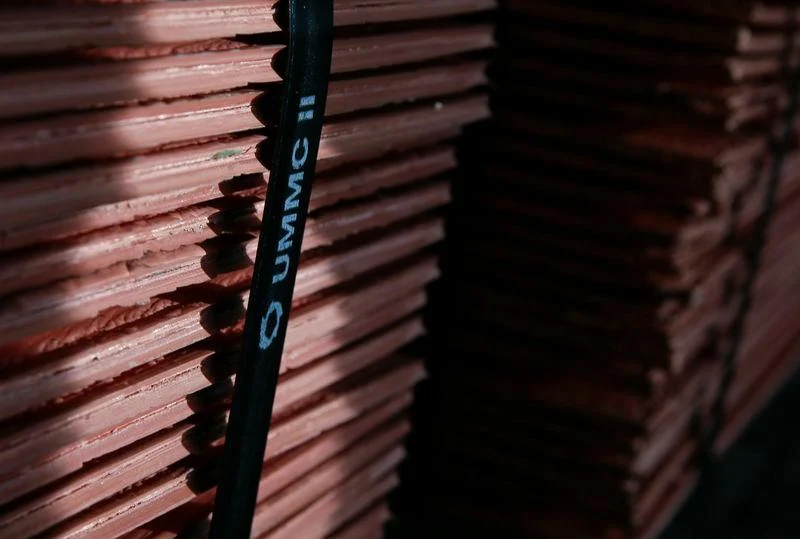
London, UK – [Current Date] – The global copper market is experiencing a seismic shift, with the "red metal" shattering previous records and charting a relentless upward trajectory. On Tuesday, copper futures on the London Metal Exchange (LME) reached an unprecedented all-time high of $14,779 per ton, marking the fourth consecutive session of gains. The conversation among market participants has rapidly evolved from whether prices will breach the $15,000 per ton threshold to when, with analysts increasingly suggesting this pivotal mark could be reached within the current week. This dramatic ascent is fueled by a complex interplay of geopolitical uncertainty, persistent supply constraints, and robust, ever-growing demand.
The primary catalyst for this meteoric rise is the looming specter of tariffs proposed by the Trump administration. While details remain fluid and unconfirmed, the prospect of a 15% tariff on refined copper imports into the United States beginning in January 2027, potentially escalating to 30% in 2028, has sent shockwaves through the market. The White House’s deliberate silence on the matter has amplified speculation and created a volatile trading environment, leaving market operators on edge and driving speculative capital into the market.
"Will it reach $15,000 this week due to Trump’s tariff confusion? Of course, it’s possible," commented Tom Price, an analyst at Panmure Liberum. "You can pick any high figure when there’s so much speculative capital behind an investment idea." This sentiment underscores the speculative fervor gripping the market, where uncertainty itself is becoming a powerful driver of price action.
The Tariff Tsunami: Triggering a Rush for US Copper
The immediate consequence of the proposed tariffs has been an intense scramble to secure copper supplies for the United States. Traders are actively exploiting price differentials between futures markets, particularly on the COMEX in New York, to engage in arbitrage strategies. This has resulted in a significant influx of copper into US warehouses, with over 300,000 tons of the metal reportedly flowing into American storage facilities in recent weeks.
This surge has dramatically skewed global inventory levels. COMEX inventories have now reached a staggering record of 695,624 tons. In stark contrast, combined inventories on the LME and the Shanghai Futures Exchange (SHFE) barely exceed 300,000 tons, representing less than half of the US holdings. This creates a grotesquely uneven distribution of the metal within the global system. While copper is physically present, its availability outside the United States has become severely constrained, exacerbating the supply-demand imbalance.
A Chronicle of Copper’s Climb: From Record to Record
The current price surge is not an isolated event but the culmination of a sustained upward trend driven by a confluence of factors. The narrative of copper’s ascent can be traced through key developments:
- Early 2025: Emerging concerns about global economic recovery and the green transition began to put upward pressure on copper prices. Analysts noted increasing demand for electrification and renewable energy infrastructure.
- Mid-2025: Reports emerged of declining production from major mining regions, particularly Chile. This signaled a tightening of physical supply, which started to outpace the steady growth in demand.
- Late 2025: The United States administration began to signal potential trade policy shifts, including discussions around import tariffs on various commodities. This introduced an element of geopolitical uncertainty into the market.
- Early 2026: The Trump administration officially proposed tariffs on refined copper imports. This announcement acted as a significant accelerant, prompting a rush to secure supplies before potential imposition.
- Present Day: Copper prices have hit all-time highs, driven by ongoing speculation surrounding the tariff implementation and the persistent realities of supply shortages and robust demand. The market is now keenly watching for any definitive statements from the White House, which could trigger further price volatility.
The Pillars of Price: Supply Scarcity and Demand Deluge
The current price rally is underpinned by two fundamental pillars: a critically constrained supply and an insatiable, growing demand.
Supply: The Production Bottleneck
The global mining industry is grappling with significant production challenges, creating a fundamental supply deficit. Major copper producers, responsible for approximately two-thirds of global supply, collectively saw their output decline by 3.5% in the first half of 2026. Chile, the world’s largest copper producer, experienced a particularly sharp downturn, with July production falling 9.4% compared to the same month in 2025.
In fact, Chile recorded its lowest copper production for a second quarter in at least 19 years and has now revised its annual production forecast downwards for two consecutive quarters. This decline is attributed to a combination of factors: aging mines are yielding lower ore grades, operational disruptions are becoming more frequent, and new project development is struggling to keep pace with depletion. The overall picture is one of a critically tight physical supply market, a sentiment echoed by BlackRock, which describes the current market as "very, very tight."
The implications of this constrained supply are far-reaching. Even a modest increase in demand, or any further unforeseen production disruptions, could have an outsized impact on prices. The market’s reliance on a few key producers makes it particularly vulnerable to localized issues, whether they be geological, environmental, or geopolitical.
Demand: The Unstoppable Appetite
On the other side of the equation, global demand for copper continues to surge, driven by powerful secular trends. The ongoing digital revolution, with its exponential growth in artificial intelligence, data centers, and cloud computing, requires vast amounts of copper for its intricate infrastructure. Simultaneously, the global transition to renewable energy sources – including solar, wind, and electric vehicle charging infrastructure – is a significant driver of copper consumption.
S&P Global projects that global copper demand will increase by a remarkable 50% by 2040, highlighting the metal’s indispensable role in the future economy. China, the world’s largest consumer of copper, is showing strong signs of continued demand. Orders from State Grid, the country’s dominant power utility, present a positive outlook for infrastructure development, and the broader Chinese market is entering its peak season for manufacturing activities.
Major financial institutions are aligning with this optimistic demand outlook. Morgan Stanley maintains a positive view for the remainder of 2026, noting that their forecast of $14,250 for the fourth quarter could be surpassed depending on the resolution of the tariff situation. Citigroup has already projected that copper could reach $15,000 by the end of the year. UBS, meanwhile, expects copper to close 2026 at $14,500 and hit the $15,000 mark by March 2027.
Navigating the Headwinds: Inflation and Dollar Strength
Despite the overwhelmingly bullish sentiment, the market is not without its potential headwinds. Investors and traders will be closely scrutinizing upcoming US inflation data, scheduled for release on Friday. A stronger-than-expected inflation report could lead to a strengthening of the US dollar. Historically, a stronger dollar can put downward pressure on commodity prices, including copper, as it makes dollar-denominated assets more expensive for holders of other currencies. This could trigger a wave of profit-taking, leading to a temporary dip in copper prices.
Furthermore, looking ahead to 2027, Morgan Stanley has cautioned that US import demand for copper could weaken if the proposed tariffs are either confirmed or definitively ruled out. This suggests a potential shift in trade flows and demand patterns depending on the geopolitical outcome.
Conclusion: $15,000 Beckons as Uncertainty Reigns
For the immediate future, however, the dominant narrative remains one of upward momentum. As long as the tariff uncertainty persists and the fundamental supply constraints continue to bite, copper appears to have significant room for further price appreciation. The $15,000 per ton mark, once a distant aspiration, now seems less like a ceiling and more like a powerful magnet, drawing the red metal inexorably towards its next record. The intricate dance between geopolitical machinations, the realities of resource extraction, and the relentless march of technological progress has created a perfect storm for copper, propelling it to unprecedented heights and reshaping the landscape of global commodity markets.